Full article about Cabaços e Fojo Lobal
Walk the Caminho dos Namorados under chestnut smoke, past 1514 tiles and wolf pits
Hide article Read full article
A Morning Light on the Path of Lovers
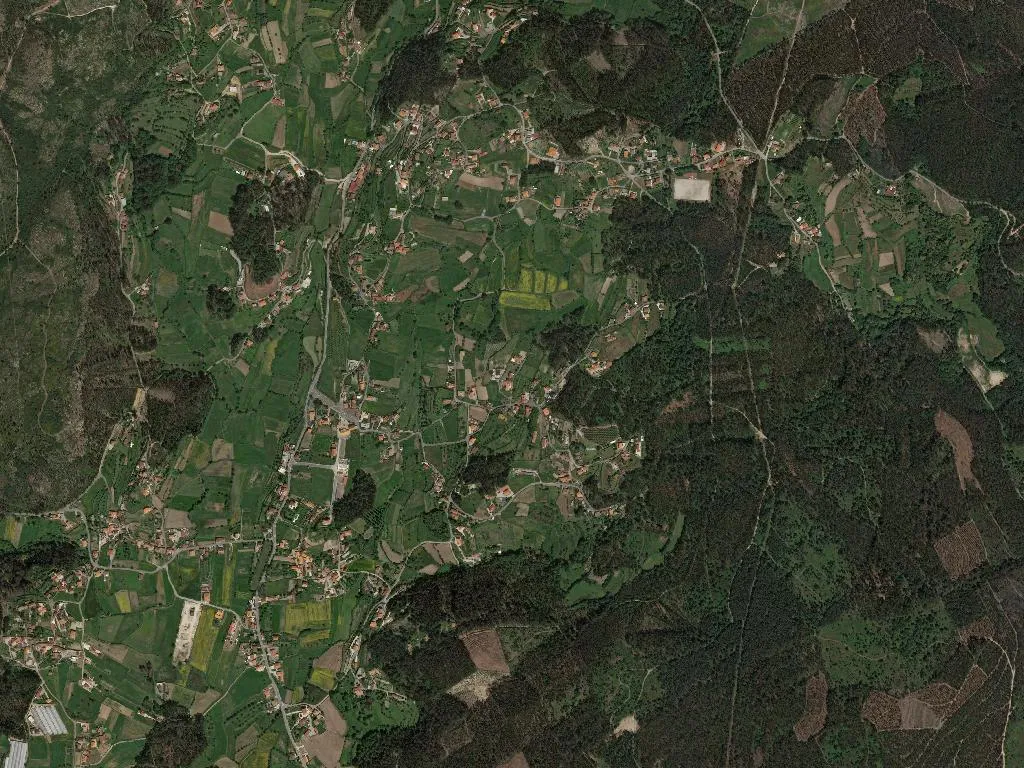
The morning light slants across the schist walls of the Caminho dos Namorados, where young men have etched initials with iron tips — a kilometre and a half of stone that holds the vows of those who scarcely knew what they were promising. The air carries the scent of chestnut wood, and in the distance the bell of Cabaços’ parish church strikes nine, its metallic echo rolling down the valley to meet the murmur of the Ribeira do Fojo. Between 90 m and 400 m above sea level, the Lima valley folds into waves of ancient chestnut groves, oak and gorse that, come April, ignite into a yellow so vivid it hurts the eyes.
Stone that remembers
The Igreja Matriz has anchored Cabaços since 1514, when King Manuel I granted the village its own parish charter. Inside, 18th-century tiles — a blue January sky trapped in ceramic — gossip with a baroque altarpiece that catches candle-light during Sunday mass, when the local choir sings hymns that feel older than the walls. A few paces away, the chapel of São Sebastião, once a plague refuge, hoards a silence you can weigh in your hand. Down-slope, in Fojo, the water-mill still stands, wheel frozen yet stubbornly present, the same stones that ground rye when today’s great-grandparents were barefoot.
Where the wolf left its name
“Fojo Lobal” is no poetic flourish: fojo — the pit where meat was salted; lobal — wolf in village Latin. Here, traps were laid for predators that threatened the long-horned Barrosã cattle which still graze the slopes. Their DOP-certified beef appears each Saturday at Quinta do Outeiro, where women hand-fill tripe with minced meat and smoke-cure sausages over green-wood fires whose dense fog clings to clothes. Sarrabulho — rice thickened with pig’s blood and spiced vinegar — simmers in clay, the fat of wine-marbled pork keeping time with the ladle. On the last Saturday of every month the Tascas Abertas throw open doors: rough-cut tables, live concertina, and bagaço firewater that burns the throat yet settles the stomach.
Water that names and nourishes
“Cabaços” derives from caput aquae, head of the water. The spring still feeds the Ribeira de Cabaços, forming glass-clear pools where children leap barefoot across moss-slick stones in August. Further south the Lima widens into white-sand river beaches such as Arnado, where the bar O Pescador rents stand-up boards and the water mirrors the dark-green oaks on the far bank. The parish lies within the Protected Area of the Bertiandos and São Pedro de Arcos Lagoons: purple herons settle on the margins, rare dragonflies stitch circles on the surface — small miracles that pass unregarded.
Way-markings that stay with you
Yellow arrows of the Central Portuguese Camino slice five kilometres through the parish, steering pilgrims between chestnut groves and granite calvaries that have watched centuries pass. Walk in October or November and you coincide with the Chestnut Trail: fruit scattered across the ground, the communal roasting pit open for sampling and cinnamon-laced red wine. The six-kilometre Caminho do Monte climbs to the miradouro do Sameiro, where the valley layers itself in greens and greys, the river glinting like a silver wire. At Café O Fiscal they stamp pilgrim passports before the final dozen kilometres to Ponte de Lima — and you’ll still ask for an espresso for the road.
Promises kept on foot
On 15 August the Festa do Senhor da Saúde draws thousands who climb on their knees to the churchyard, paying ancient vows while bonfires burn through the night and folk groups dance the vira to drumbeats you feel in your ribs. The first Sunday in May brings the Senhora da Boa Morte procession, followed by an auction of bolo-rei cake that keeps bidding until it stings. October’s Senhor do Socorro gathers Fojo Lobal around a steaming communal pot of sarrabulho, hands tearing warm maize bread — gestures repeated since anyone can remember. Easter Sunday’s Círio das Chouriças fills the nave with sausage smoke and blessing; no one leaves hungry.
At dusk, when the low sun sets the schist walls alight and the carved initials on the Caminho dos Namorados deepen into shadow, sweethearts still place a stone etched with names and a date — a tradition that refuses to age, a simple act that still says everything words can’t.