Full article about Facha Village: Where the Bell, Not the Clock, Rules
Bronze chimes pace vineyard rows in Ponte de Lima’s granite hamlet.
Hide article Read full article
The Bell That Measures the Day
The church bell rings three times, hesitates, then lets the note fall. At seven o’clock the sound is still swallowed by darkness; it slips down Canada da Igreja, vaults Avelino’s wall and expires in the vegetable-stream below. In Facha nobody consults a watch; the day is told by bronze.
Green That Isn’t a Postcard
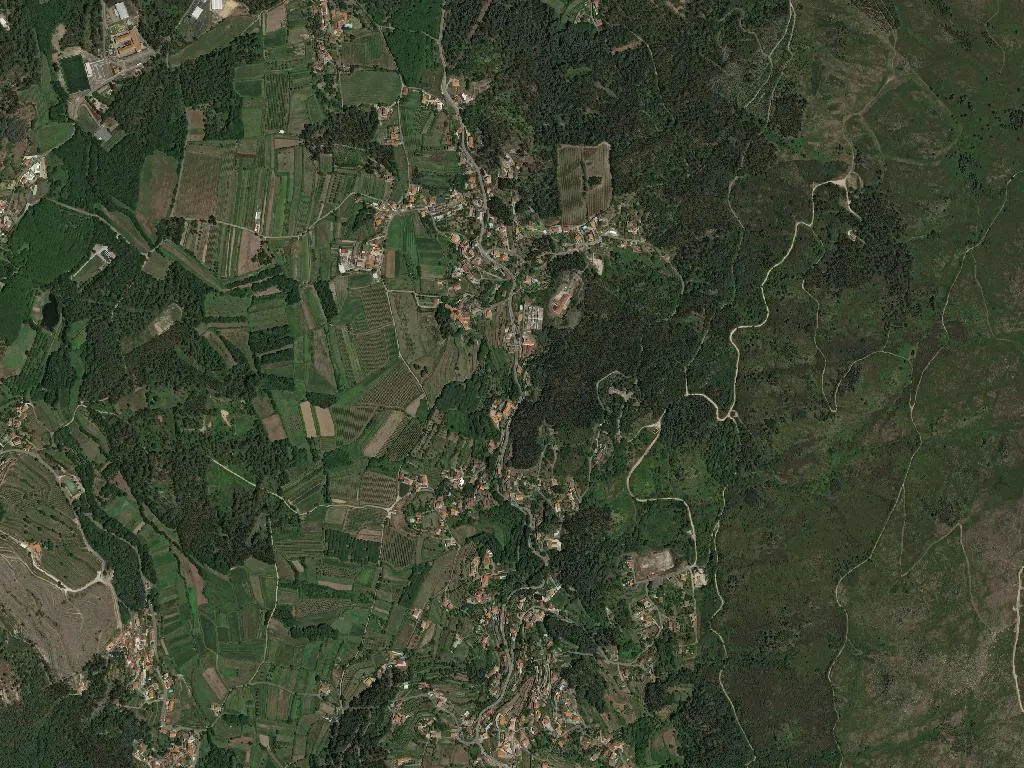
The vines terraced above the Lima are not scenery—they are the parish payroll. Weekends are for pruning, March for burning back the scrub, August for cutting before the sun turns brutal. From a car window the rows look surgical; step between them and the soil clings like wet pastry, smelling of the tanned-hide fertiliser the cooperative drops by helicopter. Locals don’t wax lyrical about terroir; they call the ground “ore”—schist and granite. When the river bursts its banks the silt still finds its way to Dona Aurélia’s wood-fired oven, the way it did in the eighties, pushing corn-bread dough against the oven mouth.
Twenty-Three Children
Population 1,390, but the figure that matters is 23—the children who sprinted through the primary-school gate this morning. When the second bell sounds the whole parish exhales: gossip pauses by the butcher’s block, Sr Aníbal lifts his finger from the circular-saw trigger, even the hunting hound sits at the school gate as though it understands the future is arriving in a navy-blue rucksack.
Four Feasts, Not Three
Guidebooks list three festivals; they miss the fourth—Our Lady of the Assumption, once a September blow-out with Sunday roast-ox and almond-dragée stalls. The procession has shrunk: down Rua de Baixo, sharp left at the mother church, back up the hill. The brass band is minus its tuba—pilfered a decade ago—so Zé Mário’s sousaphone does the job. When the litter passes the co-op cellar the parish-council president doffs his cap, opposition or not.
Beef That Never Reaches Lisbon
Carne Barrosã DOP stays here. Sr Luís the butcher slaughters two cows a month; order your hind-quarter three days ahead. The fat is the colour of corn, salted only with coarse crystals from Marinhas. On St Martin’s Day the abandoned bull-ring becomes a grill: spits of meat, clay pitchers of red, cornbread that D. Odete ferries still-warm under her apron.
Boardwalk to the Wetlands
Bertiandos Lagoas lies three kilometres away, reached on foot along the Passadiço—planks that squeal in rain and lift in December gales. At dusk the fog folds over the water and the Iberian midwife toads sound like cows locked in a barn. Take a jacket: the wind flips to the north without warning and steals the heat from your shoulder-blades.
Beds for Pilgrims
Santiago walkers enter along Rua Nova—opened in the fifties so Padre Anselmo’s tractor could reach the hay-rick. They ask for water at the Alameda fountain; no one tells them it comes from the mine and is colder than tap. Three private rooms exist: Dona Alda’s linen counterpane and packet of Festas biscuits; ground-floor Zé Costa’s where a terrier named Xico barks but never bites; the old hunting-club hay-loft—roadside window, scent of fennel, €15 with breakfast. No Wi-Fi; sit on the right-hand bench in the café and you’ll catch a bar.
Ten O’Clock Curfew
Streetlights snap off at ten. The last tractor idles into “Kiwi” the mechanic’s shed and real silence begins: tower clock, gutter water, Sr Ramalho’s dog arguing with the moon. The wood-smoke you smell is not hearth fires but the pallet factory burning off-cuts to dry planks. Still, when the wind turns it drags the scent through open windows and reminds people of sponge-cake in the oven and grandfathers snoring to Rádio Renascença.
How to Read the Parish
Facha is not a place to tick off; it is a place to keep. Passers-by see vines and granite cottages. Those who stay learn the oldest stone is in the cemetery wall—1723, the name Marques rubbed out by moss—and that the only accurate map is sketched on the café balcony after Sunday mass: who is ill, who has married, who traded the tractor, who still keeps ’99 vintage for a grandchild’s baptism.