Full article about Gandra: Where the Lima Breathes
Granite lanes, moss-quilted walls and candle-lit chapels in Ponte de Lima’s quiet parish
Hide article Read full article
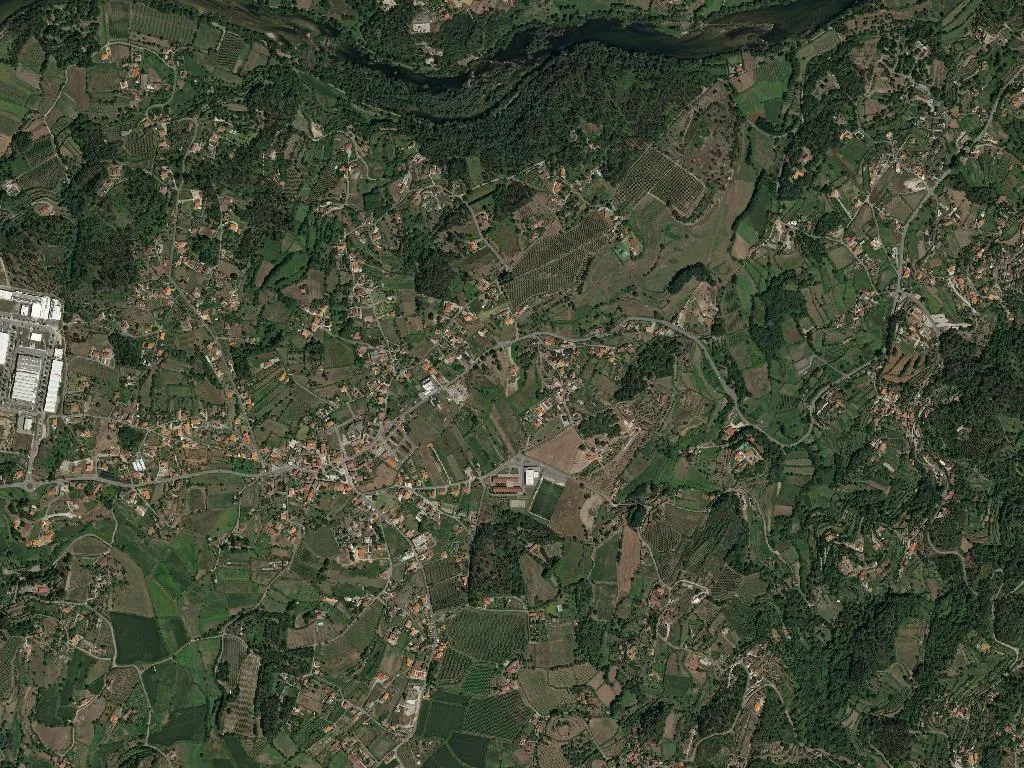
The lane dips in a slow curve between granite walls quilted with moss. As the River Lima draws closer, the light changes, turning aqueous, as though the air itself has thinned to water. On the left bank, humidity tattoos the stone cottages with darker veins and every breath carries the scent of alluvium and freshly turned earth. Gandra sits in this low bowl—seventy metres above sea level at its highest—where the coastal plain begins to crumple into the first ridges of the Minho interior.
Three hundred and forty-seven hectares are scattered into tiny hamlets; only nine holiday cottages advertise themselves online, and none of them bother with AirBnB’s ‘Superhost’ badges. Density here is 300 souls per square kilometre, yet it feels roomy: houses follow the medieval rule of proximity to workable plots, linked by dirt tracks still absent from Google’s street-view car.
Where the sacred keeps its own map
Three festas still punctuate the year: Nossa Senhora da Boa Morte (late August), Senhor da Saúde (May) and Senhor do Socorro (September). With 322 residents over 65 and barely 112 under 25, the processions ought to feel depleted; instead, the whitewashed chapels bounce candlelight as if time were negotiable. Between them runs an unofficial grid of footpaths—shortcuts to shrines that pre-date the tarmac. Walk them at dusk and you’ll hear the murmur of the Lima long before you see it.
Two variants of the Camino—Central Portuguès and the lesser-used Nascente—cross the parish, but Gandra refuses to perform for hikers. There are no yellow arrows sprayed on stone, no café selling scallop-shell fridge magnets. Pilgrims tramp through hay-scented lanes, disappear over a brow and leave only boot-printed clay.
Water, wine and Barrosã beef
Four kilometres east lie the Bertiandos and São Pedro de Arcos lagoons, a Natural Monument visited largely by spoonbills, not tour buses. Reach them via single-track roads where wing-mirrors brush hedges of fuchsia and hydrangea. The boardwalks drift through alder and willow; the soundscape switches from tractor to reed warbler.
Gandra sits inside the Vinho Verde demarcation. Vines are still trained high on ramadas—overhead pergolas that leave room beneath for potatoes or a parked car. Spring gives them the colour of Granny Smith; by late summer the foliage is bottle-green, then bronze after the September corte. Most plots are family-run; grapes disappear into a stone lagar behind someone’s grandmother’s house and reappear in January as a sharp, light wine that tastes like green apple skin.
Pasture for Barrosã cattle, protected by DOP status, unfurls along the river meadows. You rarely see the herd, but the evidence is there: electric fencing around a marshy meadow, granite troughs fed by a trickling levada, the faint, honest smell of manure drifting through open stable doors.
When the sun drops behind the west-facing terraces, the cottages glow the colour of smoked honey. Gandra hesitates, caught between the rural self-containment it was and the low-key, weekender future it has not yet chosen. For the moment the soundtrack is simple—water running in the irrigation channels, a dog barking across the valley, and the hush of a place that has not decided how loud it wants to be.