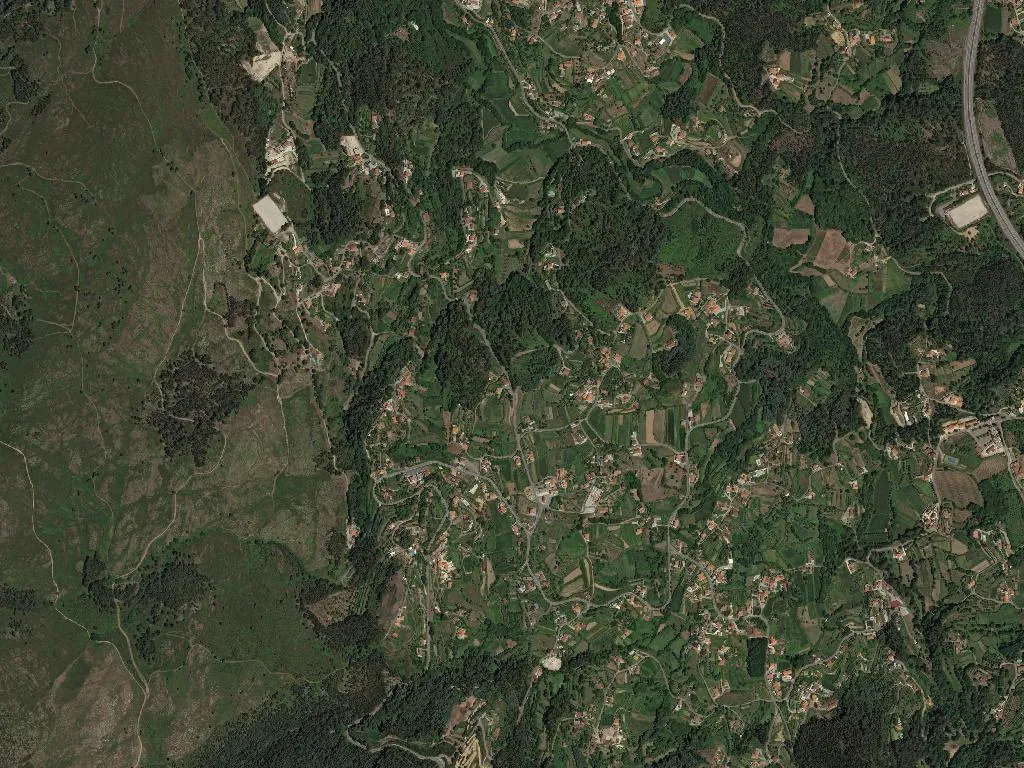
Full article about Rebordões: Where the Lima River Sleeps in Glassy Wetlands
Mirror-calm lagoons, misty boardwalks and three village feasts in Ponte de Lima’s hidden parish
Hide article Read full article
A Place Where Water Stands Still
The tarmac gives way to beaten earth, and the air changes texture. There is an indeterminate scent along the banks — stagnant water, dense vegetation, ancient mud that ferments in the sun. Rebordões (Santa Maria) lies at the point where the valley of the Lima broadens and the river forgets its urgency, pooling into mirror-calm lagoons that reflect poplars and willows. At 143 m above sea level, the land breathes to the rhythm of these wetlands.
Water That Doesn’t Hurry
The Bertiandos and São Pedro de Arcos Natural Monument defines this 707-hectare parish. These are some of the last true wetlands in the Minho, nurseries for biodiversity where the grey heron lands in slow motion and the kingfisher streaks the air in electric blue. Boardwalks creak underfoot, threading through reed beds that whisper to the wind. Here water has none of a river’s haste — it spreads, lingers, creates pockets of silence broken only by the discreet plop of a moorhen.
On misty mornings the landscape dissolves into layers of pewter and silver. Pasture green emerges blurred, almost unreal, and the silhouettes of the nine houses that make up the only hamlet rise like boats moored in thick fog. This is wayfarers’ country: both the Portuguese Central and the Eastern Camino weave through, delivering pilgrims to Santiago with mud-caked boots and gazes already turned inward.
Faith in Three Movements
Rebordões marks the calendar with three processional beats. The Festa da Senhora da Boa Morte (last Sunday in August), the Senhor da Saúde (first week of July) and the Senhor do Socorro (third Sunday in May) punctuate the year with fireworks, brass bands and sung mass. None rivals the spectacle of Ponte de Lima’s great romarias; the mood is more restrained, more familial. The bell of the eighteenth-century Igreja Matriz de Santa Maria tolls across the valley and everyone knows work stops. Women bring marigolds from their yards, men shoulder the palanquins, and for a few hours liturgical time overrides the agricultural clock.
Beef from the Hills
Barrosã DOP beef arrives from the granite uplands to the northeast, but the plate stays loyal to valley tradition — potatoes boiled in their skins, greens cut the previous day, vinho verde served in clay bowls. There is no culinary theatre, only logic: every ingredient tastes of where it was reared. Vines occupy the better-drained slopes, away from lagoon humidity, yielding grapes whose bright acidity slices through fat like a razor.
A Clock That Ticks Slowly
969 inhabitants are scattered across 7 km² — enough to keep the primary school open (129 pupils in 2023) yet never enough to cause a traffic jam. Pensioners occupy stone benches beside the churchyard, trading caldo verde recipes and debating milk prices. The demographic balance is fragile but holding, propped up by seven registered guesthouses that bring weekenders from Braga and Viana do Castelo, and by the odd family returning from city jobs.
The municipal road 528 snakes between schist walls furred with ferns. Beyond them, the blue ridge of the Serra do Soajo scissors the sky. When evening light strikes the lagoons, the water surface turns antique gold and the silence deepens — broken only by the distant cry of a heron, the hush of wind in the reeds, the weight of centuries settled in the wet earth.