Full article about Sá: Where the Bell Runs Late and Maize Steam Rises
Granite weds clay, diesel sardines sizzle, and the Lima swallows the chapel’s scrap-iron chime.
Hide article Read full article
The bell that keeps its own time
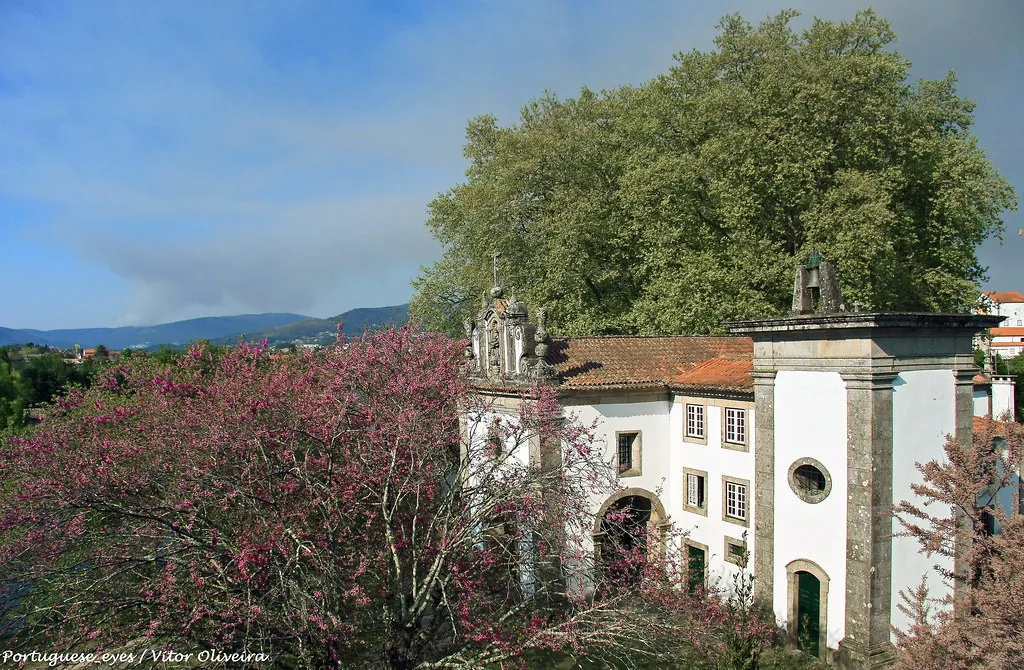
The bell of Sá – not the polished bronze in Ponte de Lima’s main church – clangs over the valley like scrap iron dropped on stone. Three flat strokes, a pause long enough to roll a cigarette, then two more. No one checks a watch; when the bell tolls seven, the village knows the priest has overslept again. The chapel crowns a low ridge, but its voice tumbles straight down to the N201, drifts along Rua do Cruzeiro and expires in the bramble-choked banks of the Lima.
Between lagoons and loopholes
Outsiders hear “lagoons” and picture Sá itself. They’re two parishes south, but the wind still carries the scent of peat and the dipper’s metallic call. Here the irrigation channel that feeds the maize gives off wet-horse steam when the river fog lifts. Pilgrims on the coastal Camino ask, “How far to Ponte de Lima?” and are told, “Left at the wayside cross, then keep straight.” No one mentions the footpaths: shin-deep slurry and dogs that remember the Aljubarrota campaign.
Three feasts, three scents
In mid-August Nossa Senhora da Boa Morte leaves her hilltop chapel in Lanheses and spends the night in Sá’s sacristy. The eve smells of diesel generators and sardines blackening over eucalyptus coals. After Sunday’s procession, women ladle caldo verde into unglazed bowls; the wine comes from an oak barrel that António keeps behind the plough discs. September belongs to Senhor da Saúde, ferried from Refóios on a John-Deere decked with dahlias. The brass band massacres the 1834 Hymno da Carta; teenagers drink mini beers behind the cemetery wall and let off rockets under the heather. October’s feast is the quietest: ten candles, a psalm cracked by three widows, and bees-wax that clings to your jacket until Christmas.
Stone and clay
Houses are not the textbook granite of northern Portugal; they are granite forced to marry clay. Plaster flakes, grass colonises the joints. Windows are postcard-sized not for defence – the Moors never climbed this far – but because glass was once dearer than brandy, and July sun scorches linen. Schist walls mark field boundaries, stacked dry, flattened by the first winter cloud-burst, rebuilt the next morning. In high summer the stone exhales dust and boiled-egg – the same smell your grandfather’s hands gave off after hammering the scythe.
What isn’t here
No café. There was one, where Rua da Igreja kinks, but it died with Dona Amélia. Espresso is now dispensed from Zé do Pipo’s kitchen, courtesy of a Nespresso machine smuggled back from Lyon. No supermarket: a dented van brings loaves on Wednesdays and Saturdays, honking twice like an impatient goose. No chemist, no ATM. The post office opens when Mr Brito finishes hoeing – ten-ish, or perhaps after siesta. For petrol you walk to Quinta do Freixo with a five-litre jar and return smelling of tractor.
What still is
Maize is still sown to feed the galo de Barcelos, the region’s extravagant cockerel. Cobs are stored in a timber granary that groans during a north wind. Smoked pork still hangs in the cellar, cured over strawberry-tree wood that gives the fire a ghost-blue smoke. At five the cattle low, the neighbour’s hound barks at the waning moon. Sunday mass is attended chiefly for conversation; the resident priest left and the supply vicar still confuses every gravestone. When the sun drops behind the twin humps of Santigões, the valley rusts. The bell stays silent; the only sound is the Lima turning unseen stones. In someone’s kitchen a log spits, bean-and-chouriço stew bubbles, the sausage still bleeding in the middle. You don’t photograph this; you don’t post it. It is stored in the fingers that tear the crust and on the tongue that still tastes Sá’s own salt.