Full article about Sandiães: maize, maize, maize, then the Lima glints below
Vines, feast-day rojões and boot leather on the Camino—rural Minho at 133 m
Hide article Read full article
The bell strikes half-past three
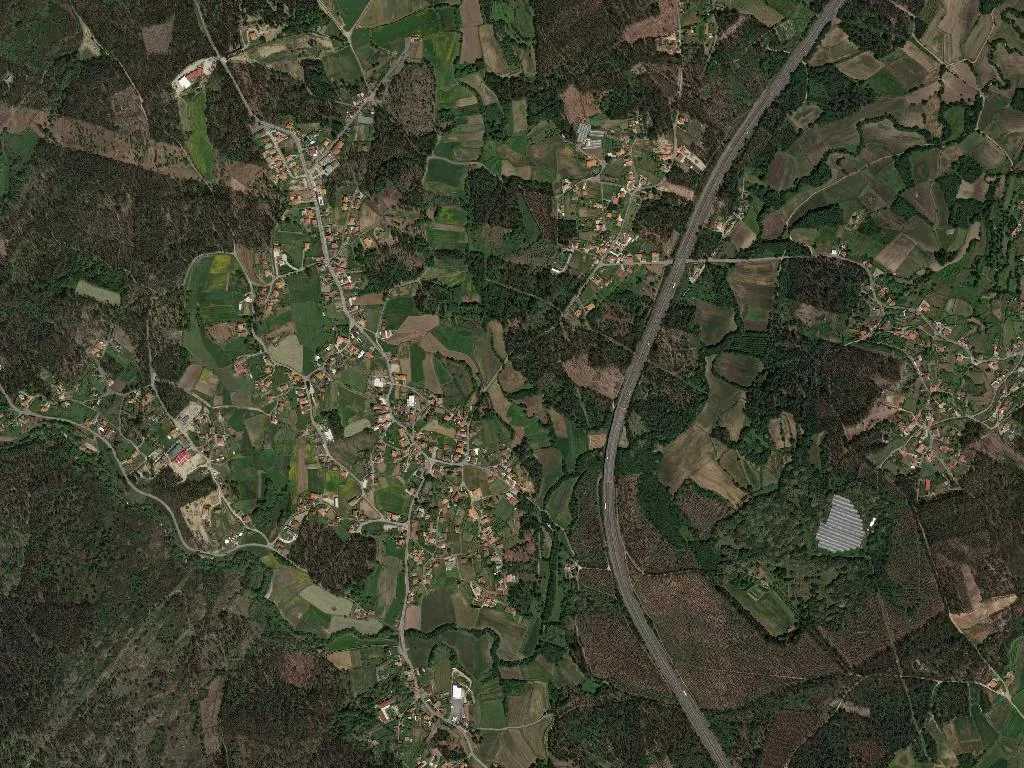
The bell of Igreja de Sandiães strikes at 15:30 and the note rolls across waist-high maize, follows the powder-dry footpaths that climb to 133 m, then dissolves into the Lima valley below. From here the river looks like a strip of pewter, but the parish itself is tuned to an inland frequency: high pergola-trained vines for Vinho Verde, and Barrosã beef that appears only on feast-day tables.
Municipal road 530 — the thin ribbon linking Ponte de Lima with Ponte da Barca — bisects the hamlet and doubles as a pilgrim spine. Since 2017 both the Central and the Eastern variants of the Portuguese Camino converge here, so the only strangers you’ll meet are booted, sun-hatted walkers refilling bottles at the granite fountain. There are no crowds, no latte art, just the slow friction of boot leather and the afternoon silence that makes every footstep sound like a metronome.
Three feast days, three pulses of the year
Sandiães keeps time with three processional Sundays. Our Lady of the Good Death arrives first, the opening Sunday of September; Christ of Health follows on the third October Sunday; the Lord of Deliverance closes the cycle on May’s last weekend. On these days front doors stay ajar, tables sag under rojões (cider-marinated pork) and flame-blistered chouriça, and the churchyard becomes an outdoor refectory. The rest of the year the calendar is dictated by potatoes needing earthing-up, beans needing strings, and granite walls that have to be coaxed back into line after winter frosts.
Ten minutes south by car lies the Natural Monument of Bertiandos and São Pedro de Arcos lagoons. Boardwalks hover over still water that reflects alder canopies; the air drops three degrees and smells of silt and crushed mint. Kingfishers stitch fluorescent seams above the surface; late-spring nights bring bitterns booming like distant foghorns.
Sleep in granite, wake to roosters
There is only one key in the door: Casa da Eira, a two-bedroom manor house rescued from dereliction, its eaves still blackened by decades of corn-drying smoke. Wake when the cockerel decides, watch low fog unroll across the terraces, then breakfast on oven-warm bread from Reboreda, sheep’s-cheese from Arcos de Valdevez and a glass of milk still foaming from the pail.
No restaurant signs intrude; meals are cooked behind the same walls that rear the ingredients. Caldo verde thick enough to stand a spoon in, cabidela rice the colour of rust, and, when the thermometer dips, papas de sarrabulho — a cinnamon-dusted stew thickened with pork blood and cornmeal. Barrosã beef, protected by DOP status since 1996, is reserved for birthdays and name-days: grilled over oak embers, served with roast potatoes and grelos sautéed in lard that tastes faintly of chestnuts.
Evening stretches shadows the length of the stone terraces; the Lima turns molten copper; a dog barks once, more out of habit than threat. Sandiães offers no spectacle, only the granular texture of a rural day — granite under bare feet, the metallic tang of a scythe, the taste of soil that needs no subtitle.