Full article about Santa Comba: Minho hamlet where 1693 bell still rings
Empty granite houses, silent kilns, blood-spiced papas and vinho verde poured from tanks
Hide article Read full article
The bell that measures the morning
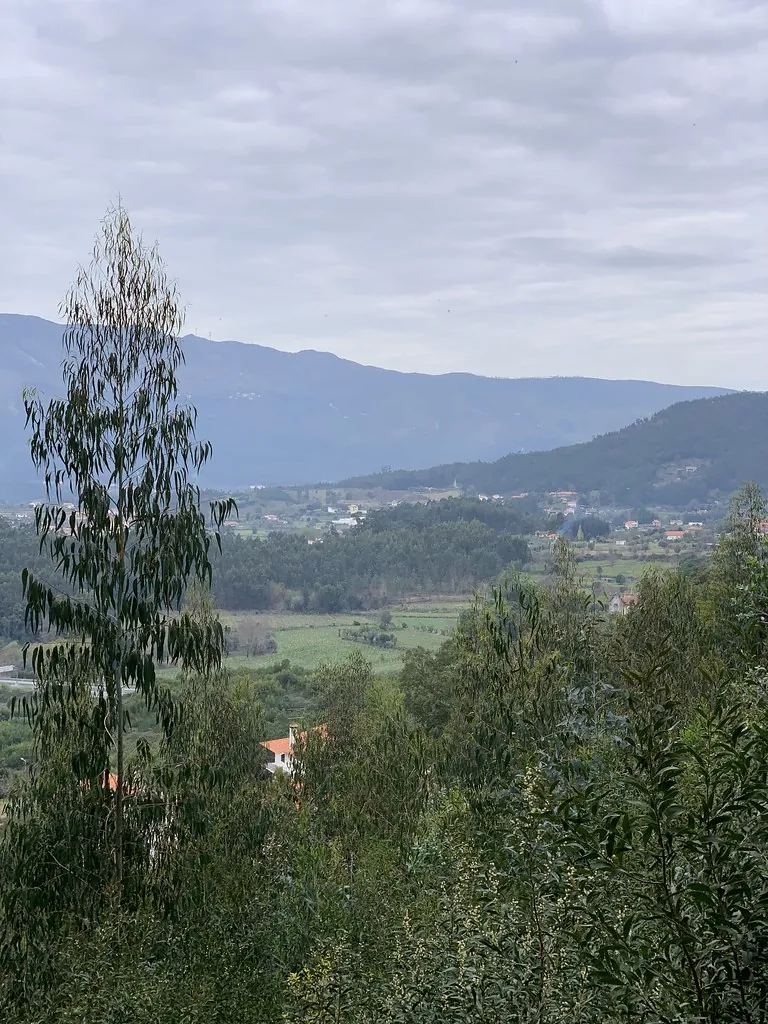
At 7.30 a.m. the hermitage bell carries across the Lima valley while the river is still milky with mist. Seventy granite houses – a third of them empty – are scattered among the vines at scarcely 40 m above sea level, yet winter clings to the stone. The smell of wet loam drifts from vegetable plots irrigated by medieval levadas that pre-date the Inquisition.
From hut to parish
Sancta Comba simply meant “Saint’s Hut”. No one can point to the original chapel; by 1527 the crown census listed only 20 souls. Today the roll-call is 591 and falling. The pottery kilns cooled in 1994 when Dona Alice shuttered the last workshop: the Lima’s grey clay is no longer dug and the younger generation left for France and Luxembourg.
Three saints, three parties
A calendar meant for thousands is shouldered by hundreds. On the first Sunday of September emigrants fly home for the Festa da Boa Morte, filling the lanes with Parisian number-plates. In May the Senhor da Saúde procession starts in Ponte de Lima; pilgrims cover 8 km on foot behind a canopy carried by eight men in waistcoats. July belongs to Senhor do Socorro – the only feast that still fields folklore groups, borrowed from neighbouring parishes because Santa Comba no longer has teenagers to drum and dance. The parish church keeps its 1693 bell-tower, but the gilded altar has waited twenty years for funds that the town hall cannot release.
Minho pantry notes
O Moinho, once a daily canteen for field hands, now fires its ovens only on Thursdays and weekends: papas de sarrabulho – a dark, cumin-scented stew of pork blood and bread – served with a glass of lemon-white Loureiro. The eponymous bolo de Santa Comba, an orange-scented loaf heavy with eggs from backyard hens, is baked 3 km away in Friastelas and must be ordered a day ahead. Drive to Quinta do Convento and you’ll leave with a €7 bottle of lime-fresh vinho verdo straight from the stainless-steel tank.
Stone and water trails
The Central and Nascente variants of the Portuguese Camino cross on the EN203 beside the water-wheel at Valboa. A yellow arrow is painted on the wall of the old primary school, now an eight-bed pilgrim shelter; the key hangs behind the counter at Zé’s bar, which unlocks at eight sharp. Swap boots for bikes and a riverside cycle lane delivers you to the Bertiandos lagoons in five quiet kilometres.