Full article about São Pedro d’Arcos: heron dawn on the Lima wetlands
Otter trails, stone mills and horse-bath rituals in a 350-ha Ramsar haven near Ponte de Lima
Hide article Read full article
Dawn on the lagoons
The silence of the wetlands at dawn has weight. Not an absence of sound, but the presence of something older: the slow beat of heron wings across still water, the rustle of reeds where yellow-bellied toads still sleep, the distant bark of a dog on Sr Armindo’s farm. In São Pedro d’Arcos, the landscape exhales across 350 hectares where the water does not race to the sea but lingers, rests, feeds. Strung between the Lima and its tributaries, the parish counts barely forty souls per square kilometre – room enough for nature to reclaim what centuries of husbandry once shaped.
Where water draws the map
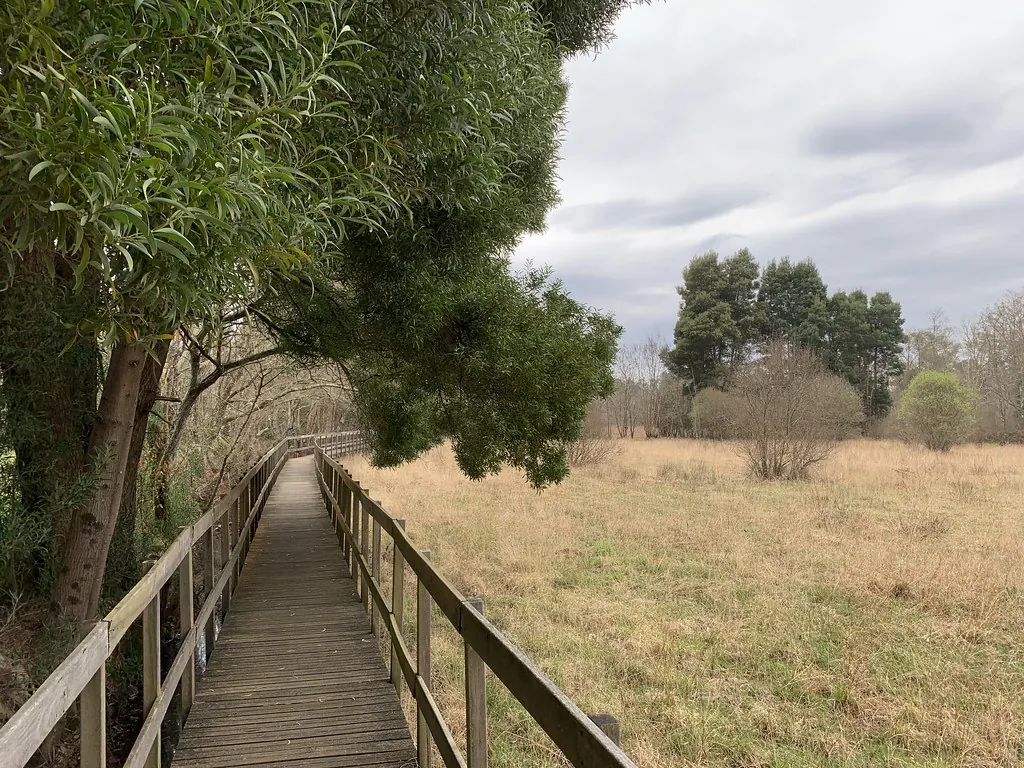
The Bertiandos and São Pedro d’Arcos Natural Monument is no picture postcard; it is a living system, Ramsar-listed for the aquatic birds that nest or simply refuel here on the East Atlantic flyway. The Lagoons Trail snakes five kilometres through galleries of alder and willow, past stone weirs that once turned watermills, across narrow bridges whose mossy flags creak underfoot. When evening light skims the water, otters slide soundlessly between rushes. Every August, local farmers still drive their horses into the deeper channels for the annual banho dos cavalos, a ritual bath that cools hooves and memories alike.
The parish church, classified in 1982, stands with the spare elegance of Minho vernacular – baroque touches visible only in the gilded carving of its retable. A few steps away, the chapel of Nossa Senhora da Boa Morte hosts the 15 August romaria: a procession that climbs the dirt roads to the beat of bass drums and concertinas, the bearers swaying like pendulums beneath their canopies.
Footprints older than tarmac
São Pedro d’Arcos sits on the Central Portuguese Way to Santiago, the medieval pilgrim artery that funnels walkers north to Galicia. The stone pavement – polished by centuries of boot leather – reaches Ponte de Lima in eleven kilometres of granite granaries, stone calvaries and Romanesque bridges whose arches murmur even in high summer. At first light you meet Sr Joaquim herding cows to the meadows, ox-carts creaking along lanes that smell of fresh manure and newly cut grass.
Taste of the Lima valley
The cooking here needs no flourish. At O Moinho, arroz de sarrabulho steams in iron pots: pork blood, Carolino rice and a heat-seeking spice mix that lingers on the tongue. Rojões – cubes of Barrosã DOP pork – fry in lard until golden, then arrive with boiled potatoes and orange rounds that slice through the richness. Wood-oven kid, fired at five in the morning so the temperature is exact by noon, falls from the bone, its crackling scented with garlic and sweet paprika. Quinta do Ameal’s Vinho Verde arrives ice-cold, its razor-edge acidity the perfect foil. Finish with Dona Amélia’s egg-yolk charutos, dissolving beside a thimbleful of medronho brandy that warms the throat like a sunset.
Where green keeps multiplying
The parish lies inside the North Littoral Natural Park. Oak woods alternate with meadows irrigated by medieval levadas. A cycle lane shadows the Lima all the way to Arnado Park without a single car interrupting the glide. In July and August the river beaches at Torno and São Pedro offer glass-clear water, ash-tree shade and the soft splash of children learning to dive. At the Bertiandos Interpretation Centre you can join nightly bat and amphibian walks – red-filtered torches, scientific names whispered, frogs percussioning the dark.
Night settles slowly. The lagoons turn to black glass, mirroring the first stars. From the chapel of Boa Morte a single lamp stays lit. The bell tolls nine times, a metallic note that crosses the fields and vanishes among the reeds. What remains in memory is not a monument or a view, but the damp weight of dusk, the scent of soaked earth, the echo of a bell that keeps time for a community which never saw the need to hurry.