Full article about Vitorino das Donas: where nuns’ ghosts scent the Lima breeze
Crumbling cloisters, glacial river-lagoons and lime-washed manor walls echo 800 years
Hide article Read full article
The scent of stone and time in Vitorino das Donas
At eleven o’clock the sun scours the lime-washed walls of the Paço de Vitorino, flaking them like old skin. Beyond the willow fringe of the Lima, the river keeps its ancient soundtrack: not a hush, but the low, constant rasp of water on stone, as though someone were drawing a bow across a bass string. The granite staircase the Benedictine nuns once climbed in wind-lashed habits now ends at a chapel that smells of rancid candlewax and laundry left too long in the rain. An alabaster font drips so slowly the water aches the teeth – the same Arctic nip we chased after school, tin mugs clattering.
The nuns’ monastery and its half-buried memory
Vitorino first appears in the 1220 Inquiries as Sancto Salvatore de Voitorio; the “das Donas” suffix arrived with the Benedictine sisters who ruled here from 1175. Their monastery, built on the site of Santa Maria do Barco, is now a heap of schist where sheep pens look almost modern beside the masonry. Inside the parish church – rededicated to the Divine Saviour – bargain incense fails to mask the damp. Blue-and-white azulejos recount stories no one reads: too high, too dim. Parish gossip says parishioners have been picking flakes off the gilded altarpiece for centuries, swapping gold for answered prayers.
The parish council, erected in 1958, is simply a house with a flag. Step in and the air is equal parts coffee fumes and paper dust. Mr Armando, the clerk, knows every stone yet still asks strangers, “And whose people might you be?”
Cycle path, lagoons and the persistence of green
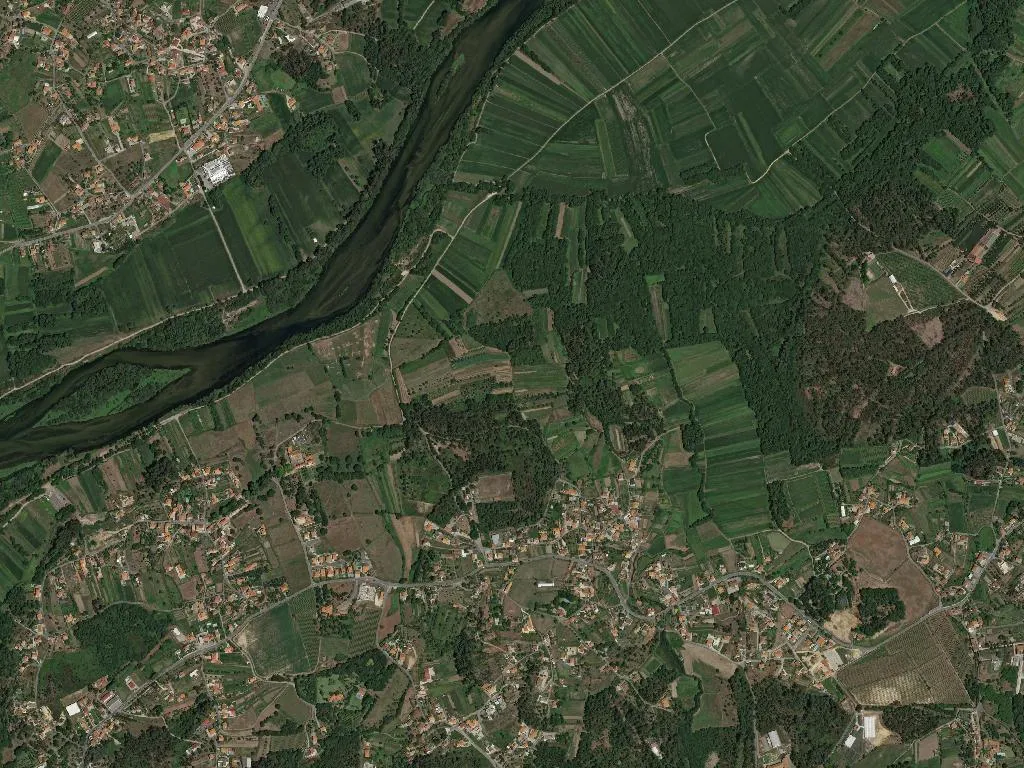
The Bertiandos Lagoons Nature Reserve begins just up the lane; the geese keep to the upper ponds where reeds grow man-high. The Ecovia – a packed-sand cycle track – brings helmeted weekenders who brake for cows that never look up. At Lugar da Passagem the “beach” is lorry-imported sand; even in August the Lima stays glacial, and parents wince at children’s howls.
Pilgrims on the coastal Camino ask, “How far to Ponte de Lima?” The universal reply: “Depends.” Stone crosses stand sentinel, but no one stops to pray. The old corn granaries on stilts are ornamental now, crammed with swallow nests and bat guano.
Festivals that rise from the soil
The last Sunday of August belongs to the Festa da Senhora da Boa Morte. Mass at eight, then folk troupes stamp the churchyard until dust clouds the air. Pork steaks sizzle in bolo do caco; lager flows; mothers shout sons’ names across the square. September’s Feira do Senhor da Saúde sells live hens tied by the ankle and honey decanted into handwritten jars. The convent sweets are trucked in from Braga, though no vendor admits it.
At Easter the priest still makes the Compasso rounds, blessing each house; grandmothers tuck a fragment of consecrated bread in the larder “so we never go without”. Janeiras – the winter tradition of door-to-door song – is now performed by Zé Manel’s grandsons who forget half the lyrics, accept biscuits and a euro, and leave grinning.
At table with the Lima
Rojões come from backyard-reared pigs, marinated overnight. Chips are hand-cut, thick, fried in lard until soft and waxy rather than crisp. Arroz de lampreia arrives the colour of midnight, sugared at the table. Kale soup uses garden greens and pork sausage, not streaky bacon. Carne Barrosã IGP is sold at the village butcher: scarce, expensive, worth it. White Vinho Verde from the Lima valley is poured from clay pitchers that leave the tongue feeling file-sharp. The household aguardente lives in five-litre demijohns broached only for births and funerals.
The palace fountain still drips. The water tastes unchanged; no one grows younger, but no one grows older either.