Full article about Boivão: Where Vineyard Terraces Tilt Against the Sky
Granite cottages, eucalyptus breeze and three Caminos brushing Valença’s quietest parish
Hide article Read full article
The scent of wet earth and eucalyptus
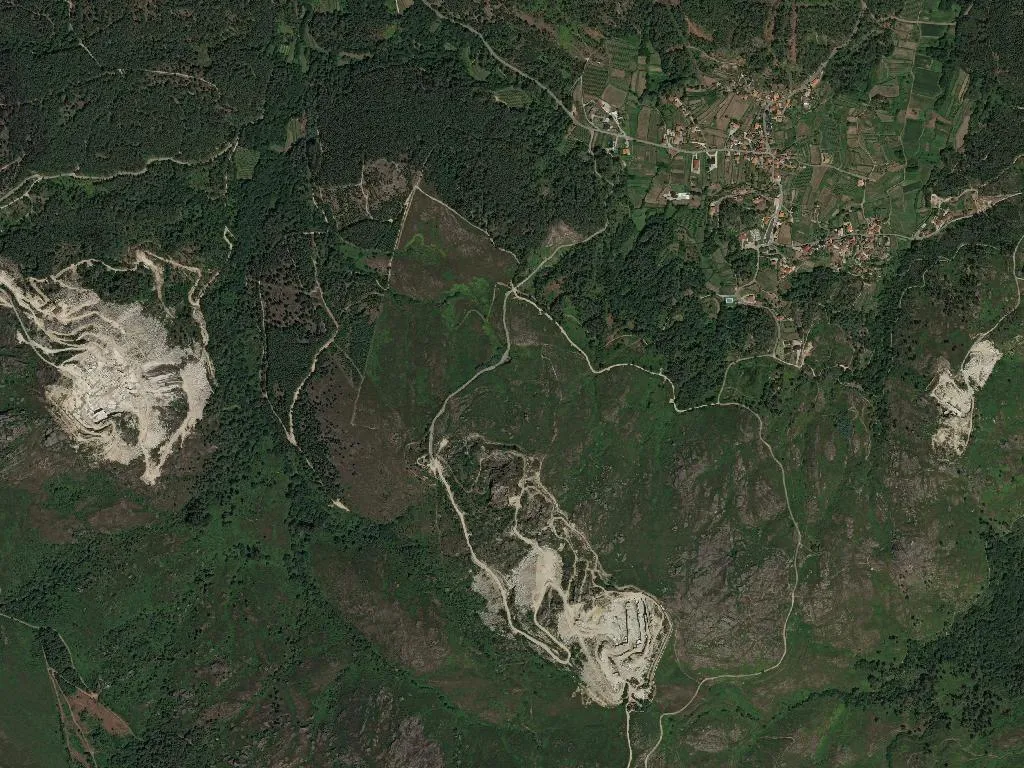
Wind barrels up the Boivão ravine carrying the smell of damp soil and eucalyptus. At 251 m above sea level, granite cottages stagger across slopes stitched with narrow vineyard terraces that run sideways against the tilt of the land. Silence is thick here, broken only by a distant dog and the scrape of boots on uneven cobbles.
Boivão is Valença’s smallest parish — 185 souls in 2021, scattered across 7.98 km² of folds and summits. Arithmetic tells the story: more space than people, more forest than roofs. Sixty-nine residents are over 65; only eleven are under 14. Time moves at the speed of pruning shears and harvest baskets; children are seasonal, wrinkles are chronological records.
Lighthouse at the top
The first Sunday in September belongs to the Festa da Senhora do Faro. Her chapel perches at 312 m, the parish’s highest point — faro once meant beacon or sea-mark for locals. For twenty-four hours the saddle of the hill is louder than Lisbon airport: fireworks crackle, brass bands blare, and the tiny forecourt swells with returning emigrants from Paris, Geneva, Porto. The procession inches down the EM-568 behind Boivão’s philharmonic band, cornets ricocheting off the valley walls. Then the cars leave, the shutters bang shut, and quiet reasserts itself like fog.
Three Ways, one crossroads
Geography has made Boivão a footnote in the guidebooks of pilgrims. Three separate variants of the Camino de Santiago brush the parish — the Central Portuguese (via Cerdal), the Coastal (via Vila Nova de Cerveira) and the Interior (via Valença). None of them stop, but all of them climb. Walkers crest the hill, refill bottles at the granite trough beside the primary school (closed since 2009), swap buen Camino for bon chemin, and disappear. The village is a comma between longer sentences, a place to tighten laces and breathe.
Green that fizzes
Altitude and Atlantic influence shroud Boivão inside the Vinho Verde demarcation, sub-region Monção & Melgaço. Loureiro and Pedernã vines cling to loose-stone walls, ripening slowly under bruised skies. Harvest arrives in mid-September when acidity and residual sugar reach the razor balance demanded of a wine that will finish at nine per cent and a light petillance. There are no tasting lodges, no gift shops. Fermentation happens in garage corners, 500-litre chestnut barrels bought at farm sales, or second-hand steel tanks from the local co-op. What you taste is by invitation only, poured between gossip and slices of smoked chouriço dangling over the wood-burner.
Late-afternoon light splits the clouds and floods the valley for thirty seconds. Granite walls exhale the day’s stored heat. From the nineteenth-century church of São Vicente — rebuilt in 1892 over a sixteenth-century hermitage — the bell tolls the Angelus. Boivão keeps no one. Yet the image stays: the strict geometry of terraces, the weight of silence, the realisation that here life is counted in vintages, not calendar years.