Full article about Fontoura: Where Three Caminos Merge in Minho Gold
Hear the São Gabriel bell summon pilgrims past cork groves, chapel-lined loops and manor gates
Hide article Read full article
The bell that rings for three Caminos
The bell of Igreja Matriz de São Gabriel tolls across maize terraces and low-slung vines. Three pilgrims climb the lane, walking poles clicking on irregular granite, rucksacks caked with Minho dust, eyes fixed on the yellow arrows daubed on gateposts. Only here do the Central, Coastal and Interior Portuguese routes of the Camino de Santiago braid together, turning this parish of 685 souls into a discreet crossroads for hikers bound for Galicia.
Five chapels, one stream
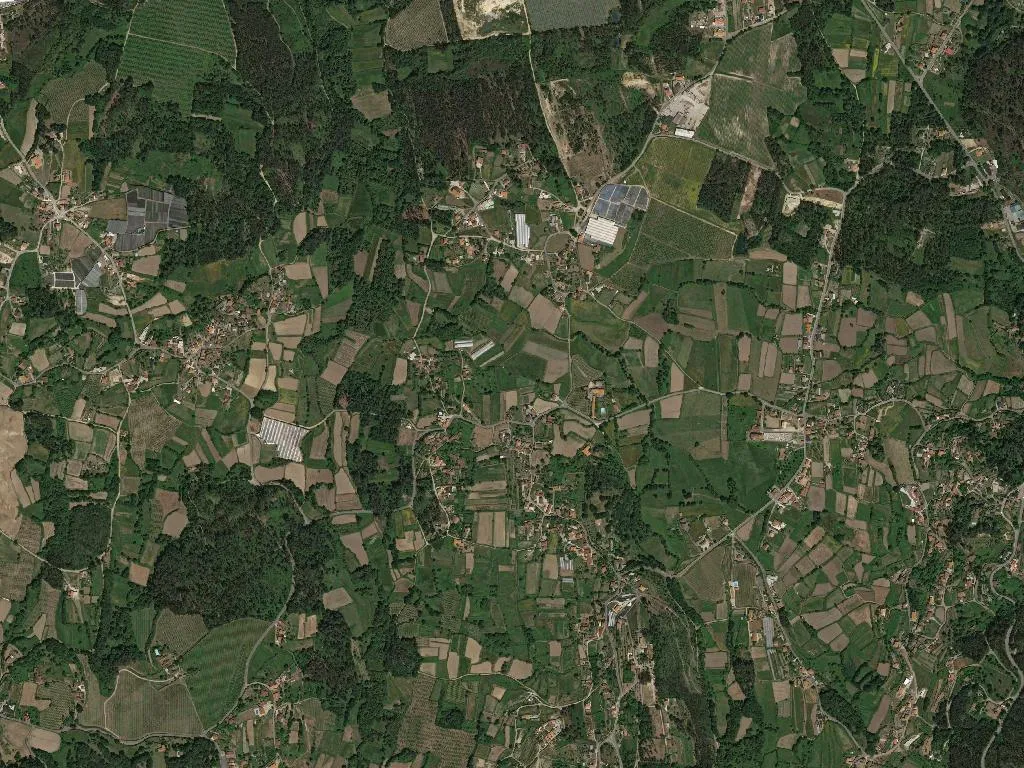
At just 40 m above sea-level, the land rolls like a crumpled sheet. Oak and cork groves interrupt the hedged plots; the Fontoura stream threads the folds, feeding willow-shaded pools where nightingales bathe. A six-kilometre loop links five chapels—São Gabriel, Pópulo, São José, Senhor dos Aflitos and Casa Alta—tracing the old “chapelada” processions that still haul parishioners from one shrine to the next during novenas.
Inside Senhor dos Aflitos, model boats hang from the rafters—ex-votos left by Minho fishermen who once beached their trawlers nearby and came here for blessing before the tide turned. Painted blue and white, the carved hulls have never known salt water yet carry the memory of those that did.
Gilded wood and manor-house granite
Rebuilt after 1704, the parish church rises in sober Baroque dress. Late sunlight pours through high windows and ignites the gilded retable—vine-leaf volutes, cherubs’ curls, every surface gilded until it hums. Next door, the Quinta de São Gabriel keeps its stone coat-of-arms above wrought-iron gates; hydrangeas and camellias scale the wall that once sheltered the resident clergy.
Lower down the lane, Casa do Gonçalo shows the Minho vernacular at its most honest: long arcade, communal wood-oven still fired on feast days, maize-drying granito espigueiro raised on staddle stones. With 417 buildings for under 700 inhabitants, Fontoura is a scatter of hamlets rather than a nucleated village—farmsteads set among their own plots, stitched by dirt tracks that smell of bruised fennel.
Cornbread that wakes the dogs
Saturday dawns to the scent of broa escaping Dona Alda’s basement bakery. The aroma drifts through louvred shutters and reaches even Sr Arménio’s mongrel, who barks once, twice, then rolls back into the sun. At the hatch, Alda slaps rye-and-corn dough on a pine bench and feeds it into a stone oven built by her grandfather. Fontoura broa is not the sweet, cakey version sold in Braga markets; it is savoury, dense, its crust shattering into shards that taste faintly of wood smoke. Wrapped in grease-proof paper, a loaf is pressed into chilled pilgrim hands with the instruction: “Eat while the steam still bites.”
On feast days the air shifts from smoke to paprika. Cubes of belly pork sizzle in local olive oil, stained orange with colourau; garlic crushed on schist, bay from the yard. The scent clings to tweed caps for days.
São Gabriel and Nossa Senhora do Faro
The Sunday nearest 29 September belongs to São Gabriel: procession, sung mass, brass band, then an evening arraial where teenagers tread the same cirandas their grandparents learned. A fortnight earlier, on the mid-August night of Nossa Senhora do Faro, the chapel on the ridge is outlined in candles. Locals and passing hikers follow the image through maize stubble, murmuring responses, the only percussion the shuffle of soles on dry earth. When dawn fires the vines, the walkers leave with the bell still in their ears, the taste of Alvarinho on their tongues, and the knowledge that the yellow arrow pointing north has already begun to fade under their boots.