Full article about Gandra e Taião: Minho Valley Bell & Granite Pilgrim Beacon
Stone-quilted hills, river lamprey feasts and a hilltop chapel that sailors once used as a lighthous
Hide article Read full article
The Bell's Echo, the River's Flow
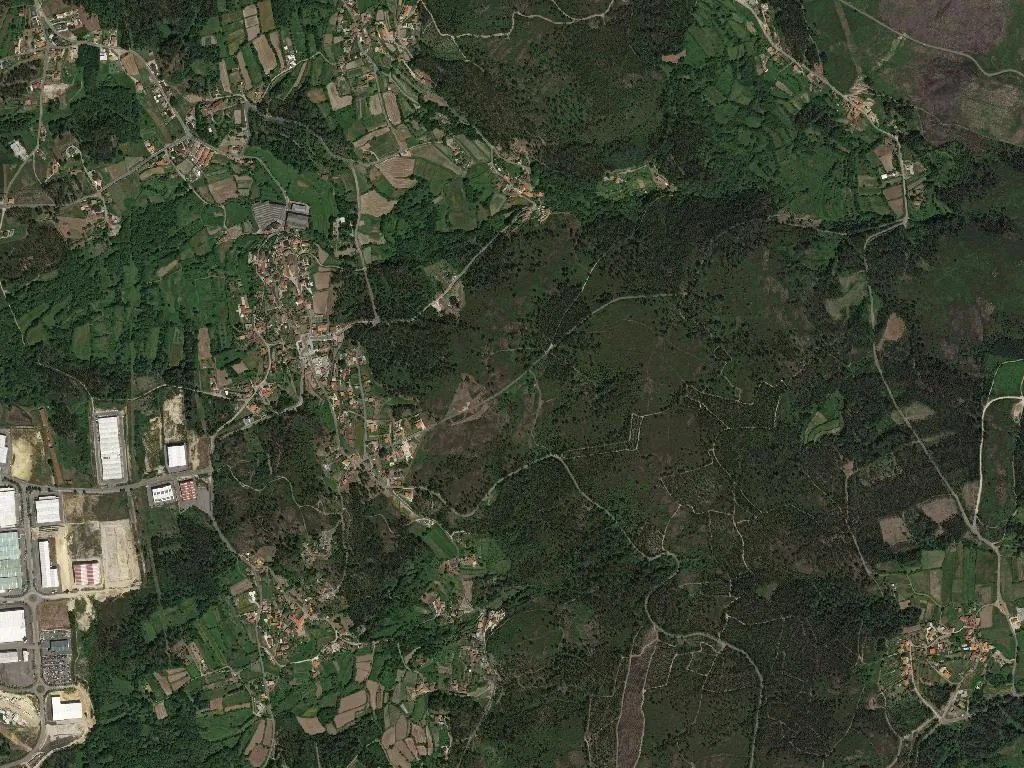
The chapel bell carries on the wind, rising from the valley of the Minho until it grazes the granite crown of Senhora do Faro. At 177 m above sea-level this is the natural balcony from which pilots of the Portuguese Coastal Camino, the inland Central Way and the newborn Nascente route take their bearings. Below them the parish of Gandra e Taião – merged in 2013 yet still running two parish councils – spreads like a patchwork of smallholdings: vines trained on single poles, cabbage rows the colour of billiard felt, plots of turnip and pumpkin that stop only where the river bends north to Spain.
Granite that speaks, water that remembers
Every wall, every wayside cross, every lintel is hewn from the same fine-grained granite that left Taião’s quarry for Porto's nineteenth-century boulevards. The scars of extraction are now a shallow amphitheatre visited by geology students, but the stone still dictates the tempo of life: it shelves the terraced hills, channels the rainwater, radiates the day’s heat back onto late-ripening tomatoes.
Parallel runnels, once races for iron-shot waterwheels, slip through gorse and broom. A handful of mills survive – roofs caved in, millstones split like giant molars – reminders that maize bread arrived here long before the potato. Where the levadas meet the Minho the current narrows, quick and opaque, carrying sea-lamprey fry upstream each March.
A lighthouse without sea
The pilgrimage chapel of Senhora do Faro was never coastal, yet river boatmen once used its white bulk as a landmark, the Minho’s own “lighthouse”. The feast, held every last Sunday of August, still orients the year: tractors polish to chrome, women carry trays of lamprey rice through clouds of grill smoke, teenagers queue for plastic cups of rasping vinho verde that leave their lips chalk-dry. After Mass in the open air the procession circles the knoll, brass band wheezing out marches that haven’t changed key since the 1950s.
A table built on smoke
Inside farmhouse kitchens smoke-cured chouriço hangs like burgundy batons. The links are lean, spiced only with sweet paprika and a confetti of garlic, then slow-smoked over eucalyptus until the skins bronze. Thick rounds are tossed into clay pots of arroz de sarrabulho – a dark, almost porridgy rice bound with pork blood and cumin – or simply grilled and served with boiled potatoes and orange moons that cut the fat.
Supper might finish with papas de abóbora, the orange squash simmered with pig’s fat and just enough sugar to blur the line between side dish and dessert, or cavacas, brittle egg-rich biscuits that shatter and leave sugar freckles on the tablecloth. Throughout, the local white vinho verde – Loureiro on granite, Trajadura on schist – performs the neat trick of tasting like liquid granite itself: tense, saline, almost shocking.
Walking between two names
A web of cobbled lanes and granite stiles stitches Gandra to Taião. Orchards of citrine lemons alternate with pinewoods where cicadas drill the afternoon. Population density is a whispering 69 souls per km²; silence pools between houses like water in a ford. Way-markers stencilled with the scallop shell point walkers to village cafés where espresso costs sixty cents and the patron will gladly stamp a pilgrim credential.
Beyond the last cottage the path climbs through gorse tunnels to an isolated cork oak, its trunk inked with decades of initials. From here the view is a lesson in Iberian geology: the river glinting like tinfoil, the Spanish sierras stacked in bruised layers, and somewhere in between the invisible border that history redraws each century.
When the sun slips west the granite façades catch fire. Senhora do Faro stands profiled, a paper cut-out against a sky the colour of chilled rosé. Down on the Minho the water keeps moving, indifferent to parishes, to nations, to the small bell that will soon toll again – not to hurry anyone, but to remind the 1,391 residents that here time is still measured by what you can coax from soil, grape and smoke.