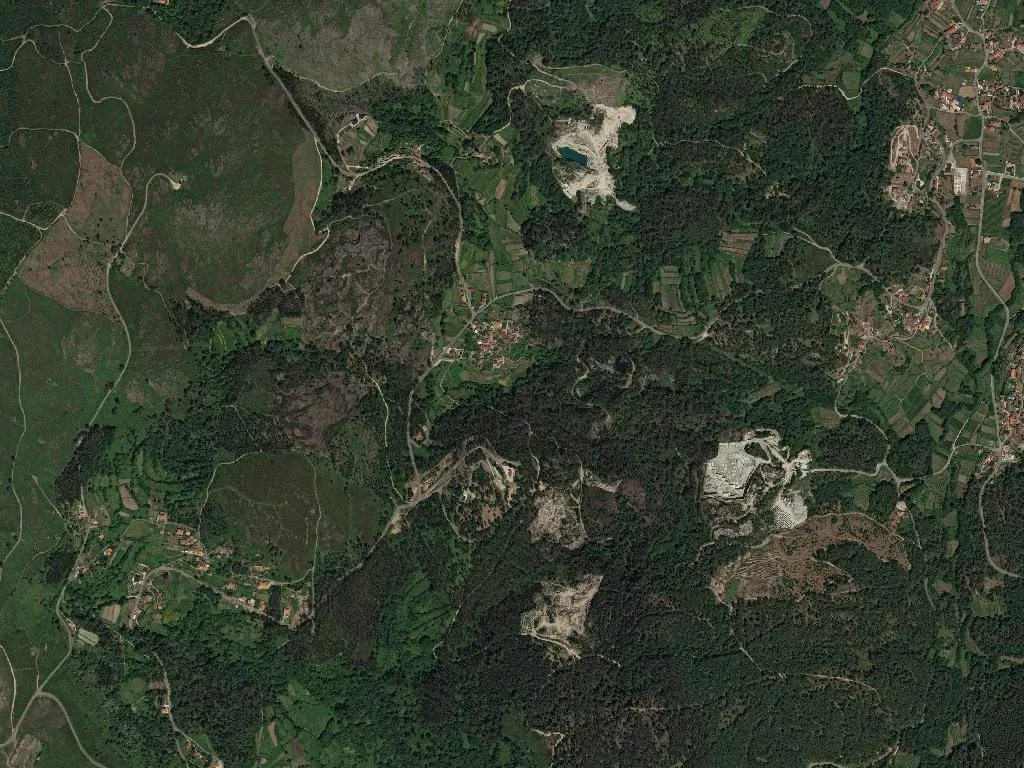
Full article about Gondomil e Sanfins: Vinho Verde vines & Camino silence
Walk Gondomil e Sanfins above the Minho to sip garage-made Vinho Verde, trace moss-walled Camino routes and warm your palms against 17th-century granite.
Hide article Read full article
The crunch of boots on ochre soil dissolves among the terraces of Loureiro and Alvarelhão vines that stitch the hillside at 182 m above the Minho. Morning light slips through the trellis, dappling the ground with shifting coins of gold; by late afternoon the granite cottages have soaked up enough July heat to release it slowly, wrapping the lanes in a warm, resinous breath that smells of bruised geraniums and wood-smoke.
Where three pilgrim tracks meet
Few settlements of 418 souls can claim to be crossed by three separate Camino routes. The Central Portuguese, Coastal and Interior Ways all converge or graze this 17 km² parish, turning Gondomil e Sanfins into a silent junction for scallop-shell wayfarers. Yellow arrows painted on cottage walls point the direction, but it is the vernacular lanes themselves—hemmed by moss-padded stone walls and the occasional stray vine tendril—that narrate the millennium-old passage. There are no albergues or souvenir stalls, only the metronomic creak of rucksacks and the hush of someone else’s prayer.
Granite, lime and candle-wax
The 17th-century parish churches of Gondomil and Sanfins rise like whitewashed lighthouses above a patchwork of minuscule plots. Neither is listed in national heritage registers, yet their stone belfries and cobbled forecourts still act as moral and geographic centre-points. Dotting the countryside, granite calvaries lean slightly after centuries of processions; orange lichen clings to the carved 1714 dates and to the Christ silhouettes, sealing the stone with a mute, saffron-coloured memory of vows fulfilled.
Vinho Verde poured from a demijohn
These south-facing slopes belong to the Vinho Verde demarcation, but forget any notion of supermarket fizz. On holdings rarely larger than two hectares, families train their grapes on low pergolas so the fruit can kiss the Atlantic breeze. The resulting wine—bottled, if at all, under a neighbour’s garage label—bursts with lime-peel acidity and a gentle petillance that begs a lunch of rojões (paprika-spiked pork) or a mahogany-dark sarrabulho rice. Knock on the right granite door and a litre may appear in a thick glass garrafão, price scrawled on masking tape.
The green hush after Senhora do Faro
Every August the parish doubles in size when devotees climb the wooded track to the hilltop chapel for the Festa da Senhora do Faro. A brass band leads the statue round the lanes, the drummer’s stick wrapped in ribbon the same indigo as the Virgin’s cloak. For one night the air is thick with grilled sardine smoke and the squeak of carnival rides; by dawn the valley has retracted to its default soundtrack—wind combing the vines, a single bell striking the hour from Sanfins tower, and your own footfalls echoing back from the granite.