Full article about São Julião’s January Smoke: Leitão, Cloves & Pilgrim Tales
Wood-fired suckling pig perfumes the Minho border village where three Caminos meet.
Hide article Read full article
Smoke rises like it has all the time in the world
The wood-fired oven exhales slowly, curling pork fat and garlic into the afternoon air. This is Leitão no Caixote, the suckling pig the village of São Julião saves for January’s feast of its patron saint. Crackling snaps; meat slips off the bone; the scent of bruised cloves hangs like a promise. No thermometers, no shortcuts—just a wooden lid, vine embers and the patience of people who know that lunch is ready when the smoke says it is. Even the Camino walkers, rucksacks propped against the 13th-century cross, miss the onward yellow arrow while they queue for “one more nugget”. Some never leave; they come back years later without the pack, just the appetite.
Borderland and belief in the Minho lowlands
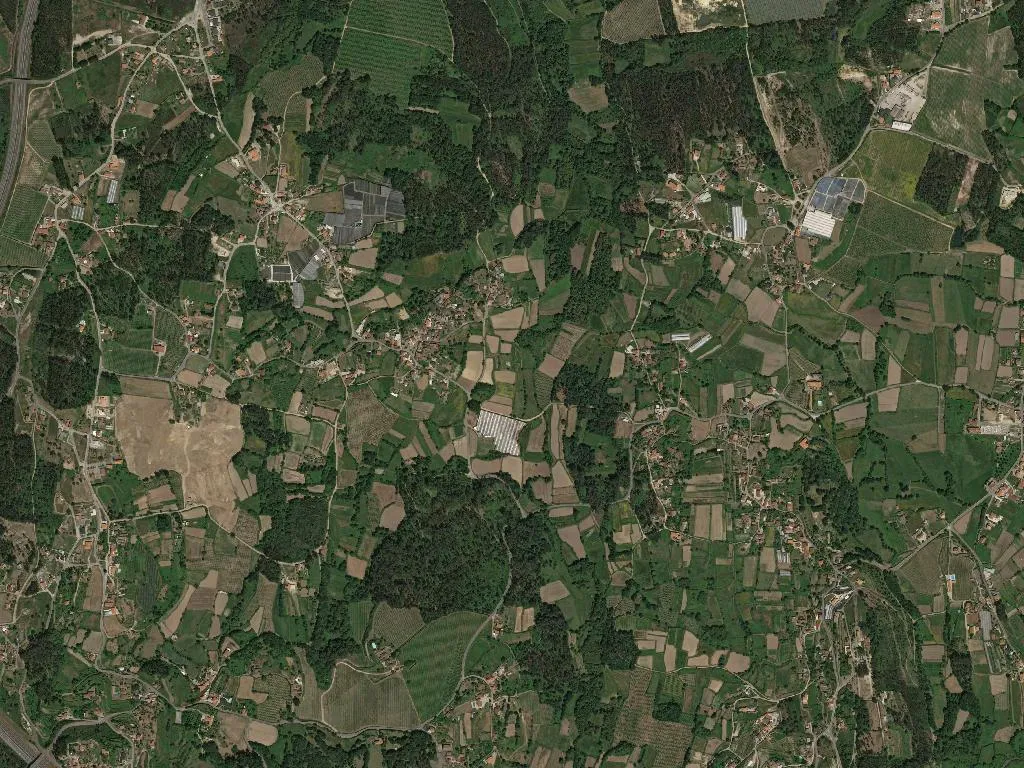
From the ridge road you look down into a slim valley pinned between the river Minho and the first granite ribs of the Serra de Arga. Slate-roofed houses seem glued to the terraces, as if a winter gale might send them sliding into the stream. The civil parishes of São Julião and Silva were merged in 2013—Lisbon’s pen-pushers saving paper—but no one here noticed. Six hundred souls, a herd of russet cows and a mongrel called São Brás keep the census much the same. The church bell still strikes the agricultural hours; Sunday mass merely formalises the conversations that began over morning coffee.
Three Santiago routes meet at one crossroads
The village square is a pilgrim confluence. The Central Portuguese, the Coastal and the lesser-known Nascente from Trás-os-Montes all converge here like walkers comparing blisters outside a bar. They lower rucksacks onto the stone cross, refill bottles at the spring and ask, “So this really is São Julião?” I point uphill to the fortress town of Valença, its star-shaped walls glinting in the distance, and they leave lighter, carrying a story instead of a stone. Most keep walking; a few return every winter, drawn by the scent of burning oak and pigskin.
Mountain flavours in one weekend
Festival Sabores Serranos turns the parish into an open-air kitchen. No printed menus—just a queue, a trestle bench and a plastic plate that sags under crackling, corn bread and a ladle of D. Rosa’s sarrabulho—pork blood rice sharpened with cumin and lemon. The band strikes up a vira; boots tap the dust in time; glasses of effervescent Vinho Verde are refilled from jeroboam bottles. Promises are made—“next year I’m bringing the whole family”—and, unusually, they are kept.
Above the mills and the sun-clock
Follow the lane past the last house and you reach Casa da Laranjeira, a minor-baron’s townhouse now opened by volunteers on Saturday afternoons. Inside: oak chests, a 19th-century chaise-longue and the lingering smell of last winter’s fire. Cross the stone slab bridge and the water-mills lie drowned in ivy; only one wheel still creaks when the stream swells. On a half-collapsed wall a slate sundial keeps Iberian time—an hour behind Greenwich, half an hour behind desire. No heritage plaque, just a valley of striped maize plots and an old oak that doubles as a letterbox for love notes left by local teenagers.
When the oven cools, the aroma lingers on coats. Laughter drifts across the square, fainter now—the school bus leaves at seven, cows wait to be milked, the council worker sweeps the roadside before the sun gets fierce. But the smoke will rise again next Sunday, next feast, next year. And the 600 of us will be here, same bench, same glass, telling the same story—one that, after today, belongs to you as well.