Full article about Verdoejo: Where Three Caminos Whisper Over Granite
Yellow arrows, river murmur and maize-scent lace this Valença parish crossed by pilgrim boots.
Hide article Read full article
Yellow on Granite
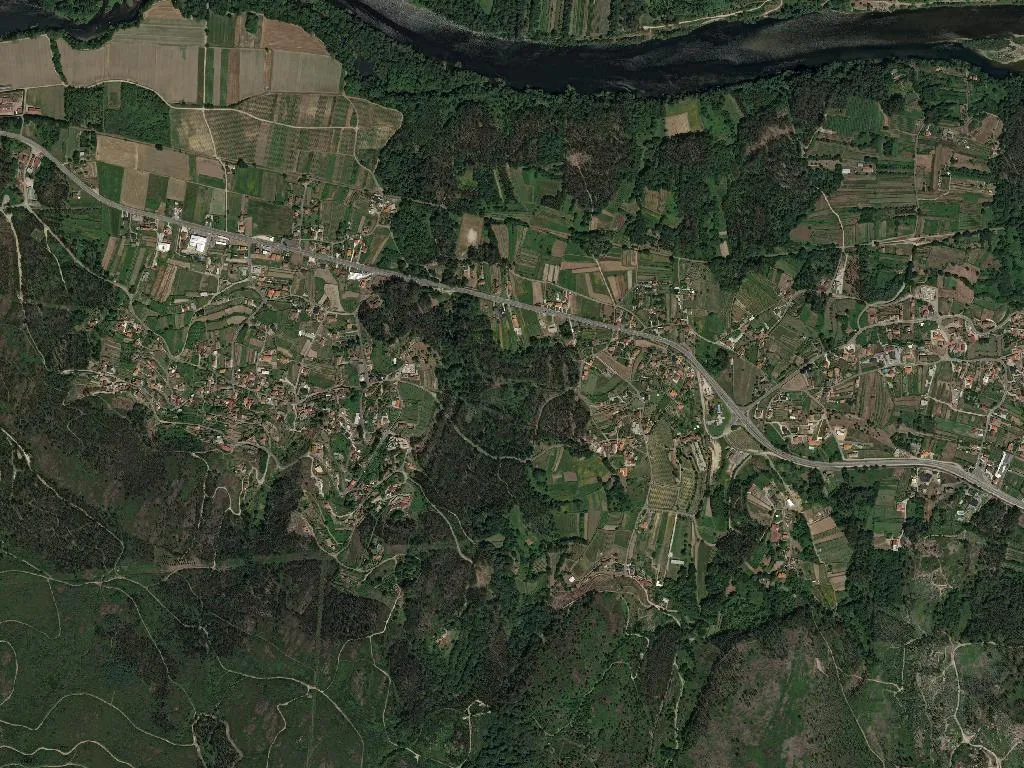
The arrows begin on the stone walls, migrate to lamp-posts, then bleed directly onto the tarmac. Verdoejo never bothered with a road sign; why would it when three separate Camino routes already scribble their intentions across the parish? Staff-tips drum like walking metronomes, chickens keep unruly time, and somewhere below the lane the Coura river talks to itself in a dialect of water and slate. The “green” in the hamlet’s name is not literary flourish: it is the scent of turned soil after March rain, the mucilage on holm-oak leaves, maize tassels brushing against lichens that grow British-OS-map contour lines over granite.
Crossroads
Few places of 573 souls can claim three St-James itineraries. The Central Portuguese slices in from the south-east, but most footprints belong to the Coastal: sun-scorched walkers fresh from Baiona’s Atlantic boardwalk, sand still lodged in boot eyelets. The Nascente turns up rarely—only the stubborn or the cartographically curious persevere along its 260 km from Braga. None of this is new; the paths pre-date the scallop shell’s marketing department, back when Barcelos pottery and dried cod travelled up-river by skiff rather than souvenir fridge magnet.
August explodes around the Senhora do Faro chapel. Double-parked Citroëns clog the forecourt, grilled sardine smoke wrestles with incense, and candle stubs stand in Super-Bock bottles while pilgrims queue at Rosa’s pantry-café to swap blister horror stories over 60-cent espresso. The other eleven months the place reverts to its factory settings: door unlocked, fountain gurgling, swallows dive-bombing the bell tower.
Water You Cannot See
The Coura is audible, rarely visible. Gravity feeds an invisible lattice of irrigation channels so that terraced plots stay emerald even when the Minho province shimmers at 35 °C. Locals shrug—“a água anda debaixo,” water walks underneath—an engineering secret older than Portugal itself.
In back gardens, vines climb persimmon trees like botanical gossip. The resulting wine has no DOC credentials, no trophy shelf: just a granite-mineral white that arrives in thimble-sized glasses grandmother keeps on the top shelf. Sip it with caldo verde and cornbread and you taste Atlantic drizzle, Iberian sun and a calendar nobody rushes.
What Lingers
After the pilgrim season the village soundtrack reverts to domestic percussion: the creak of Albertina’s iron bed at dawn, Joaquim’s long-case clock that still gains three minutes a week, a dog announcing the sunset to an empty lane. When the bus to Valença wheezes away at 14:30, the only other engine is the church bell counting the hour.
Dusk settles behind Monte do Faro and lights click on in the same order they have since mains electricity arrived in 1963. No terrace bars, no Spotify playlists—just wood-smoke drifting over stone walls and the flicker of quiz shows from kitchen TVs. Tomorrow the arrows will coax new ankles past Rosa’s café, but Verdoejo itself will remain planted between collapsing terraces and the annual rhythm of maize, indifferent to the traffic it quietly feeds.