Full article about Campos e Vila Meã: Where Minho’s Tide Meets Factory Smoke
Walk Campos e Vila Meã for cracked-bell Mass, lagoon swims and a Cistercian candle-lit feast in Portugal’s northernmost parish.
Hide article Read full article
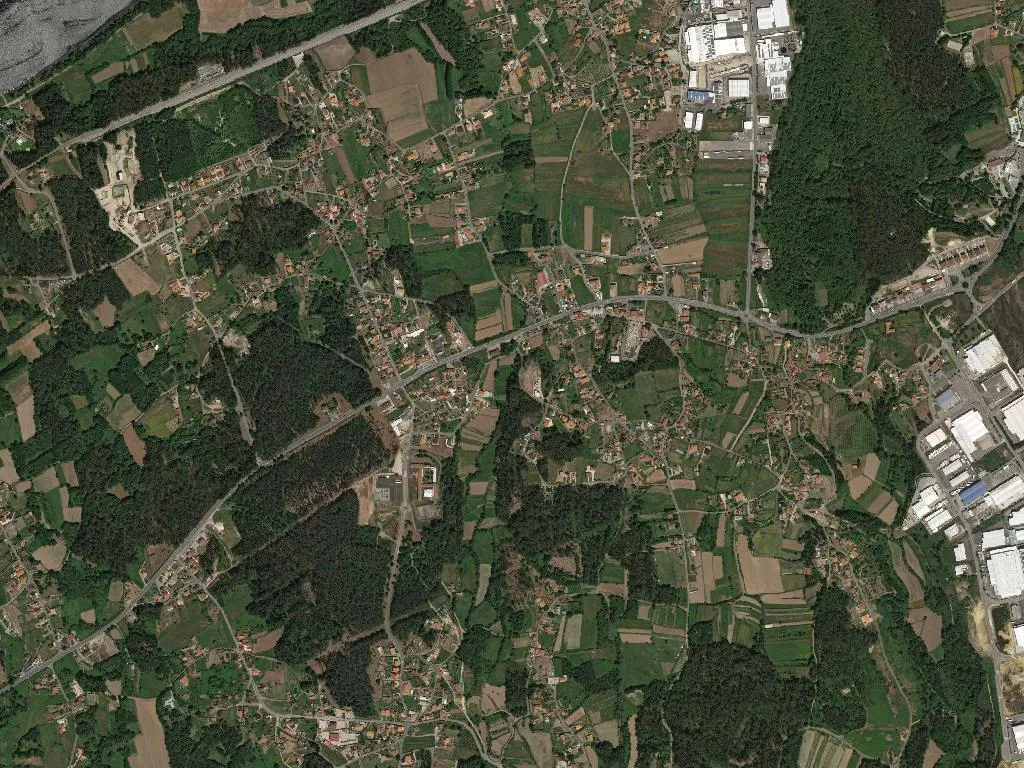
The scent of burnt oak drifts across the Minho’s flood-plain, braiding with the river’s cool breath. On Portugal’s northern lip, the water widens into a natural lagoon at Vila Meã; children cannon-ball from a granite boulder, sending ripples across the reflection of Galician hills. What you think is a distant light aircraft is only a stork gliding over the grassed-over runway at Cerval’s microlight strip – the airfield officially exists, yet the birds outnumber the pilots. This is the civil parish of Campos e Vila Meã, 875 hectares where the river still writes the rules and a shoe-last factory keeps medieval lanes awake.
Two hamlets, one story
Campos was chartered in 1255; Vila Meã followed in 1270. They spent seven centuries as neighbours before the 2013 local-government shake-up fused them. The Latin campus survives in the open cornfields that roll away from the river; Vila Meã’s name records its old role as a “middle village” between the Minho crossing and the Serra de Arga. Memory of earlier monastic power surfaces every 26 December at the candle-lit chapel of Santa Luzia, built over the vanished Cistercian house of Valboa. Women ferry trays of iced puff-pastéis into the nave, the oven behind the bell tower doing temporary duty while the congregation swaps gossip and matches.
Granite, bell-metal, calvary
The parish church of São João Baptista rises from Campos like a stone keep: walls a metre thick, roof the colour of wet slate, a bell dated 1892 that cracked the same winter and now gives a bronchitic cough across the maize plots. In Vila Meã, São Paio answers with its whitewashed rectangle and a Manueline cross whose granite lace has been finger-smooth since 1534. Both buildings unlock for Mass on Saturdays and for funerals; otherwise they stand open so grandparents can shelter from Atlantic showers and check football scores on their phones. Between services, the shoe-last plant at the edge of Campos disgorges 400 workers for the midday break – cars line the verges because the car park was laid out when Portugal still made shoes by hand.
Lamprey, shad and the taste of the Minho
The river’s spring arrival of lamprey is treated like a limited-edition drop. José Manuel in the Taberna do Minho starts cooking on Friday dawn: the eel-like fish is bled into the pot, its iron-rich liquor thickening rice to the colour of Burgundy. Book or go without; he serves until the enamelled pot scrapes bottom. Shad, all dagger bones and silvery flesh, appears as debulho – butterflied, salted for 24 hours, grilled over vine prunings so the skin blisters into smoky shards. Winter demands rojões: cubes of belly pork crackled in lard with marbled fat, then stained with sweet paprika. Mrs Alfredo next to the Galp pump still makes blood-and-rice morcela with bay from her yard; you buy it still warm, wrapped in a sheet of Jornal de Notícias. Everything tilts into a tumbler of spritzy Loureiro that tastes of lime-leaf and river stone.
Saints, cakes and LED bulbs
Festivals divide the calendar into edible checkpoints. On 20 January São Sebastião brings sponge cakes flavoured with orange zest; one contains a single butter-bean – discover it and you buy the round. Midsummer is São João, 23-24 June: boys tour houses collecting eggs, flour and aguardente to make a communal punch that will fuel all-night bonfires. Vila Meã’s turn arrives 5-6 August with São Paio: procession at dusk, accordion on the bandstand (new LED fairy-lights, same 1973 repertory), long tables under plane trees where granddaughters pour vinho verde from height to aerate it. Nobody checks a watch; the evening is measured in refilled glasses.
Where the river is the horizon
Upstream from the lagoon the parish council has laid out wooden picnic pontoons at Moutorros; grandfathers claim the channel was all reed-bed before the Spanish dams. Children play barefoot five-a-side on the forecourt while sardines char on disposable grills. Three signed footpaths climb through gorse and eucalyptus to give hawk-eye views across the Minho to Galicia’s hill farms; the Portuguese Coastal Camino cuts through on its way to Santiago, backpackers stopping for a river-cooled beer and a photo of the storks on the control tower. As the sun drops behind the ridge, São Paio’s bell, a distant tractor and the water’s glide merge into a single, repeating chord – the sound that follows you south on the road home.