Full article about Covas: Dawn bells over maize terraces, granite and memory
Copper-Age shards, 1742 church bells, eucalyptus smoke—Covas hides above the A28.
Hide article Read full article
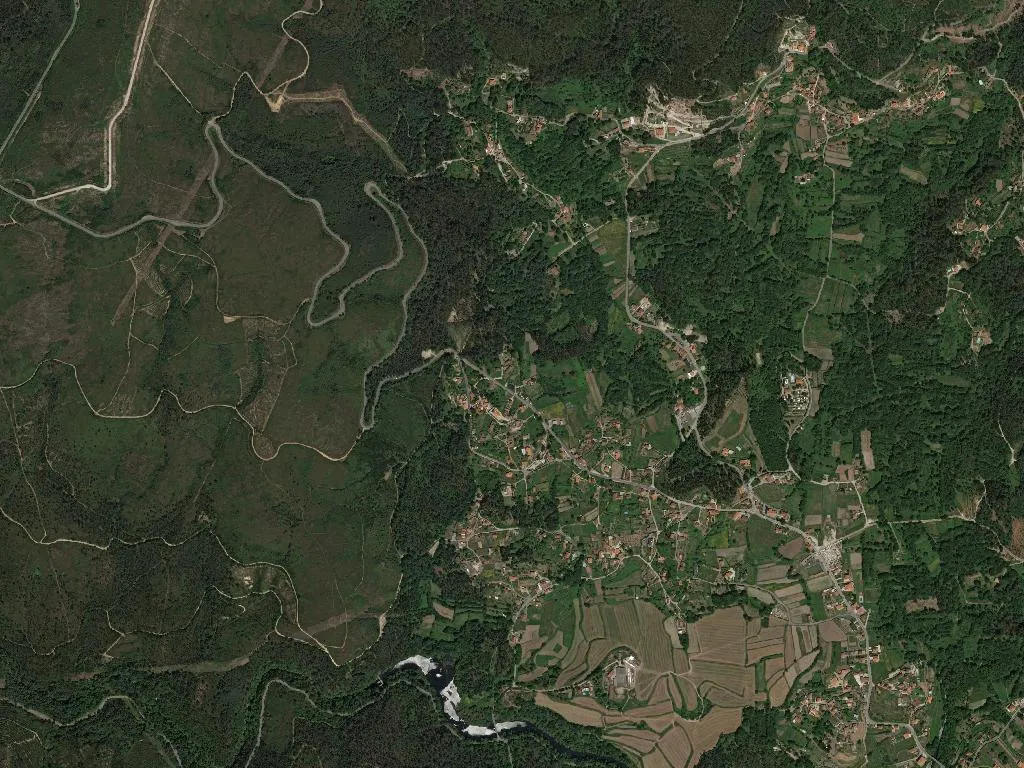
The bell of the parish church clocks the valley with three clipped strokes. Sound ricochets off granite cottages, then dissolves among maize terraces that step down towards a stream still hidden in dawn haze. At 161 m above sea level, Covas wakes to metal on metal, not to smart-phones; to the resinous tang of newly-lit eucalyptus logs, not to pod-machine coffee. Mist clings to the vines and to the dark-stone espigueiros—narrow granaries on stilts that stand like sentinel chessmen carved from shale and quartz.
Where the shale remembers
Human fingerprints have been found here since the Copper Age: pottery shards at Quinta de Água Branca betray a 4,000-year-old hunger for this sun-facing slope. Documented life begins in the thirteenth-century charters that list Covas as a waypoint on the coastal pilgrim road to Santiago, a detour that skirted Spanish tolls and river pirates. The name comes from the Latin cova—a fold in the ground—and the settlement still hides inside successive collars of granite ridge, invisible from the A28 motorway only twenty minutes away. Until the 1950s a monthly cattle fair spilled Galician and Minhotan traders into the single street; negotiations were conducted in mirrored dialects while oak branches shaded the butter-coloured cows.
The mother church, completed in 1742, replaces a medieval chapel torched during the 1640 uprising against Spain. Its golden altarpieces flare against gun-metal walls; morning light filters through nineteenth-century azulejo panels, printing cobalt diamonds onto flagstones bowed by three centuries of knees. Country chapels—São João to the west, Santa Luzia to the east—demarcate parish boundaries; inside, night-lights flicker for safe childbirth or a grandson’s driving test. Baroque granite crosses, quarried on nearby Serra de Arga, punctuate crossroads where farmers once paused to read the wind before market.
Fireworks, fiddles and midsummer smoke
On 16 August the village doubles in size. The feast of São Roque begins with a procession that halts traffic—though there is almost none—then detonates into a night-long arraial where sardines blacken over open braziers and the parish amplifier competes with owls. A month earlier, São João’s eve drags the party into the churchyard itself; children leap the dying bonfire while their grandparents trade summer gossip over tumblers of vinho verde poured from white porcelain bowls. Mid-winter, 20 January, belongs to São Sebastião: neighbouring parishes converge for a mass parade followed by rojões—cubed pork flash-fried in lard and wine—and bowls of papas de sarrabulho, a mahogany-coloured mash of blood, bread and cumin that tastes better than it photographs.
Clay pots and wood-smoke flavour
Covas cooks like the interior Minho always has: kid goat seasoned only with rock salt and rosemary, slow-roasted in a wood-fired bread oven until the skin crackles like thin ice. Rojões arrive sputtering in cast iron, paired with those same blood-enriched papas thick enough to hold a spoon upright. Caldo verde—potato and kale—gets its orange freckle from house-made chouriço whose paprika-spiked fat blooms on the surface. Cornbread, still warm from the forno, tears into rough wedges ready for cured goat’s cheese streaked with ash. Pudding reverts to convent maths: egg yolks, sugar and desperation produce papos de anjo—“angel’s bellies”—bathed in fragrant syrup. The mandatory pour is vinho verde from the Monção-Melgaço sub-zone: poured in small stemmed glasses, faintly petillant, sharp enough to slice the pork fat and startle the palate for the next bite.
Walking between shale and green
Covas sits on the coastal branch of the Camino de Santiago, but you won’t find souvenir stalls or laminated menus in English. The way-marked trail enters on mule-width slate slabs, skirts cornfields that hiss in the breeze, passes communal granaries where maize cobs hang like drying chandeliers, then slips between vineyards whose lowest wires are designed to keep wild boar at shoulder height. Locals insist the boar have learnt to limbo. From the castle mount—really a rocky spur above the last allotments—the view stretches south across the River Minho to Spain’s Monte Aloia, its peaks scalloped against a sky the colour of wet denim. Buzzards wheel; somewhere a dog rehearses its echo. By late afternoon the air smells of fresh-cut eucalyptus and the stone walls glow rose-gold, as if the granite itself remembers the embers of São João.