Full article about Mentrestido: Stone & Parsley Above the Minho
A granite hamlet where pilgrims sip vinho verde from Coke bottles and 87 elders still toll the bell.
Hide article Read full article
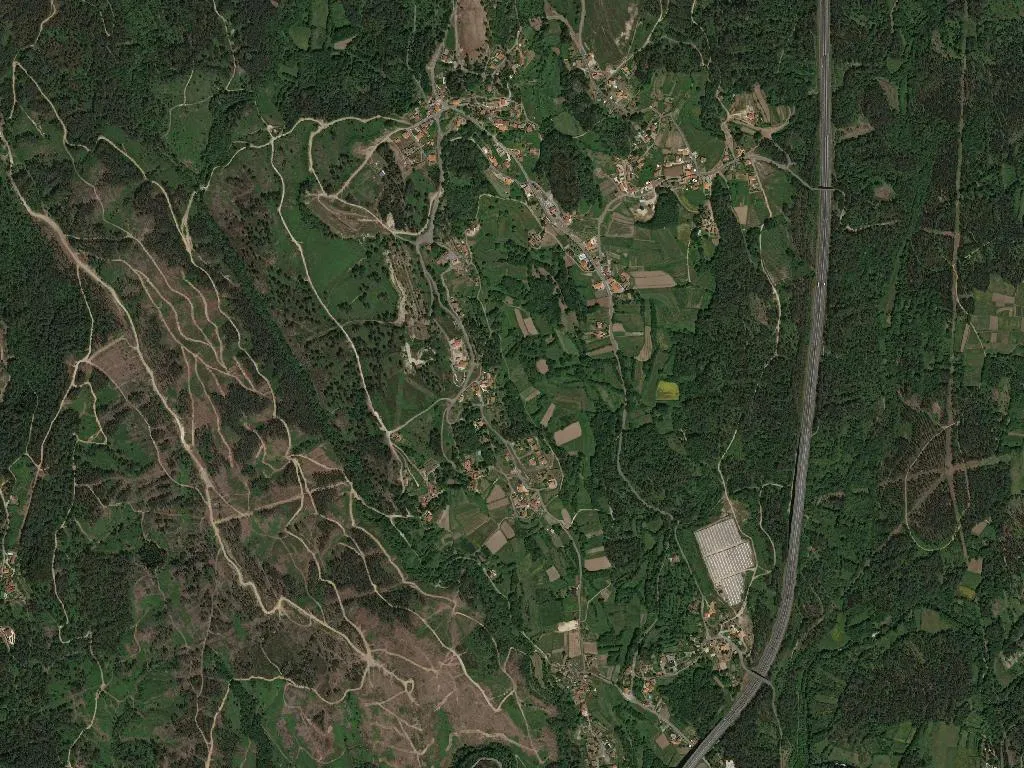
The granite walls radiate heat like the cast-iron lid of my grandmother’s Rayburn – slowly, then all day long. Mentrestido sits at 177 m above the Minho valley, fifteen minutes inland from Vila Nova de Cerveira on a serpentine lane with nowhere to pull over. Officially 273 souls; in practice the 87 ancients who still shuffle to the 10 a.m. mass, 26 children who surface only at weekends, and everyone else lost somewhere in the arithmetic.
Path and stone
The Coastal Camino passes through as casually as a commuter asking for an espresso to go. Pilgrims climb the granite setts, peer at their phones, ask how much farther. Two buildings wear the discreet plaque of Portugal’s heritage police – the parish church of São João Baptista and the chapel of São Sebastião – giving walkers licence to drop packs and inhale. The stone changes colour like a football strip: winter’s wet charcoal, August’s almost-white. Look closely and you can still read the mason’s chisel mark, left before he sailed to Brazil in 1953.
Green wine and high days
The vineyards are the north-facing strips your grandfather would call “bottom land” – too cool for swagger, so the vinho verde emerges lighter than the fuller cousin from the Lima valley. No architect-designed quintas here; instead Sr Armindo fills a two-litre Coke bottle for three euros and throws in a fistful of parsley from his garden. Beds are scarce: Laura’s house, tiled in 1920s Valadares azulejos inherited from her grandmother, or Zé Manel’s, where breakfast is ham-stuffed loaf and you’re invited to take the leftover coffee in your enamel mug.
The calendar allows three outbreaks of noise: São Roque in mid-August, the midsummer fogueira of São João, and January’s São Sebastião – strictly for locals because the cold could split stone and outsiders have the sense to stay away. On the good nights the population triples. The bandstand has stood since 1987; only the speakers have been upgraded, the original timber having rotted through. Sardines come from Caminha’s morning auction, but the grill master is Silva, who welded his barbecue from a discarded washing-machine drum.
What remains
When the last hatchback coughs away, the air is left with wood-smoke and Mr Albano’s dog barking at a waning moon. The fountain stones stay green, though it’s honest moss, not the plastic kind they sell in shopping-centre garden centres. Come back in twenty years and Armindo will still be outside the café – now reduced to two plastic chairs and a camping table – declaring the world finished. He’ll be right, of course, but Mentrestido will still be here, stubborn as the moss, reminding whoever passes that there was time before we started counting it.