Full article about Favaios: Bread, Moscatel & Slate in Alto Douro
Rise at dawn to wood-oven crust, baroque gold and fortified nectar in Alijó’s wine village
Hide article Read full article
Favaios: where the slate holds the sweetness of moscatel
The first thing you notice is the scent of fresh bread. Not a vague bakery aroma — it is dense, with the crackle of a crust somewhere inside a wood-fired oven, mingling with the dry morning air at 524 metres above sea level. In Favaios, the loaf has a proper name: pão alentejado de Favaios, a slow-fermented sphere whose burnished shell collapses under thumb pressure and whose crumb needs nothing more than a thread of olive oil and a rub of raw garlic. You eat it at the counter, on a doorstep, in the co-op tasting room while the first glass of moscatel of the day is poured. This is how the village wakes — between flour and must.
A name that began with beans
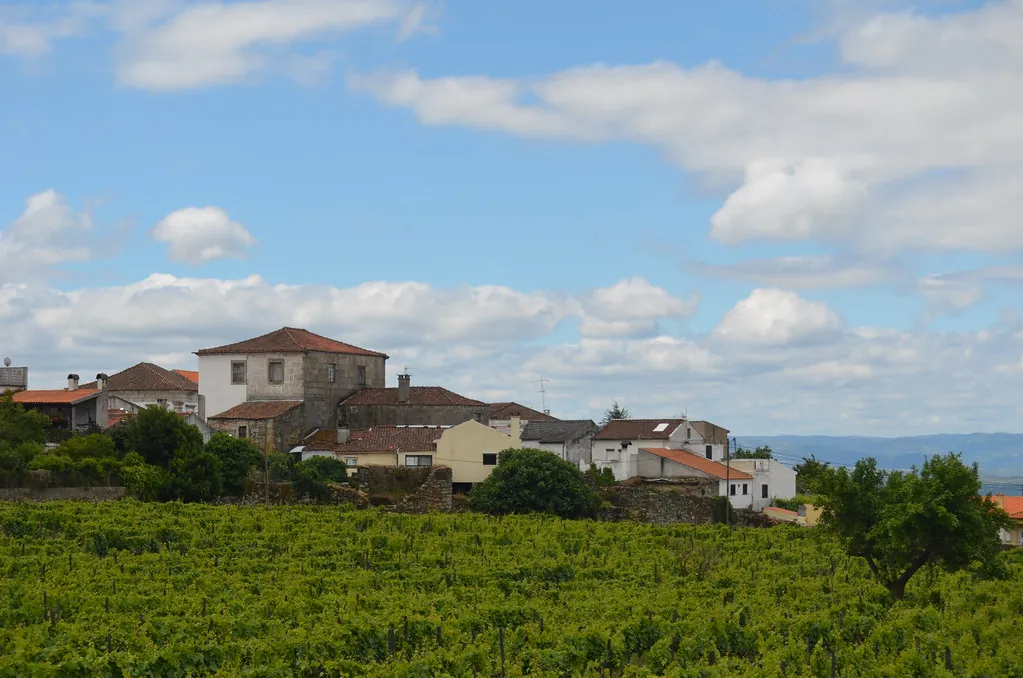
Medieval charters record the place as “Fafanes”, a echo that softened over centuries into the current toponym, from the Latin faba — bean — a reminder of an agrarian life that predates the vine by centuries. The parish broke away from neighbouring Santa Eugénia in 1927, yet its bond with the Douro is older: until the nineteenth century a rope ferry linked the two banks, moving barrels of brandy and wine downstream to Porto. Today 937 people (2021 census) live inside the UNESCO-listed Alto Douro wine region and within the official network of Wine Villages — a label any visitor confirms at first glance: here, everything orbits the vineyard.
Gilded altarpieces and slate walls
The 18th-century Igreja Matriz de São Bento dominates the centre with a single-nave sobriety. Inside, light slips through a filter of dust and glances off a polychrome baroque altarpiece, its gold leaf dulled by time, while 1740s azulejo panels clad the walls with scenes the eye unpicks slowly in the half-dark. A few strides away, Largo do Cruzeiro stages daily life: a cast-iron bandstand, a granite wayside cross, stone benches where conversations stretch into dusk. Around the square, dark-slate press-houses and granaries compose a functional architecture that needs no ornament — the rough stone texture, moss in the joints, sun-split wooden gates recount generations of vineyard labour.
On the hilltop, the tiny 1700s chapel of Nossa Senhora dos Aflitos becomes the focus of a May pilgrimage; the procession coils through narrow lanes and the square fills with pop-up grills and folk-dance groups. September brings the Festa de Nossa Senhora da Piedade — once a livestock fair, now a thanksgiving feast that closes the festive calendar just before the harvest.
The press where feet still tread
Favaios keeps a communal stone-and-oak lagar that was in weekly use until the 1950s, when workers stripped to the knee and trod grapes by foot, the juice running into a granite trough. It is still visitable; during harvest weekends you can kick off your shoes, step into the cold pulp and feel the rhythmic shudder of the beam press — a tactile sequence no screen can replace. Fifty metres away, the Moscatel Interpretation Centre unpacks the story with scale models of presses and pruning knives: how this village became one of the very few places in Portugal to make only white muscat, a floral, balanced fortified wine grown on schist terraces that drop toward the Pinhão river.
The local growers’ co-op, founded in 1952 by Maria da Conceição Gomes to corral smallholders, is now the country’s largest muscatel producer. Guided visits end in a vaulted tasting room where new and aged moscatels are poured beside wedges of that obstinately named bread. In the 1980s head winemaker Manuel Monteiro introduced temperature-controlled stainless steel, propelling Favaios moscatel onto international wine lists.
Terraced vines down to the Pinhão
Set out on the signposted seven-kilometre footpath “Entre Vinhas e Xistos” and the body resets its rhythm. The trail corkscrews through twisted olive groves, cherry orchards that explode white in April, and walled vineyard terraces descending to the Pinhão’s gallery forest where poplars and willows veil the water. At dawn herons and blackbirds work the banks, while beyond them rise the quartzite summits of the Alvão massif, topping 1,000 m and gifting the night-time freshness that concentrates sugar in the berries.
The dry Mediterranean-continental climate — scorching summers, razor winters — shapes the table as much as the vine. Winter calls for white-bean soup with Galician kale, pork sausage and olive oil, a dish that warms like a wood-stove. Hunter’s rabbit, simmered in local red wine with bay and nutmeg, arrives with a slab of maize-and-rye broa straight from the communal oven. After the harvest come pumpkin fritters; at weddings an almond-and-egg-yolk bridal cake. Chorizo, salpicão and rice-blood-black pudding smoke gently on slate chimneys; the scent clings to alleys on cold November afternoons when the São Martinho bonfire pairs roast chestnuts with água-pé, the diluted grape must left after fermentation.
Winter masks, moscatel in the glass
An ancient revelry is re-emerging: the Caretos. In mid-winter, masked lads in fringed wool suits and tin masks rattle bells, burst into houses, recite the “luck of the year” and receive offerings — a ritual that blends sacred and profane with the same ease the village blends bread and wine. Portuguese cinema noticed: scenes from the 2001 film O Pão e o Vinho were shot here among terraces and slate walls that required no set dressing.
On Epiphany night, Janeiras singers drift through the streets, their voices climbing slate lanes until they dissolve into the plateau silence. Stay over — in one of the stone cottages converted into guest rooms — and you will wake to the same sequence: crust crackling in the bakery, the chink of a moscatel glass set down on granite, and that dense perfume, half warm flour, half ripe grape, that exists at no other altitude.