Full article about Pegarinhos: Douro terraces where bells echo above the clouds
Visit Pegarinhos in Alijó, Vila Real—sip unlabelled red in stone lagars, hear São Pedro’s bell roll across empty terraces.
Hide article Read full article
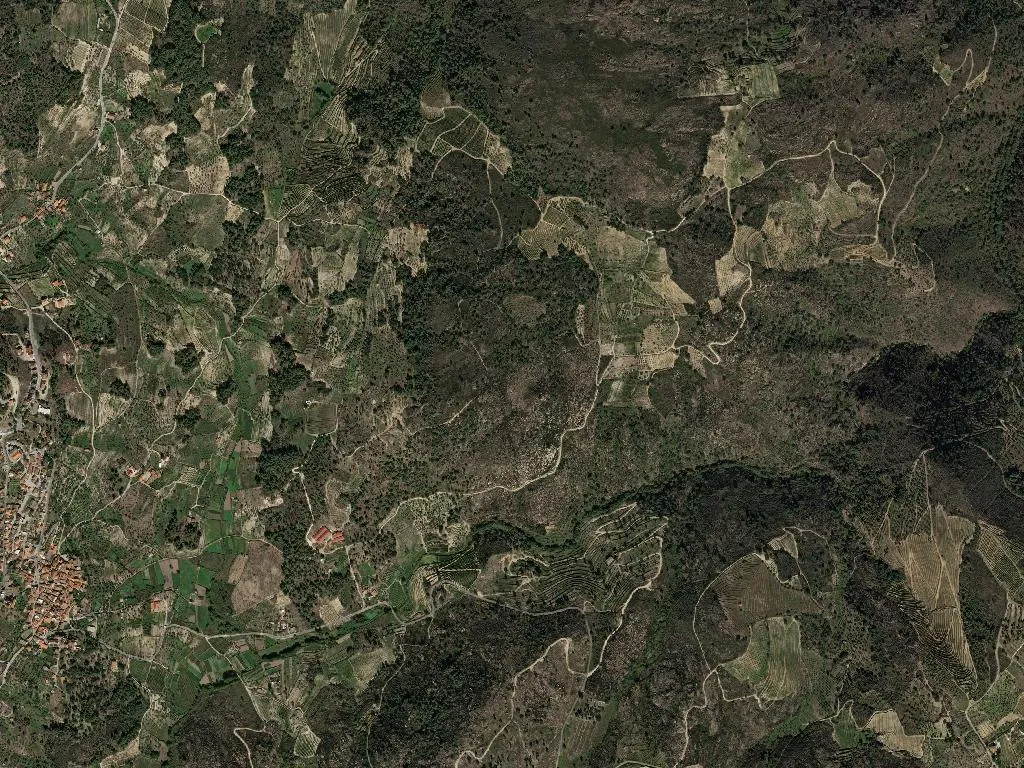
The bell of São Pedro strikes half past ten and its iron note rolls downhill, past two freshly re-pointed cottages and three doors bolted since the last Eurovision was won by a turbaned singer. At 544 m above the Douro, Pegarinhos spreads across a staircase of schist terraces so steep they feel designed by someone late for dinner. Fewer than 400 souls still live here, outlasting poor phone signal more successfully than old age itself. The air smells of turned earth; in October it also smells of must, bubbling in stone lagars where Zé do Carmo still thumps the surface with an open palm to judge the ferment by ear.
Stone steps and scuffed knees
Local etymology claims the name comes from “pegar” – to grab – because every footstep must clutch the narrow socalcos; miss your footing and you slide three metres into rosemary and broom. The parish was officially created in 1836, yet its inclusion in the Alto Douro Vinhateiro needed no paperwork: the terraces themselves are the deed. Population density hovers around 20 per square kilometre, which means neighbours recognise one another by car number plates; they know those plates only pass twice a day – dawn shift down to the valley, dusk shift back up.
Faith carved out of schist
The Capela do Senhor Jesus da Capelinha in Vilar de Maçada is no larger than a London dining room, yet every August it swells beyond Lamego’s busiest café on market day. Pilgrims walk uphill from the hamlet below; anyone who drives is assumed lame or lazy. Further along the ridge, Nossa Senhora dos Aflitos and Nossa Senhora da Piedade keep their medieval vigil. The parish church door still groans on the same hinge it has occupied for half a century, and the priest’s car arrives with suspension so tired it appears to split over every speed hump.
Labels refused, tradition kept
There is neither DOP nor IGP stamped on the wine; for locals that’s tourist small-talk. The red is poured in a water glass and refilled before you’ve drained the first. Posta mirandesa – the thick sirloin from Mirandesa cattle – is sliced by Fernando at the counter with a blade that could double as an oar, then weighed on a two-pan balance: “just to check quality, not to shave the price”. Chestnuts are so plentiful that in October the husks are stacked into three-metre pyres, and autumn soup is thick enough to hold a crust of bread upright. Wild boar occasionally arrives courtesy of the neighbour who clipped one on the N212; nobody asks for paperwork when a Christmas cozido steams on the table.
Tracks between shale and sky
The council lanes demand memorisation: a hair-pin, an even tighter hair-pin, a hump that sends the axle dancing, then a dog asleep on the crown because it knows only two cars come this way. There are no way-marked trails; follow the handsomest dry-stone wall and you’ll arrive somewhere. Red-legged partridge clatter up at the crunch of a boot; Jorge, the last man who still hunts without GPS, occasionally bags a rabbit. In October riparian woods compete with the vines to turn gold first, and migrant finches rest in the almond branches like travellers who remembered Portugal serves a decent coffee on the road to Spain.
Dusk settles slowly; the same sun that browned Antonio’s shoulders during the September harvest now gilds the leaf edges. Outside the café, conversation sticks to the grape price and whose adega door still stands open. Wood-smoke begins to climb the chimneys; someone asks whether Zé has fetched the beans from Pinhão. In Pegarinhos the day ends when the last set of headlights switches off – and that, more often than not, happens before the ten o’clock news has begun.