Full article about Sanfins do Douro
Wake where tractors cough at dawn, sleep in a stone mill lulled by water
Hide article Read full article
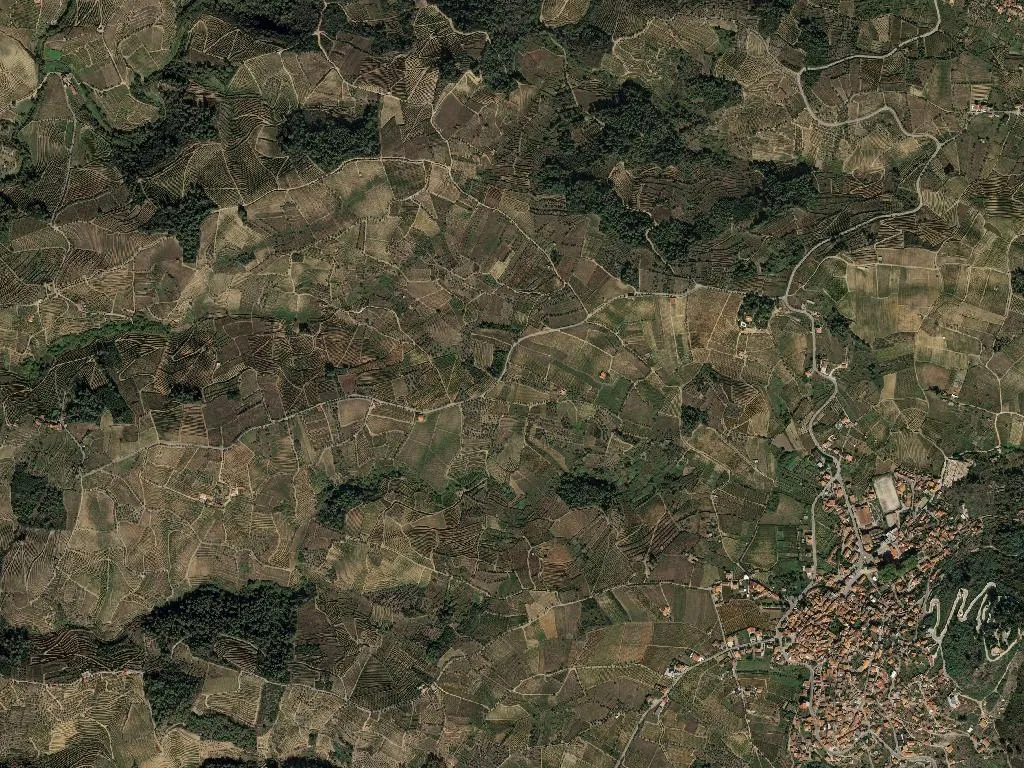
By four o’clock the granite is warm enough to burn your palm and the terraced vines look like contour lines inked across the hills. Sanfins do Douro, 543 m above sea-level in the municipality of Alijó, is not a scenic pause on a river cruise: it is a parish of 1 256 souls who still hoe, prune and pick by hand. UNESCO stamped the Alto Douro Wine Region in 2001, yet the real certification happens every morning when the church bell of São João Baptista rings at seven and the tractors cough into life.
Stone, lime and terrace
Dark-slate walls shoulder the earth in perfect steps. Between them the vines grow low and twisted, trained to duck the Atlantic winds that funnel up the valley. Four stone houses have been stitched into guest accommodation: Casa do Sotão on Rua da Igreja keeps its 80-cm-thick walls and dispenses with air-conditioning; Lagar da Quinta do Correio still smells of the olive press; Casa da Fonte in Vilar de Maçada opens straight onto a communal washing tank; Moinho do Real lets you fall asleep to the sound of water spilling from the mill race. Prices run from €70 to €110 a night, breakfast trays delivered in cane baskets.
There are 73 inhabitants per km², but statistics feel abstract when you stand in the chemist queue behind three generations of the same family and listen to them argue about the price of fertiliser.
Calendar of processions and potatoes
Festivals obey the agricultural clock, not the tourist one. On the first Sunday in May the parish carries Nossa Senhora dos Aflitos through the lanes to bless the flowering vines. The third Sunday in August belongs to Nossa Senhora da Piedade just before the pre-harvest lull. In July Vilar de Maçada stages the Senhor Jesus da Capelinha procession: banda filarmónica de Sanfins strikes up a funeral march composed in 1912, the mordomo’s wife ladles caldo verde from a zinc cauldron and last year’s wine is passed around in unlabelled bottles. No tickets, no wristbands.
Between 15 and 30 September families harvest their own plots. The knives have walnut handles and cost €12 from Sr Armindo’s forge, open since 1974 on Rua da Ferraria. Children still miss school for a week; the grape skins still stain the village fountain purple.
Where to eat what the fields taste like
O Torga on Rua Principal has been grilling veal since 1983. Ask for posta à Torga – a 600 g slice served with oven-baked rice – and drink whatever António, the owner, is pouring from the steel jug (usually a field blend of tinta roriz and touriga franca). Across the road Mr António’s smokehouse perfumes the air with smouldering schist; his chorizo is sold by weight and sliced with a penknife. On Wednesdays the communal oven in Vilar de Maçada fires up: bring your own wood, your own dough, and collect the loaves when the bell clangs.
A road, a river and a licence to fish
The municipal road 528 corkscrews east until, at kilometre 12, an unnamed lay-by offers a stone bench and a 400-metre drop to the Douro. Below, the water looks like hammered pewter. Continue 7 km to the Bagaúste dam, built in 1973, where barbel and boga-comum nose the currents. A day licence from the Agência Portuguesa do Ambiente costs €5 and can be bought online; take a picnic because there is no café for miles.
How to arrive without a tour operator
There is no railway station, no gift shop, no tasting salon with a view. Catch the Transdev bus in Vila Real at 07:30 on a Wednesday (€3.45, exact change only) and ask the driver to drop you at the chapel. On Saturdays the market in Alijó sells melons grown on the Quinta do Portal estate; hitch a ride with one of the growers who stop for coffee at the Central café at 10 sharp. They will be arguing about football and the price of diesel. Join in – by the time the coffee is cold you will have an invitation to see the lagar.