Full article about Santa Eugénia
Stone alleys, three feast days, 1943 vines—Alijó parish breathes slow life into schist and sky
Hide article Read full article
The scent of September mornings
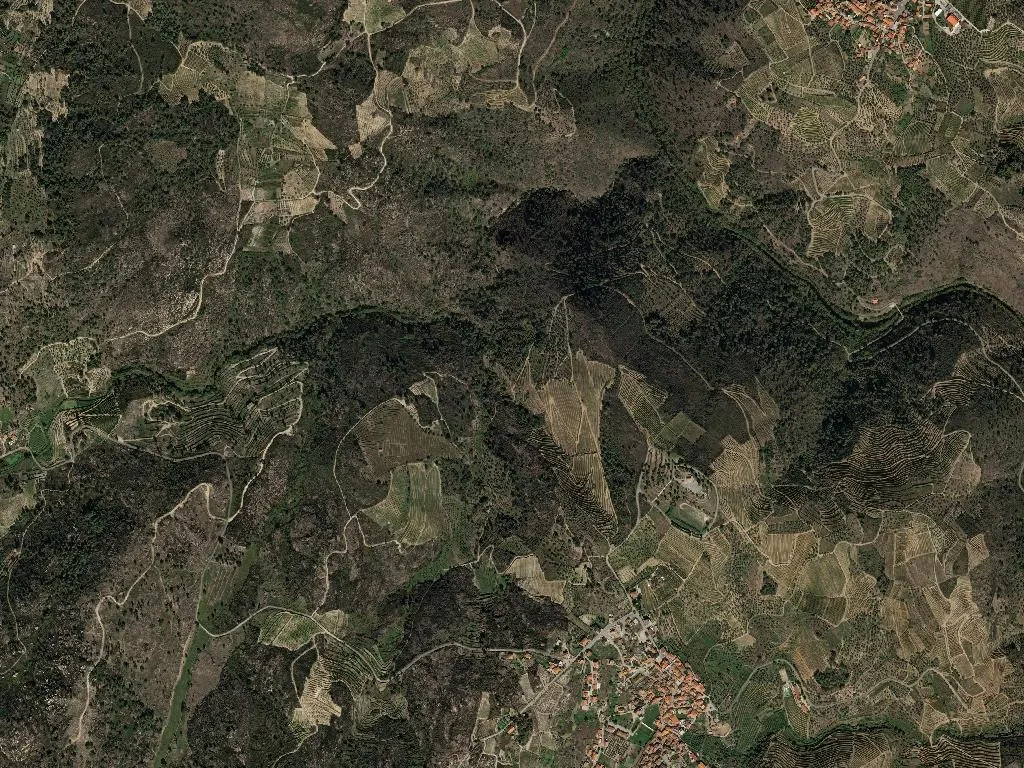
The cobbled path beneath my feet carries the scent of dry earth mingled with the distant smoke of an early-morning fire. Santa Eugénia rises at 385 metres above sea level, folded into the terraces of the Alto Douro Vinhateiro, where 278 souls keep alive one of the smallest parishes in Alijó. Dark-schist houses shoulder together along alleyways no wider than a cart-track; the only sounds are the occasional bark of a dog and the sun-warped groan of a wooden gate.
The years written in stone
Of those 278 inhabitants, 117 are over 65. Only 17 children still race the lanes – a faint after-image of what this place once was. Population density barely grazes 30 per square kilometre, scattered across 914 hectares of vineyard, olive grove and scrub. Yet something stubborn holds: a quiet refusal to let the hamlet blink out.
Three feast days, three devotions
Faith still organises the calendar. On the first Sunday in June the Festa de Vilar de Maçada honours Senhor Jesus da Capelinha; cousins who left for France or Switzerland fly into Porto with suitcases stuffed with table linen and gossip. The second Sunday in May belongs to Nossa Senhora dos Aflitos – women of the parish keep a tríduo, singing novenas on the church steps. Finally, at the end of August, the Festa de Nossa Senhora da Piedade turns the chapel forecourt into an open-air ballroom where Filipe, son of Zé Mário, plays accordion until the stars fade. Long trestles appear under the 70-year-old fig tree João's grandfather planted; conversations stretch longer than the shadows. Candles gutter inside the tiny chapels, and at dawn 84-year-old Dona Amélia is already out gathering field flowers before the heat wilts them.
Vine and horizon
Santa Eugénia sits inside the 26,000-hectare UNESCO-listed Alto Douro wine region, though no one here speaks of World Heritage. They speak of Seixas's vineyard – the plot with 1943 plantings – and of the wall that collapsed last autumn when António was picking olives. The Tedo river is invisible but present: its water arrives by stone levada to irrigate the terraces. Old, ungrafted vines cling to schist walls; stone staircases stitch one level to the next. In September the air is thick with the perfume of ripe grapes and the cough of tractors – Zé Carlos's 1978 Massey Ferguson still doing its shift. There are no tasting rooms or tutored flights; wine is labour first, product second. The harvest goes to the Sanfins co-op where barrel number 7 bears the village football club's name painted in white emulsion.
What remains
When the light turns molten and shadows spill down the terraces, Santa Eugénia reveals its essence: a silent, obstinate continuity. Wood-smoke rises straight from chimneys – from Dona Alice's house, where bread is still baked in a wood-fired oven every Friday. Hens retreat to coops Joaquim has wired against pine martens, and night chill settles like dust. The village asks for no recognition, only to remain – perhaps the most honest form of resistance left.