Full article about Schist sun, river hiss: Vale de Mendiz trio
Three fused hamlets share terraced Douro vines, saints’ days and unlocked doors
Hide article Read full article
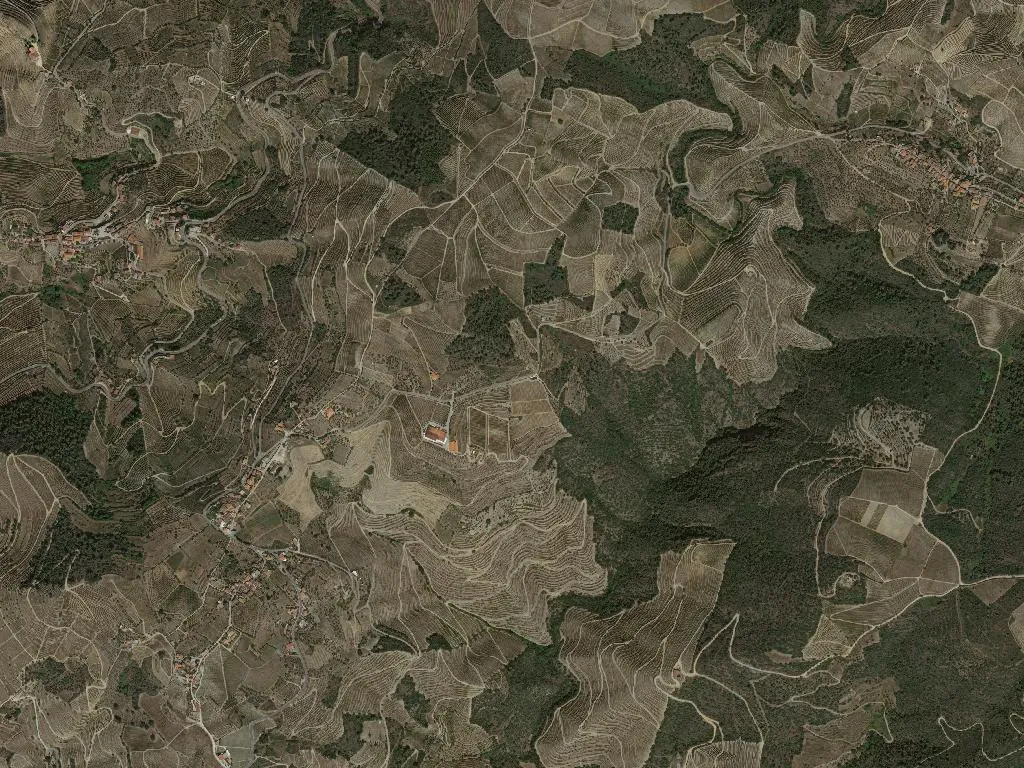
The afternoon sun strikes the schist and it gleams like wet oilskin. Below, the Pinhão river hisses between reeds loud enough to carry uphill, a whispered running commentary on its own descent. Three consecutive hairpins later the tarmac flings you into a single, three-headed village that just happens to keep three names on the letterhead: Vale de Mendiz, Casal de Loivos, Vilarinho de Cotas. Paperwork fused them in 2013; the vineyards had already done the job centuries earlier.
One territory, three signatures
Vale de Mendiz owns the fattest fold of valley bottom; old villagers still recall Sr. Mendes who toured on a donkey redistributing soil to anyone whose plot had washed away. Casal de Loivos began as “the couple of houses” pressed against the rock; front doors still stay unlatched in daylight. Vilarinho de Cotas puzzles even locals—some insist it exported prosperous “Cotas” to Porto’s cloth trade, others swear the name simply labels the stone-walled lanes that stripe the slope. Resident population: 449. Genealogical memory: identical.
At the core of the Alto Douro
UNESCO’s boundary lines stop at the roadside; the real map is etched into palms here. Each terrace wall represents one winter’s stonework, one pair of hands, one lifetime. Handfuls of students leave for university; half return when they realise the same fibre-optic that beams Netflix also frames a 180-degree Douro screensaver. Harvest is still a contact sport—basket strapped to the belly, curved pruning knife in the pocket, grape must perfuming work shirts until December.
Festa, faith and convivio
Three separate saints’ days, one continuous party. In Vilar de Maçada they walk uphill to the chapel; in Casal de Loivos chairs migrate to the street; in Vilarinho de Cotas kid goat turns on a spit in the square. When the church bell tolls everyone knows whether to fetch their best black suit or simply switch off the television. Between procession and pudding queue the talk is of sugar levels, of a grandson born near Paris, of an absent winter that still hasn’t bothered to arrive.
Stone, but no signage
The county lists one chapel and one bridge as “monuments”; the rest is community property—a wayside cross whose date succumbed to lichen, a threshing floor last used when Salazar was in power, an olive press now storing garden tools. No QR codes, no audio guides. Directions are given by pointing with a cinnamon-coloured finger: “Ask Armindo on the bench, he’s 82 and boots up faster than Google.”
Dusk slips behind the Serra de São Mamede and the slate ignites—umber, copper, then a slow violet. Woodsmoke threads from chimneys: cork oak lending its incense to the evening. Perched on a terrace wall, glass of Tinto Cão in hand, you understand that Vale de Mendiz-Casal de Loivos-Vilarinho de Cotas is not a set of coordinates but a taste—one that stays on the palate long after the last echo of the river fades.