Full article about Dornelas: Where Bells Echo Across Empty Barroso Moorland
Stone hamlet at 636 m, scented with wood-smoke, Maronesa beef and IGP potatoes.
Hide article Read full article
The plateau where sound travels farther than people
At 636 m above sea-level the wind combs continuously across bracken and heather, carrying wood-smoke and the iodine smell of damp granite. Footsteps reverberate between slate-clad houses; only 274 souls remain, most of them past retirement age, so every meeting feels like a census. The air is thin enough to make a church bell carry for kilometres, yet thick with the hush of a place that has stopped trying to impress anyone.
Clocks you can eat
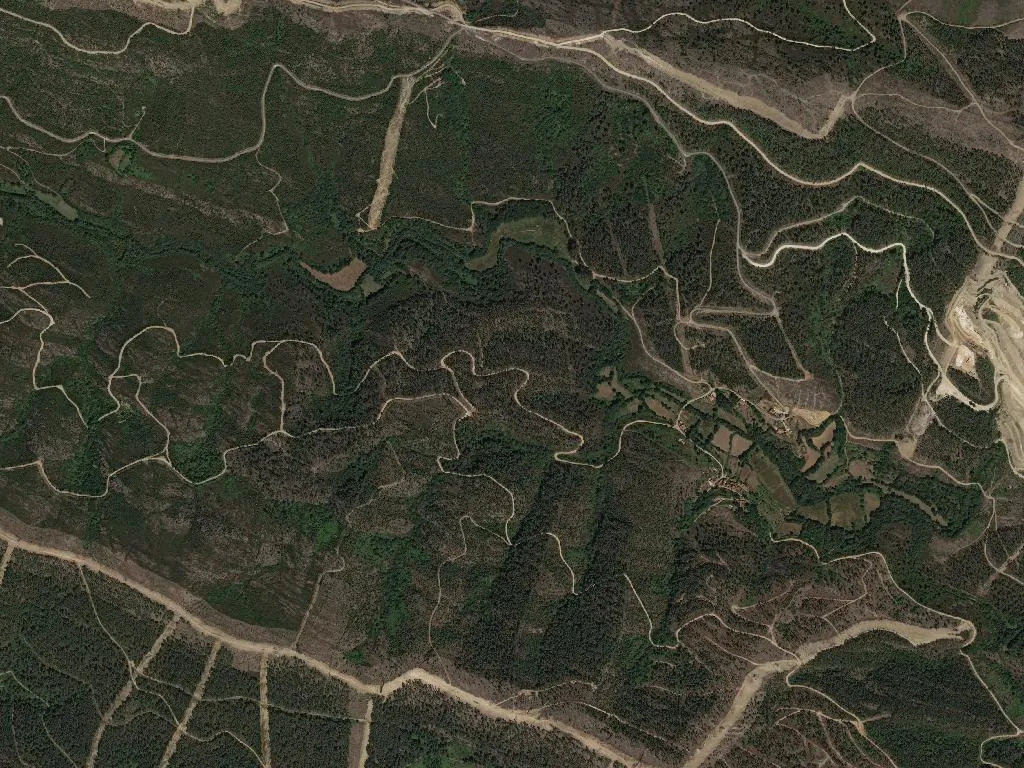
Dornelas and its satellite hamlets—Veiga, Paredes, Paradela, Outeiro—occupy 36 km² of the Barroso plateau, a UNESCO-agrobiological reserve where the year is still measured by what is ready for the knife. January brings frost that tattoos white lace across the grass; August pushes the thermometer to 35 °C and turns stone the colour of burnt honey. In between, Maronesa cattle graze the wet meadows, their cow-bells marking a slow, metallic tempo while small plots of IGP-certified Trás-os-Montes potatoes are watered by hand, a chore unchanged since the 1700s.
Building upwards, thinking backwards
The parish church, the only public monument in Boticas listed for national protection, went up between 1729 and 1733 with funds from the 11th Count of Vinhais. Its 26-metre tower is still the highest man-made point for miles,_visible long before the village itself. Around it, houses follow an austere grammar: thick schist and granite walls, apertures just wide enough for a blunderbuss, and dark slate roofs that glisten like gun-metal after rain. In the forecourt a 1747 stone cross served as the local sundial before clocks—or electricity—arrived.
What altitude tastes like
Up here, the kitchen is governed by cold nights and short growing seasons. Kid goat (Cabrito de Barroso IGP) spends four hours in a wood-fired oven with nothing more than coarse salt and garlic; the meat emerges the colour of old mahogany and as soft as confit. The beef—free-roaming Maronesa DOP—has the firm grain and mineral tang of upland pasture. In smoke-blackened lardies hang Chouriça de Carne de Barroso, Salpicão de Barroso-Montalegre IGP and the blood-based Sangueira, all cured over oak until they can be sliced thick and served with cornmeal broa still ground at the Águas Frias watermill. Finish with Barroso DOP honey, its heather and rosemary notes so concentrated you can taste the granite underneath.
Dates when the village refills
For three days around 8 September the Feast of Nossa Senhora da Livração pulls home émigrés from Lyon, Paris and Lausanne. The old primary school becomes an impromptu canteen, concertinas play until the dew returns, and the population temporarily doubles. Mid-winter is quieter: on 20 January a single Mass at 11 a.m., a slice of saffron-scented cake at the parish president’s house, and glasses of quente—red wine fortified with aguardente and sugar—to keep the cold honest. Pilgrimages follow cart-track roads to the Senhor do Monte sanctuary six kilometres away; groups set out at dawn, return at dusk with sore knees and fulfilled bargains, the mountain air scrubbed clean by their vows.
Evening drops vertically here. The sun slips behind the granite ridge, the church bell tolls the Ave Maria, and vertical threads of smoke rise unhurried into a sky turning from orange to pewter. Somewhere a cow-bell keeps time, but no one is counting.