Full article about Águas Frias: where Tâmega mist smells of ham smoke
Granite keeps, May-flowered altars and 750-m chestnut silence in Trás-os-Montes
Hide article Read full article
The sound that names the place
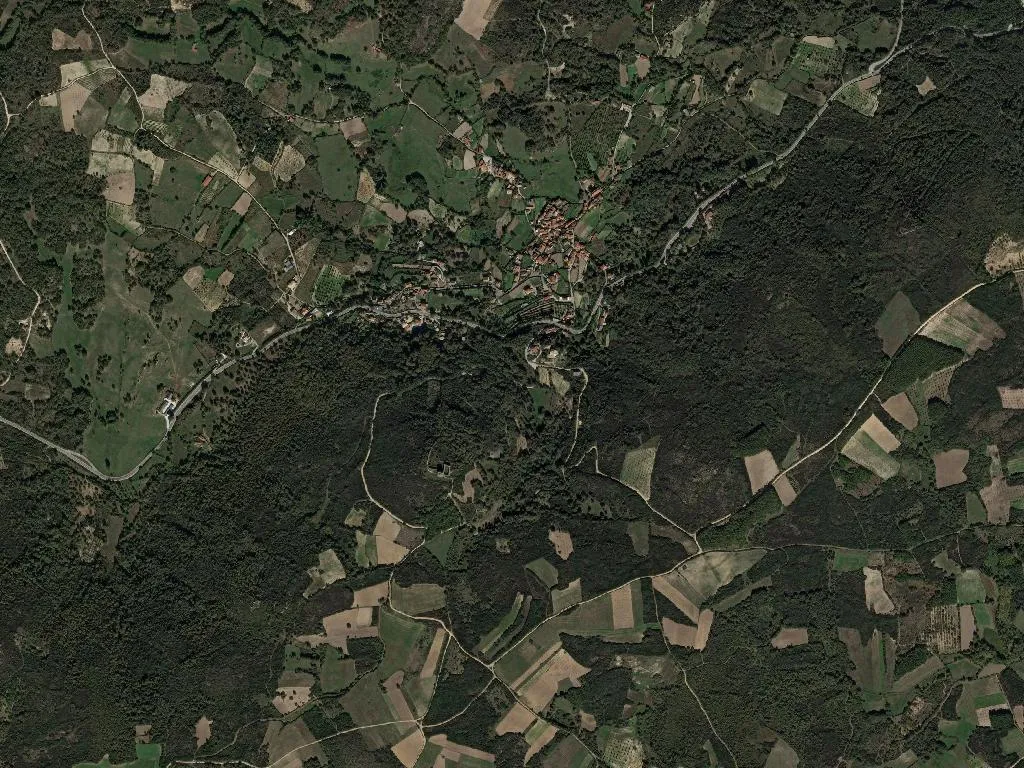
You hear Águas Frias before you see it. A constant, cold trickle threads through chestnut roots and slate moss, broadcasting from every roadside channel until the parish itself feels like a single, breathing spring. At 750 m the air thickens into Trás-os-Montes resin; green chestnut coulisses give way to granite battlements left over from border wars most Britons have never heard of.
A keep that still watches the Tâmega
The Castelo de Monforte do Rio Livre rises on a knuckle of rock, its surviving curtain wall the colour of weatherproof tweed. Granted to the Knights Templar by Afonso III in 1273, the fortress once policed the only sensible route from the upper Tâmega into Spain. Stand on the remnant of the keep at six on a winter afternoon and the low sun ignites the stone; you can trace the river’s cursive loop for kilometres, picking out stone-walled meadows and smoke scribbles from distant fumeiros where hams are quietly turning bronze.
May altars and roadside saints
Inside the parish church of Nossa Senhora da Natividade, eighteenth-century gilded carpentry catches candlelight like a ripple on barley. Throughout May villagers fill the nave with armfuls of field roses and marguerites gathered from the high meadows — a living, scented altar that makes English cathedral flower guilds look forensic. Similar devotions mark crossroads: a recess for Santa Rita outside Eiras, a granite aedicule for São Bento on the lane to Póvoa. With only 607 souls left — 216 of them over 65 — such gestures double as census markers, proof that someone still lives here and still votes (turnout hovers above 65 %).
Smoke, chestnut, DOP honey
Trás-os-Montes cuisine is winter ballast made edible. In the slate smokehouses behind every farmhouse, oak logs exhale over strings of alheira, salpicão and Barroso IGP ham. The annual pig-kill remains the social diary’s biggest date; potatoes, savoy cabbage and local red beans are simmered into a thick rancho, then served with a glass of inky Valpaços red. Come October the Padrela chestnut harvest feeds cakes so dense they could anchor a fishing boat, sweetened only with heather-scented Barroso DOP honey. At Café Central on the old N103 you can breakfast on milky coffee and a warm Pastel de Chaves — the flaky, sugar-dusted pasty that began life downstream in the county town but is eaten here as walking fuel.
Paths without way-markers
There are no branded trails, no ticketed viewpoints — just a lattice of mule tracks that smell of hot pine and fermenting chestnut husks. The county council has painted occasional yellow arrows where the Caminho Nascente of the Portuguese Coastal Route to Santiago cuts through, delivering an 18 km haul to Chaves across ridge-top commons grazed by maronesa cattle. Binocular patience is usually repaid: wild boar scuffle at dawn, red foxes sun themselves on broom banks, griffon vultures tilt above the thermals. Night-time temperatures can dip below 10 °C even in August; the springs, however, never clock off. Long after the village lamps blink out their hush continues — water born inside the mountain, rolling steadily toward the Tâmega without ever asking directions.