Full article about Bustelo: where ham hangs longer than festivals
In Trás-os-Montes’ quietest parish, Barroso DOP ham ages while stone walls outlive earthquakes
Hide article Read full article
The scent of woodsmoke draws the first map of the day
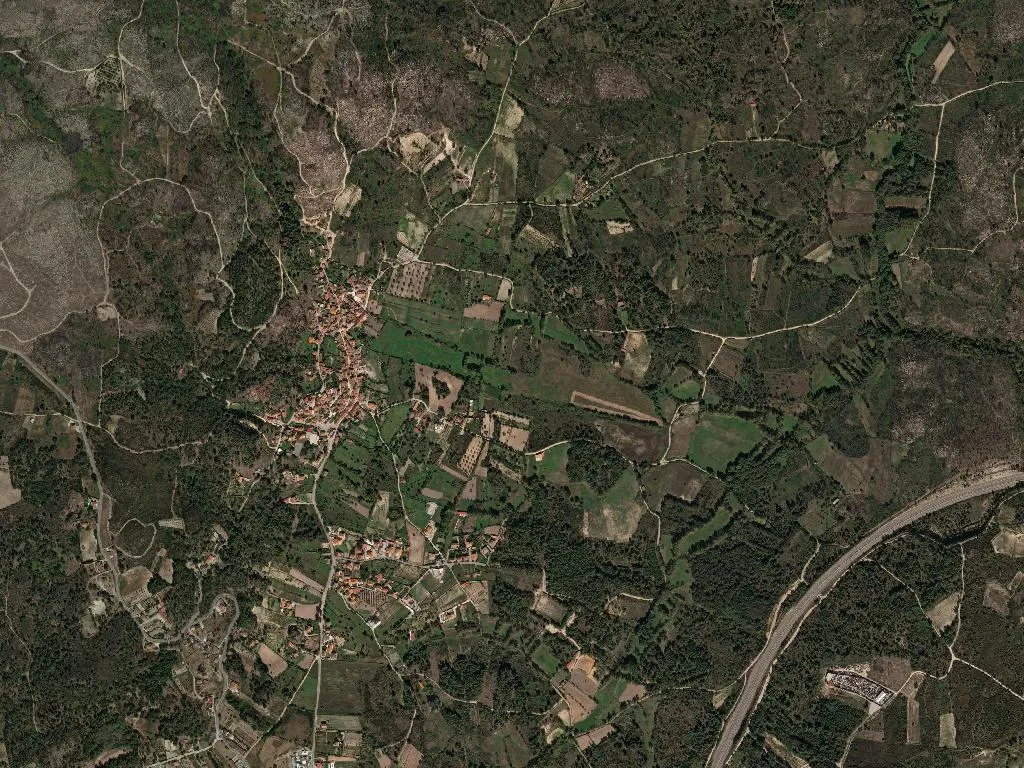
By seven o’clock the air in Bustelo is already annotated: thin blue cords rising from scattered chimneys against a sky scoured clean by altitude. At 412 m above sea level the parish occupies just under ten square kilometres of Trás-os-Montes, yet only 449 people call it home. Silence is not the absence of sound but a measurable pressure—broken by a dog negotiating the valley or a bell tied to a grazing beast somewhere out of sight.
A calendar without fireworks
You will not stumble upon a procession here, nor a weekend fair that blocks the single road with ferris wheels and smoke from grilled sardines. Bustelo’s refusal to stage pageants is not negligence; it is topography. Hamlets are sprinkled too far apart across wheaten plateaus and modest rises—bustulum, the Romans called them, little bumps—to gather a crowd. What fills the year is the quiet arithmetic of agriculture: pruning shears closed at dusk, potatoes weighed into 25 kg Hessian sacks, the same walls of schist restacked after winter frosts heave them loose. The parish council keeps birth records dating back to 1752, yet there isn’t a single listed building to point visitors toward. The heritage is the grid of narrow plots, the dry-stone geometry that pre-dates the 1755 Lisbon earthquake and outlived the phylloxera crisis that ravaged northern vineyards in the 1860s.
Certified mountain on a plate
Absence of festivals does not equal absence of flavour. Cured legs of Barroso ham hang in cellar shadows for fourteen months; their sweetness is guarded by a DOP that predates the European Union. Alheira sausages, thick with bread and mountain pork, hiss on café grills in nearby Chaves, but the butcher who fills them is likely to live in Bustelo and rise at 4 a.m. to feed his outdoor-reared Maronesa cattle. The beef, mahogany-dark from roaming scrubby oak, tastes almost wild; a sirquick sear in cast iron and a grind of colorau paprika are all it asks. Chestnuts from the Padrela ridge burst over open fires in autumn; late-winter brings IGP-labelled potatoes that collapse into soups dense enough to hold a spoon upright. Even the pastel de Chaves—an indulgent, peppery meat pasty—crosses the 15 km from its birthplace as a shared regional birthright rather than city swagger.
Footpaths that glance, then go
Two strands of the Portuguese Camino—Interior and Nascente—cross the parish, but Bustelo refuses to monetise them. Yellow arrows appear on gateposts, disappear at the next bend. There are no hostels, only two modest cottage rentals whose owners prefer bookings by word of mouth in the Chaves market on Wednesday morning. The older routes matter more: mule tracks that once fed watermills on the São João stream, the footbridge where village women gossiped while beating rugs against the parapet. Walking here is not pilgrimage; it is measurement—of slope, of wind-shift, of how long shadows grow between cereal rows before the sun slips behind the Marão.
Dusk gilds the cork-oak trunks and the fields revert to a hush so complete you can almost hear the soil exhale. Nothing happens in Bustelo, and that is precisely what remains: smoke lettering the sky, silence settling like dust, the earth continuing its quiet, unpaid overtime.