Full article about União das freguesias de Calvão e Soutelinho da Raia
Stone hamlets above Chaves keep Templar echoes, alheira curing in oak rafters and Santiago stones
Hide article Read full article
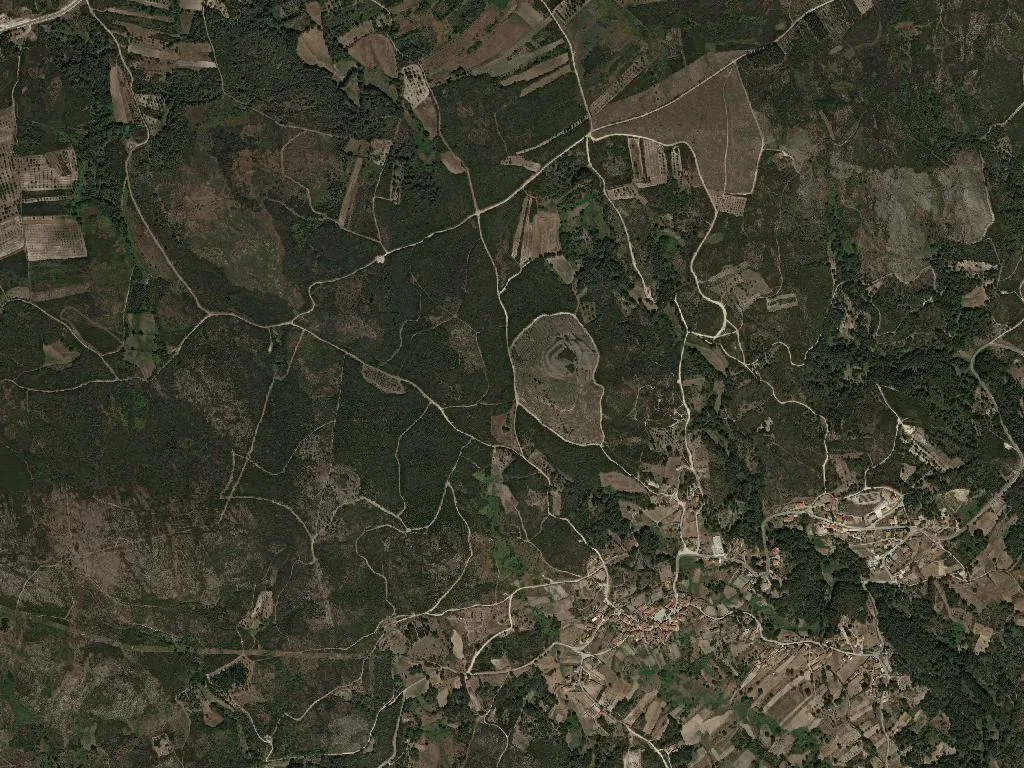
Granite ribs push through the tarmac just outside Chaves, their surfaces freckled with sulphur-yellow lichen that only flourishes at 918 m. In the merged parish of Calvão e Soutelinho da Raia the air carries winter’s blade; on fog-drenched dawns the hills dissolve and you can stand at a field gate hearing nothing but your own pulse. Thirty square kilometres of high Trás-os-Montes plateau shelter 431 souls, scattered thinly enough for silence to be measured in the gap between stone houses.
Two hamlets, one long memory
Administrative fusion came in 2013, yet the two villages share deeper strata. Both were born inside the vanished municipality of Ervededo, erased from Portuguese maps in 1853 when its lands were annexed to Chaves. Calvão’s parish church was already rising in the late 1100s, its income tithed to the Templars at nearby Castro de Avelãs. Soutelinho takes its name from the chestnut grove—souto—that once edged the raia, the old smugglers’ border with Galicia. In 1922 the diocesan boundary migrated north to Vila Real, but geography still answers to mountain and frontier first, bishop second.
Pantry at altitude
Up here flavour ripens slowly. In smoke-blackened kitchens alheira sausages from Barroso dangle above smouldering oak; their garlicky crumb was once a crypto-Jewish ruse to look like pork. Legs of Barroso DOP ham rest on chestnut racks twelve metres underground, developing sweetness at a constant 10 °C. Autumn convoys of wicker baskets haul Padreland chestnuts to roadside burners where children peel them hot, fingers stinging. Maronesa beef cattle—russet, lyre-horned—graze the same upland meadows that feed Bísaro pigs, their meat destined for salpicão that firms like a well-aged cheddar. Even the honey smells of heather and toasted chestnut burr.
Pilgrim tread
Two Santiago routes braid across the plateau: the Interior and the Nascente. Between Chaves and Verín their medieval flagstones surface in cow pastures, sink under broom, re-emerge beside a wayside granary no wider than a phone box. Walkers pass slate-roofed espigueiros on stilts, threshing-floors carved into granite outcrops, and walls built without mortar that still carry the initials of 19th-century owners.
Silence by the kilometre
Fifty-six per cent of residents are older than 65; only sixteen children remain. Schools shut years ago, their playgrounds colonised by wild marguerites. At 15 inhabitants per km² you can hike the lane from Calvão to Soutelinho at dusk and meet nothing but a shepherd’s lantern returning from the high meadows. After dark the Milky Way spills uninterrupted across the sky, its light sharp enough to silhouette every chimney stack in the village.