Full article about Cimo de Vila da Castanheira
Granite hounds, damp chapel slabs and alder-smoked sausages on a mist-crowned ridge
Hide article Read full article
The bell that only dogs answer
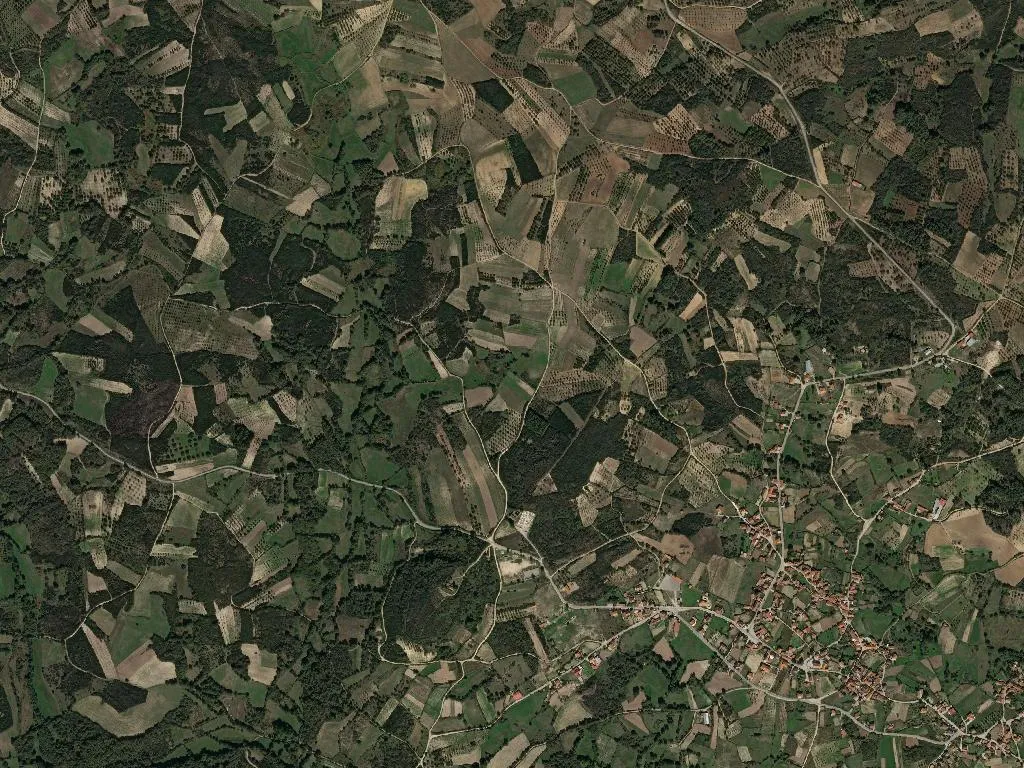
The tower strikes nine, yet the plateau is already awake. At 850 m the air is thin enough to carry the clangour only as far as the nearest hens, a pair of mastiffs and the wind combing through the chestnut groves that christened the place. Dry leaves skate across the schist slabs, releasing the faint tang of newly-cut wood that has not yet learned to burn. From the crown of the ridge—Cimo de Vila da Castanheira literally means “top of the chestnut village”—the view tumbles into two valleys still pooled with dawn fog.
Stone on watch
The granite bulk of Igreja Matriz de São João Baptista has ruled the skyline since memory began. Its low door groaned in the same key when my grandmother hauled me to the 7 a.m. mass thirty years ago. Two carved hounds guard the portal; their snouts are polished to a marble sheen by generations of children who swing from them like playground monkeys. The battlemented tower stands apart, a Romanesque afterthought you can still climb, provided your shoes survive the slime of centuries. From the top the sea is slate roofs: Cimo on one side, Sanfins on the other, the boundary known only to those who were born arguing whose turn it was to ring this bell.
Down the lane, the chapel of São Sebastião keeps its floor slabs permanently damp, even in August. Beside the Fonte da Moura an anthropomorphic grave—long enough for a man—now serves as a bench for old lungs recovering from the climb. Children use it for leapfrog; fewer realise someone lay there before paper existed to note the fact.
What the earth gives
Between October and April the smokehouses stain the air brick-red. Dona Aurinda still hikes to the woods for alder branches; she claims pine sweetens the sausages with resin and no one argues. The potatoes planted on Campo do Outeiro are knobbly and small, yet stay stubbornly intact however long you boil them. Chestnuts, the real currency, are gathered by grandchildren who appear on Friday evenings armed with linen sacks and trainers soaked in mountain dew.
At Tasquinha do Zeferino the kid goat was still grazing yesterday; today it arrives on a tin plate with grelos cut at dawn by the cook’s wife. The bread comes from Soeiro’s wood-fired oven, wedged against the church wall and lit only on Saturdays, when the priest pops in to bless the dough.
Saints, emigrants and one untouchable oak
On 20 January the procession for São Sebastião slides downhill to the chapel, candles hissing on the frost, followed by caldo verde dished out in the parish hall. The August feast of the Guardian Angel coincides with the homecoming of French-registered hatchbacks: their dusty number plates announce accountants from Lyon and plumbers from Bordeaux, while grandmothers conduct swift audits of comparative toddler beauty. São João is a square-full of bonfire, sardines trucked up from Chaves by Zé Manel, and teenage boys negotiating the flames in new boots they can’t afford to scorch.
On the summit stands the Carvalho da Missa, the “Mass Oak”. Folklore says lop a branch and madness follows; my grandfather took the risk for hoe handles and still clocked up ninety-six years, albeit with a permanent limp and enough sense to cuff me when I pinched his figs.
Silence kept too long
Officially 338 souls, though that counts every dwelling with a door. Drop by the bakery at seven and you’ll meet the same five faces; return at seven in the evening and they’re still there, only the coffee has cooled. Abandoned houses are sealed with parcel tape; their shutters are painted Wedgwood blue to suggest occupancy. When the low sun hits the schist it turns the colour of toasted barley, a shade so edible you want to bite it. The quiet is absolute—milk can be heard simmering in Dona Emília’s saucepan. The bell tolls; no one shifts; even the dogs can’t be bothered. Time is not measured here, only waited out, like rain or the slow thaw of snow on a chestnut leaf.