Full article about União das freguesias das Eiras, São Julião de Montenegro e Cela
Walk São Julião’s camino paths, taste Cela’s chestnut smoke, dance Eiras’ August fires
Hide article Read full article
Stones that have seen it all
The bell of São Julião strikes three times and the notes tumble down the valley like pebbles dropped into a well. Not yet eight o’clock, dawn’s chill still clings to the granite as stubbornly as the regular who won’t surrender his café chair. At 776 m above the Tâmega gorge, the civil parish created in 2013 by stitching together Eiras, São Julião de Montenegro and Cela feels anything but new: ox-tracks have linked their corn-threshing floors and smoke-choked ham sheds for centuries.
Romans passed through here on business, not pleasure. Their bridges still take tractor traffic, their flagstones still skate under winter rain, and they left a local addiction to building things that outlast their builders. Two feeder routes of the Portuguese Interior Camino cross the parish, but today’s pilgrims arrive on carbon frames rather than walking staffs. Stone calvaries pop up at every bend the way London has espresso bars—handy places to draw breath and recalibrate. Each hamlet keeps one church, saints rationed so no week lacks a party.
The calendar that governs life
August pulls the rope tight. On the 5th Cela throws its festival for Nossa Senhora das Neves; five days later Eiras lights bonfires for São Lourenço—if it rains you get wet, deal with it. São Julião waits until May for São Bernardino, when the air is warm but not yet fierce. Brass bands play as though tomorrow were negotiable; tables sag with kid goat that collapses at the sight of a fork, alheira sausages that snap like guilty consciences, and presunto sliced thinner than a minister’s excuse.
Between valleys and smokehouses
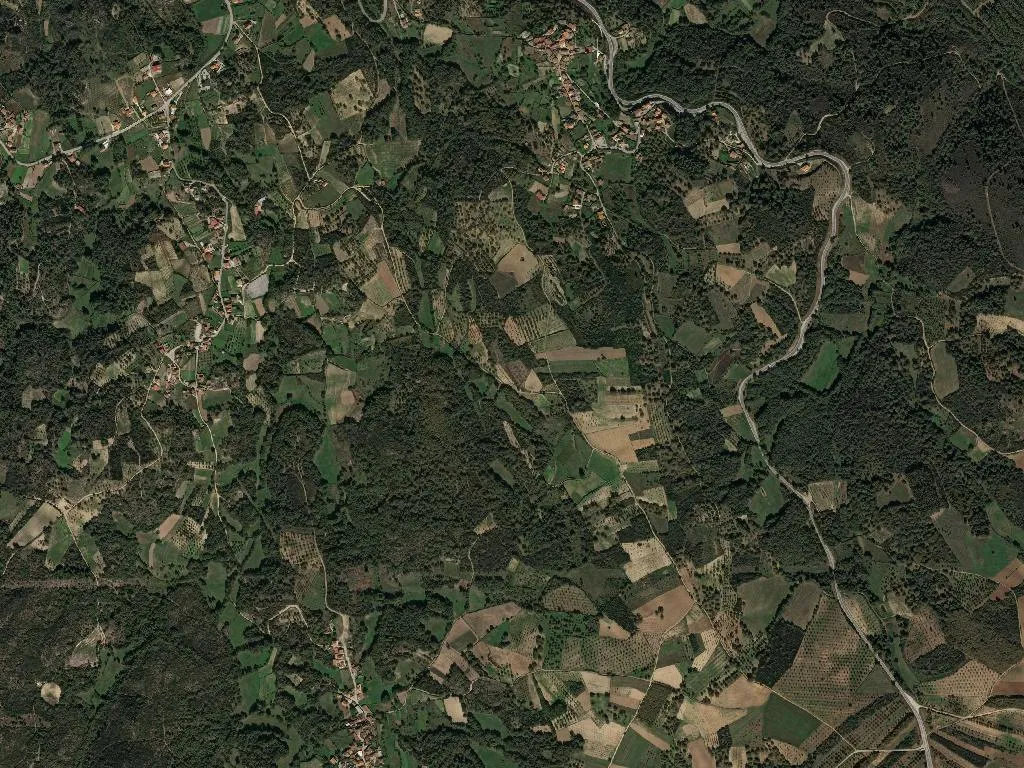
The landscape is a patchwork quilt sewn by someone with time: olive trees older than Portugal itself, pine plantations shinning up slopes like children on garden walls, streams that run shy, almost embarrassed to gurgle. Water mills stand mute, wheels rotten as old teeth, yet granite lips still show where grindstones once bit. In autumn chestnuts hail down and wild boar saunter at night like landlords on rent day. Foxes are more discreet—cross your path with the air of someone late for evensong.
A slow-motion itinerary
Headquarters sit on Alto da Micha, but the point is to get lost on the footpaths that stitch together chapels whose doors groan yet stay open. With 850 residents, meeting a soul feels like winning the Euromillions; when it happens conversation unspools endlessly. Pause by the parish noticeboard, admire the neighbour’s vegetable plot, accept the offered bica. Somewhere a Maronesa cow lows like a village doorbell; smoke curling from a stone hut advertises hams settling in for winter.
Wait until light gilds the calvaries and shadows stretch like cats before the hearth. Sit on a wall. Time here is not clock-time; it is the rhythm of seasons, the scent of oak smoke, the silence you only notice once the city is far behind. Take that with you—quietude sold by weight, paid for simply by knowing how to wait.