Full article about Lama de Arcos: Where Portugal Once Split a Kitchen
Stone cottages straddle an old Spanish border erased by smoke, smuggling and the Rosmaninho stream.
Hide article Read full article
A Line That Cut Through Houses
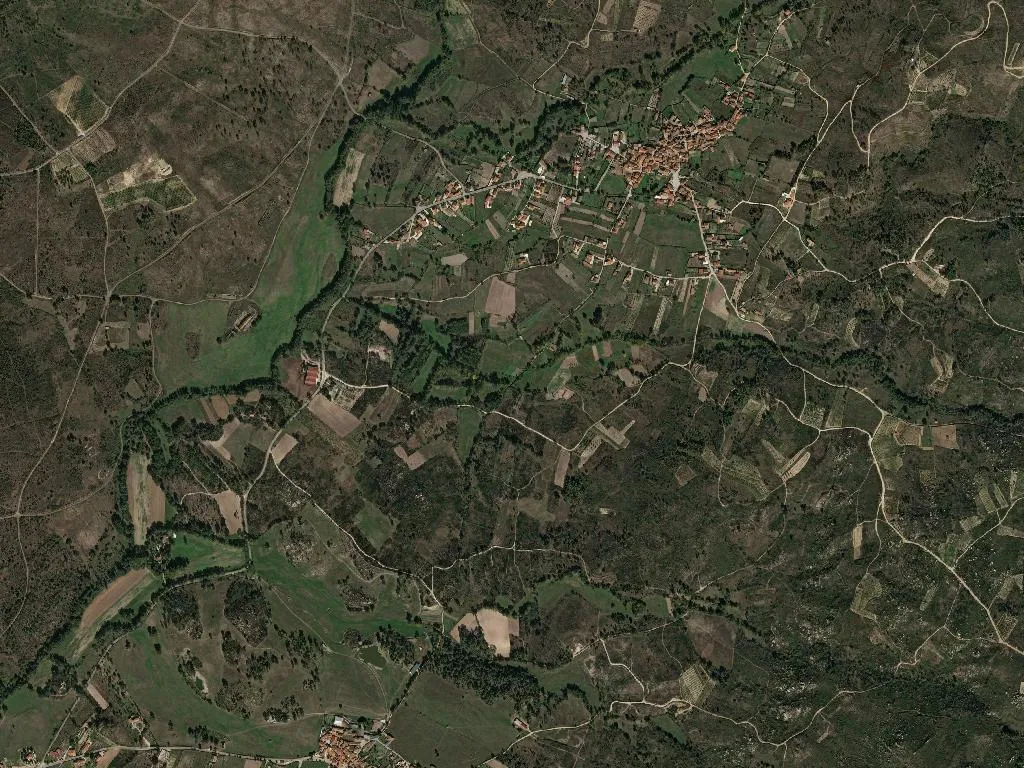
The wind slips down the Cota ridge, drags its fingers through the rye grass along the Tâmega and arrives in Lama de Arcos smelling of wet slate and woodsmoke. At 396 metres the valley unrolls like a green ledger: bottle-dark meadows, pale new pasture, grey-green willows tracing the Rosmaninho stream. Morning light lands obliquely, stretching shadows of stone walls that separate vegetable plots from sheepfolds and keep the village’s 291 souls politely apart.
Until 29 September 1864 the border between Portugal and Spain did not bother with roads or rivers; it walked straight through kitchens. A single house could hold two sovereignties: the hearth in Spain, the dining table in Portugal. During the 1641 Restoration War Portuguese troops torched the Spanish half, leaving a settlement whose memory is still scorched at the edges. Smuggling—olive oil, linen, tobacco—bridged the gap until the Treaty of Lisbon drew a final line and Lama de Arcos became unequivocally Portuguese. The name remembers an arched stone bridge over the Rosmaninho, dismantled long ago but still intact in local speech: a place where water once conceded to stone.
Stone Carved by Wind and Time
The parish church of São Vicente, rebuilt in 1727 after the 1755 earthquake, and the 1892 chapel of Nossa Senhora dos Remédios bracket the village in stone. The chapel’s slender bell-tower and rose window filter light onto an altar carved by master masons from the neighbouring Padrão hills. There are no castles or listed bridges; instead the architecture is a manual of Trás-os-Montes pragmatism: granite doorways dated 1901, slate roofs angled to shrug off Atlantic storms, open-fronted sheds that shelter firewood and the scent of resin.
What the Land Tastes Like
Here the menu is dictated by altitude and weather. Barroso ham (DOP) hangs for two winters in schist cellars until its surface blooms like marble. Alheira sausages mix local garlic with cornmeal; pork-black chorizo smokes over laurel branches in working hearths. Potatoes branded IGP grow in the Rosmaninho’s alluvial ooze; Maronesa beef grazes upland slopes up to 900 metres; chestnuts drop from centenaries every October. Barroso honey carries the resin of rock-rose and wild rosemary, while the flaky, veal-filled Pastel de Chaves arrives from the city eight kilometres away as a reminder that tastes travel even when people stay put.
Footsteps Measured in Silence
Lama de Arcos sits on two Santiago routes: the Interior, known in Spain as the Vía de la Plata, and the Nascente that swings in from Bragança. Pilgrims pass at the speed of contemplation, counting steps not kilometres. They share the path with Miranda donkeys and the sound of water turning the paddles of mills abandoned since 1950. Late afternoon sun grazes the stone; woodsmoke rises straight into cold air. Nothing hurries—only the wind returning to the ridge, the valley keeping its own slow ledger of green.