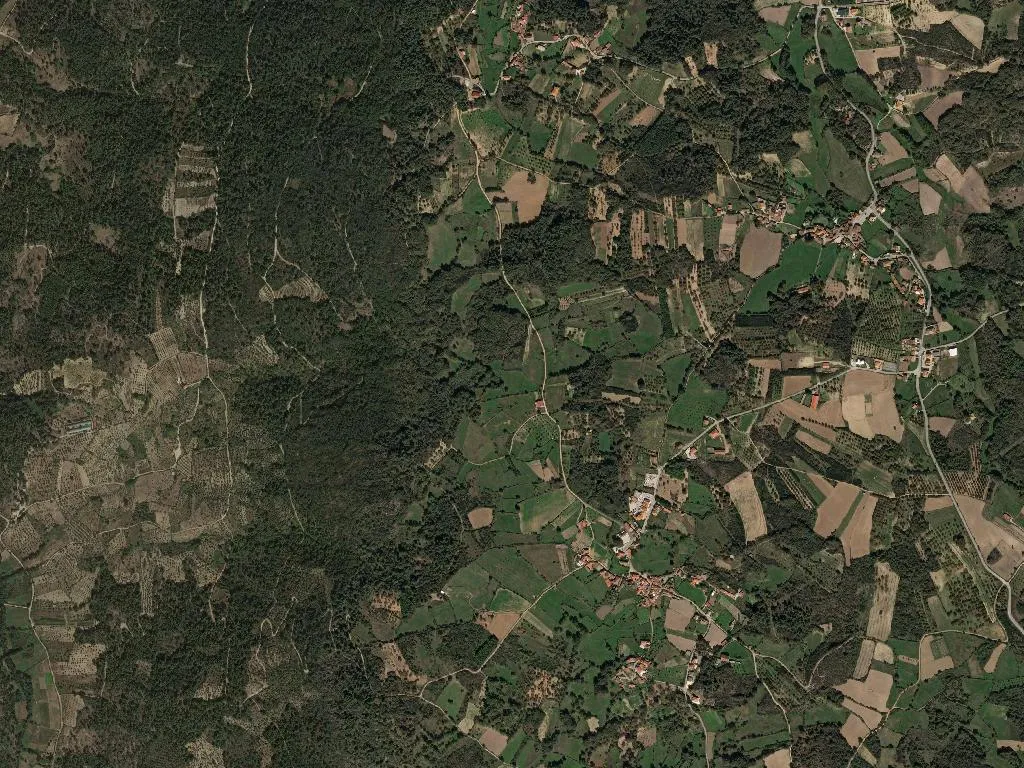
Full article about Misty Moreiras: dawn above the Tâmega
Moreiras, Vila Real: crisp sunrises, oak-scented air and stone lanes where granite cottages survey the Tâmega valley
Hide article Read full article
Return of builtin_functions.web_search:0
搜索关键词:Moreiras, a small parish nestled in the rolling hills between Chaves and Vila Pouca de Aguiar, awakens slowly to the sound of the chapel bell tolling seven times, its echo rippling through the valleys that slope down to the Tâmega River. At 787 metres above sea level, the morning air is sharp and dry, carrying the scent of
url: https://repositorio.ufmg.br/server/api/core/bitstreams/8a934d1d-1504-4d95-b61e-433e5f156da6/content 片段1: ```
CLAUDIO NICOLETTI DE FRAGA
FILOGENIA E REVISÃO TAXONÔMICA DE DAVILLA VAND. (DILLENIACEAE)
Dissertação apresentada ao Programa de Pós-Graduação em Biologia Vegetal do Departamento de Botânica do Instituto de Ciências Biológicas da Universidade Federal de Minas Gerais, como requisito parcial à obtenção do título de Doutor em Biologia Vegetal.
Área de Concentração Sistemática Vegetal
BELO HORIZONTE – MINAS GERAIS 2012
ii
CLAUDIO NICOLETTI DE FRAGA
FILOGENIA E REVISÃO TAXONÔMICA DE DAVILLA VAND. (DILLENIACEIA)
Dissertação apresentada ao Programa de Pós-Graduação em Biologia Vegetal do Departamento de Botânica do Instituto de Ciências Biológicas da Universidade Federal de Minas Gerais, como requisito parcial à obtenção do título de Doutor em Biologia Vegetal.
Área de Concentração Sistemática Vegetal
Orientador: Prof. Dr. João Renato Stehmann Universidade Federal de Minas Gerais
Coorientador: Prof. Dr. Eric de Camargo Smidt Universidade Federal do Paraná
BELO HORIZONTE – MINAS GERAIS 2012
iii
Fraga, Claudio Nicoletti de
Filogenia e revisão taxonômica de Davilla Vand. (Dilleniaceae). [manuscrito] / Claudio Nicoletti de Fraga -‐
: Il. ; 29,5 cm.
Orientador: João Renato Stehmann
Coorientador: Eric de Camargo Smidt
Tese (doutorado) – Universidade Federal de Minas Gerais. Instituto de Ciências Biológicas.
Revisão Taxonômica – Teses. 2. Filogenia – Teses. 3. Botânica – Neotropico – Teses. 4. Botânica – Teses. 5. Davilla – Teses. 6.
Dilleniaceae – Teses.
I. Stehmann, João Renato . II. Universidade Federal de Minas
Gerais. Instituto de Ciências Biológicas. III. Título.
CDU: 581(213.56)
iv
Tese defendida e aprovada, em 31 de julho de 2012 pela banca examinadora
constituída pelos professores:
Dr. João Renato Stehmann – Orientador
Dr. Andre Marcio Araujo Amorim
Dr. Marcos Eduardo Guerra Sobral
Dr. Leandro Cézannede Souza Assis
Dr. Alexandre Salino
v
Aos orientadores botânicos que tive em minha vida!
Oberdan José Pereira, Ariane Luna Peixoto & João Renato Stehmann
vi The Logical Song
When I was young
It seemed that life was so wonderful
A miracle, oh it was beautiful, magical
And all the birds in the trees
Well they'd be singing so happily
Oh joyfully, oh playfully watching me
But then they sent me away
To teach me how to be sensible
Logical, oh responsible, practical
And they showed me a world
Where I could be so dependable
Oh clinical, oh intellectual, cynical
There are times when all the world's asleep
The questions run too deep
For such a simple man
Won't you please, please tell me what we've learned
I know it sounds absurd
But please tell me who I am (BIS)
Now watch what you say
Or they'll be calling you a radical
A liberal, oh fanatical, criminal
Oh won't you sign up your name
We'd like to feel you're
Acceptable, respectable, oh presentable, a vegetable
Roger Hodgson
vii Agradecimentos
Ao Prof. Dr. João Renato Stehmann, orientador dessa tese, por me guiar no
aprendizado sobre botânica e sobre a vida em geral. Agradeço pelo apoio, compreensão e
incentivo em todas as fases desse trabalho e especialmente pelo carinho em me receber
como estudante e como hóspede junto a sua família ao final da tese.
Ao Prof. Dr. Eric de Camargo Smidt, co-‐orientador dessa tese, por me ajudar muito
no desenvolvimento of the phylogenetic studies and in the endless discussions about
character and character states, among others. I thank him also for making possible pleasant
days with Viviane and Amora while receiving me with all the love in the world in his home.
À Pós-‐Graduação em Biologia Vegetal PPGBV, desde sua coorenação, professors,
representantes estudantis do colegiado, secretárias e agregados por todo apoio que tive,
mesmo that in some hours distant from Belo Horizonte. And especially to
the Botany Department of UFMG, for the excellence in botanical knowledge.
To the directors of Research Fábio Scarano, Marli Morim and Rogério Gribel, of
the Botanical Garden Research Institute of Rio de Janeiro, for encouraging me to enter
the doctoral programme (Fábio) and for supporting (Marli and Rogério) the development of my
thesis topic, also making it possible for this broad study to become part of my
research activities at my institution.
To all the colleagues I had in the Plant Systematics Laboratory and
associated: Aristônio Teles, Leandro Giacomin, Caetano Trancoso, Thaís. E. Almeida, Marcos
Sobral, Luciana Kamino, Luciana Melo, Mariana Bünger, Érica Borsali, Gustavo Heringer, André J.
Arruda, Pablo Hendrigo, Nara F.O. Mota, Pedro Vianna, Felipe Souza, Mariana Augsten,
Marco Otávio Pivari, Danilo Neves, Aline J. Ramalho, Bruno F. Falcão, Leandro Silveira,
Luiza Fonseca A. Paula, Ana Claudia Fernandes, André Luís de Gasper, Eric K. O. Hattori,
Francine C. Assis, Izabella M. C. Rodrigues, Rafaella C. Ribeiro, Raquel S. Viveros, Talita M.
Machado. We are many, indeed!
To my parents, brothers, sisters, nieces, nephews, for the education and unconditional support
and in all the moments of my personal and professional growth.
To Aristônio Teles and Vinícius Dittrich who provided me with a home in Belo
Horizonte, thank you, brothers!
viii To Gerardo Aymard, from UNELLEZ-‐Guanare and the PORT Herbarium, Venezuela, for
receiving me and discussing Dilleniaceae 24 hours a day for a whole week, besides making
it possible for me to have material for phylogenetic analysis of Davilla steyermarkii and
Neodillenia coussapoana, that I had not had the opportunity to collect in the wild. Thank
you also for the hospitality at your residence and for facilitating my contact with the
VEN herbarium.
To Gerardo A. Salazar, from the Institute of Biology, Universidad Nacional Autónoma de
México, for making it possible for me to study the samples deposited at MEXU and ENCD,
besides kindly receiving me during the period I spent in Mexico.
To Fabian A. Michelangeli, from the Institute of Systematic Botany, The New York
Botanical Garden, for providing me with numerous aids while I was studying the collections
of the NY herbarium and for facilitating my contact with the US herbarium. Besides the
wonderful dinner watching the illuminated island of Manhattan.
To Pedro Acevedo, from the Smithsonian Institution, National Museum of Natural History,
for all the help and kindness in Washington