Full article about Nogueira da Montanha: Eleven Hamlets above the Clouds
823 m above the Tâmega, stone chapels, Roman springs & chestnut smoke scent the air.
Hide article Read full article
Up where the Tâmega wind stalls
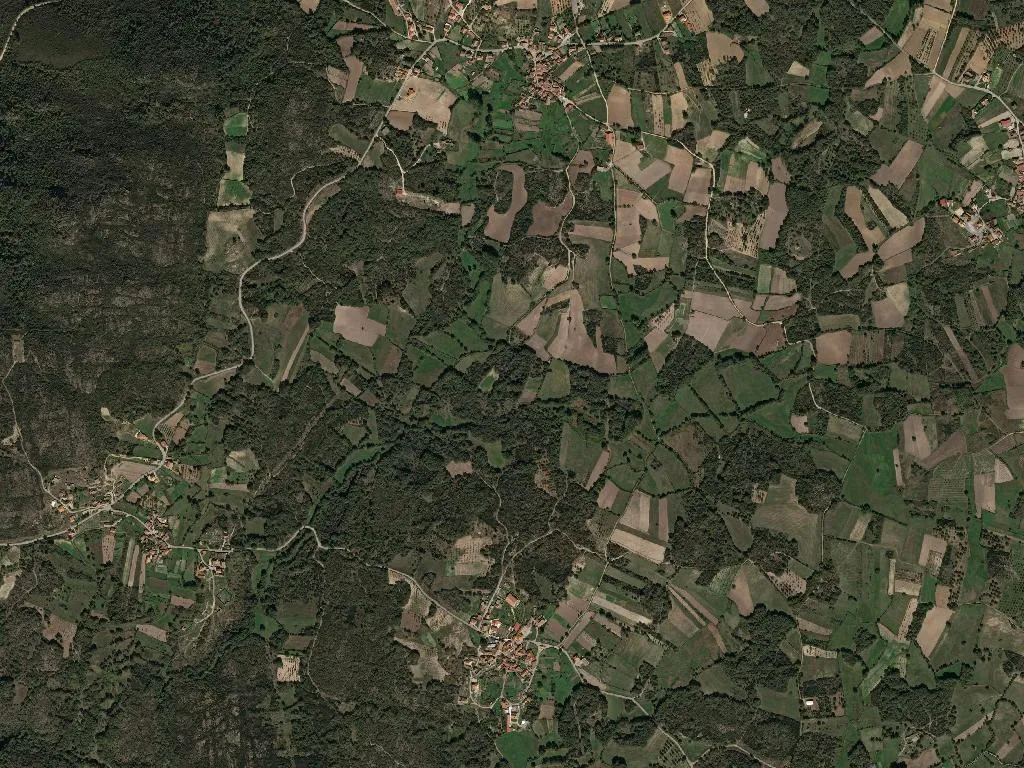
At 823 m the breeze that scours the valley arrives in Nogueira da Montanha as a whisper. The parish fragments into eleven hamlets—Alanhosa, Capeludos, Gondar, Maços, Sobrado—each equipped with its own chapel, threshing floor and plunge-tank hewn from granite.
Eleven hamlets, one ridge
“Nucaria” surfaces in 10th-century charters. The Knights of Christ later carved the place into a commandery, stamped it with a coat-of-arms—two crosses and a walnut tree—and ringed the limestone mother church of São Miguel with ten satellite chapels. Medieval foot-paths, still visible between dry-stone walls, once channelled transhumant shepherds and Santiago-bound pilgrims along the Lusitana and Nascente routes.
Stone, water, ember
Eleven Roman spring-houses still serve the 461 residents; in August the water is tooth-achingly cold. Above Sobrado, the so-called Moorish castle is only a crest of fractured battlements. Manor houses—Casa dos Sargentos, Casa dos Barradas—wear iron-studded doors against two-metre granite blocks.
Tasting the altitude
Barroso lamb (IGP) slow-roasts in the communal oven with nothing but pork fat and mountain garlic. Smokehouses hang salpicão, alheira and pumpkin-smoked chouriça; potatoes (Trás-os-Montes IGP) fatten in the alluvial meadows. October shakes chestnuts onto slate roofs; heather honey (DOP) arrives thick as fudge.
Calendar of small detonations
Santo Antão (January) fires the first rocket; Santiago do Monte follows on 27 July; Santa Bárbara and Nossa Senhora da Natividade share August; Santa Catarina (November) and Nossa Senhora da Conceição (December) close the year. Between masses, locals drink rough red from ceramic jugs while fireworks scratch the sky.
At dusk São Miguel’s bell strikes three times—no hour, simply the mountain signing off between stone and water.