Full article about Outeiro Seco
Outeiro Seco, Chaves: granite ridge village guarding a 1758 baroque retable, WWI memorial plaques and Ana’s lone café.
Hide article Read full article
Dawn catches the crest first
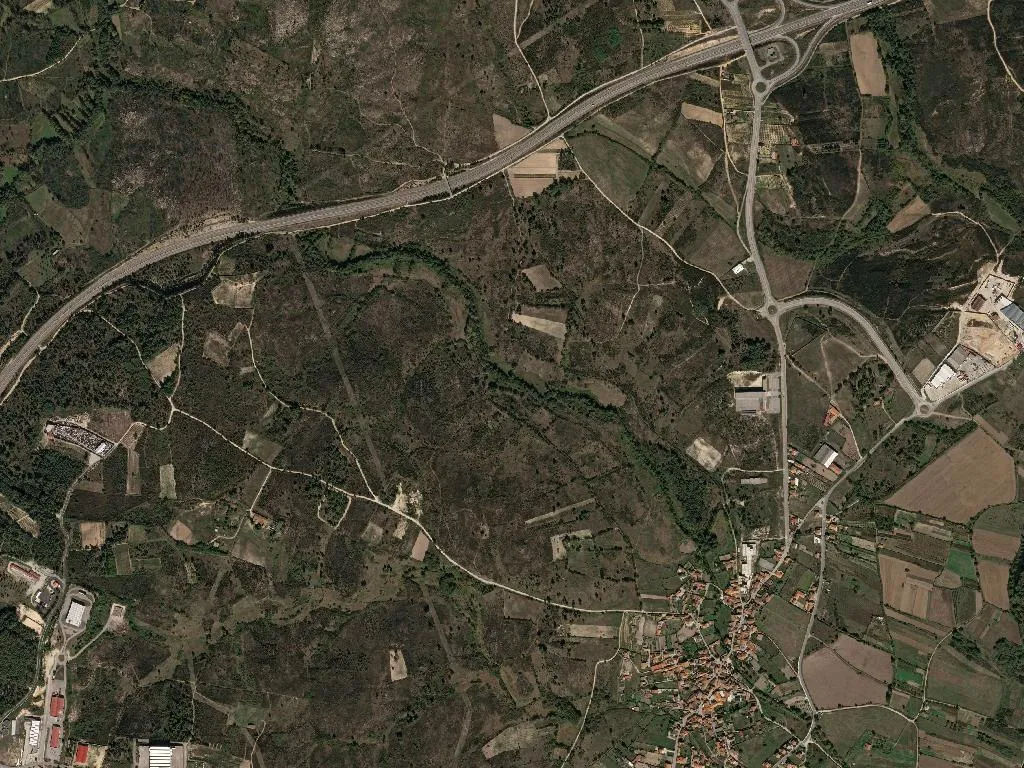
Light strikes the hilltop before anywhere else, dragging long shadows across the parched ground that christened the village. Outeiro Seco sits at 364 m, where gorse and broom give way to schist and granite, and the wind barrels unchecked from the Trás-os-Montes ridge. Silence hangs thick, broken only by the single bell of the mother church marking time with the same baritone it found in the 1700s.
An altarpiece that outlived three centuries
Inside São Miguel the gloom frames a 1758 retable commissioned by Father Domingos Pinheiro, baptised here in 1684, the same priest who opened the village’s first school and served as rector across three parishes. The paint is moth-eaten but candle-flame still coaxes out carmine robes and oxidised gold leaf. Parish records, stacked in a vestry cupboard, log every baptism, marriage and burial since his day—an unbroken paper spine of memory.
The church is both the village’s compass point and its emotional meridian. In 1895 the annual pilgrimage to Nossa Senhora da Azinheira ended in such pandemonium that fourteen cavalry troopers had to ride up from Chaves to restore order. The episode is still rehearsed on doorsteps, each narrator polishing their own detail, every version ending with hooves clattering on cobbles.
Six men who marched to the Western Front
Outeiro Seco despatched at least six soldiers to France in 1917. Their names—José Francisco Gonçalves Sevivas, Joaquim Estorga Salgado, Domingos André, José Ferreira Barroca Pantaleão, Albino de Carvalho, José Manuel Figueiras—are lifted straight from the baptismal ledgers researched by local historian João Jacinto. Only Sevivas came back decorated, rose to lieutenant-colonel of the 10th Hunter Regiment and later served as provedor of Chaves’ Santa Casa da Misericórdia. His stone house still faces the hill, green shutters closed like folded arms.
Where lunch is what Ana decides
There are no restaurants. There is, however, Café da Ana—part grocer, part pub, part village parlour. Wine arrives in chunky glass tumblers; ham is sliced to order, never peeled from plastic. If the day is right you’ll find nabada soup thick with turnip greens, or a clay pot of feijoada à transmontana. No menu—just what Ana’s stove is doing.
Ask for a bottle of house red: made in the stone eira behind the hamlet from 80-year-old vines, it tastes of iron-rich soil and smoke. Take away a loop of alheira or a length of chouriça from the fumeiro; they travel better than postcards and will remind you, weeks later, that flavours like this still exist.
Footpaths that once knew pilgrims and smugglers
Dust tracks climb and drop at their own leisure, stitching Outeiro Seco to Vilarelho da Raia along dry-stone walls knitted from schist slabs. The route doubles as both the Interior Portuguese Way and the nascent Caminho de Santiago, so you’ll meet rucksacked walkers sharing the lane with farmers heading to prune vines. Every May the Senhora da Azinheira procession retraces the same route—nowadays without military escort.
Population 849, median age nudging 68, accommodation limited to two village houses registered under Alojamento Local. No timetables, no tour buses, no gift shops. What lingers is the scent of hearth smoke at dusk, boot-heels echoing on uneven granite, and an 18th-century altarpiece still holding its ground against everything the centuries have blown its way.