Full article about São Pedro de Agostém: ham smoke & frost-bitten pastries
Oak-smoked IGP charcuterie, honeyed Barroso slopes and pilgrim-quiet lanes above Chaves.
Hide article Read full article
Smoke rising
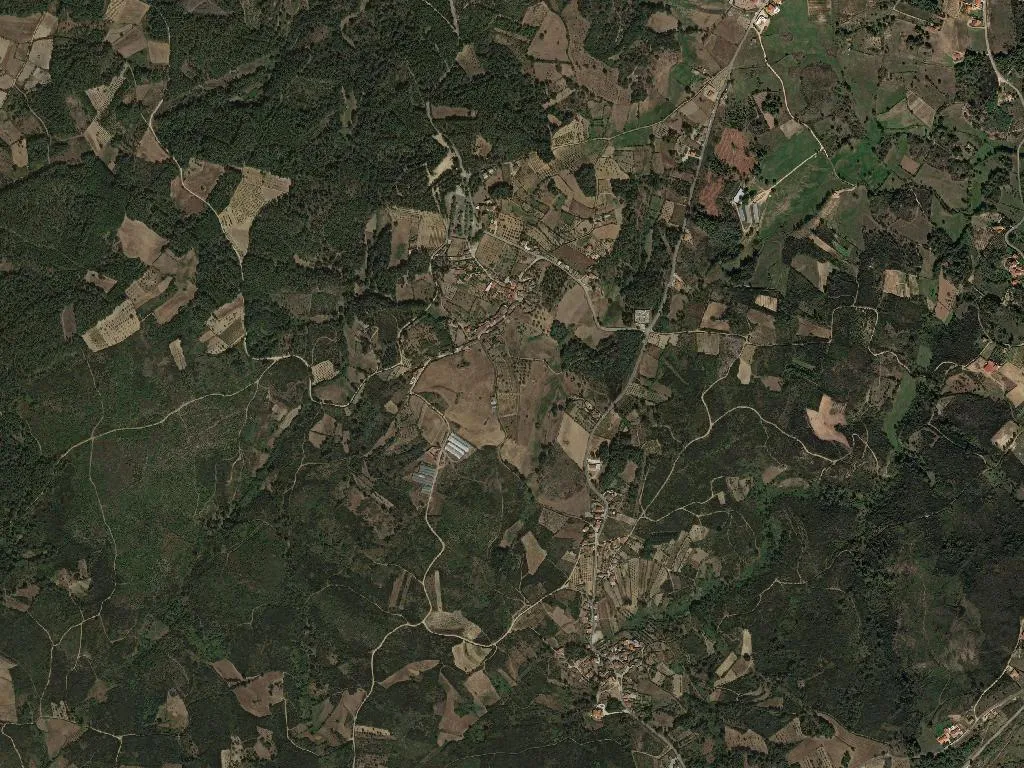
White threads lift from chimneys, needle-straight against a winter sky that feels rinsed clean of colour. At 536 m the air of Trás-os-Montes has ballast: it settles on skin, gathers in lungs, amplifies every sound until the only thing left is the mountain’s own hush. São Pedro de Agostém unrolls across meadows and oak scrub, the dark green of holm and cork broken by ochre plots of turned earth. Time is still kept by the parish church bell, by hams firming in smoke-filled lofts, by the soft thud of logs stacked before every door.
Curing rooms and high-country plates
Here gastronomy is not rustic theatre; it is altitude biology. In blackened fumeiros drip salpicão and presunto entitled to the Barroso-Montalegre IGP, their surface tightened by slow oak smoke and nights that fall to –8 °C. The alheira sausage—originally a crypto-Jewish stratagem of bread, poultry and garlic—carries its clandestine past in each juicy slice. Barroso DOP honey, the colour of burnt sugar, arrives from heather and sweet-chestnut blossoms that speckle the valley sides. Even the famous Pastel de Chaves, a pepper-laced meat parcel born ten kilometres away in the Roman spa town, tastes sharper up here, the butter in its laminated layers snapping like frost.
Way-marks of stone and faith
Two lesser-travelled Santiago routes braid through the village: the Interior Portuguese and the Lusitanian East. Wayfarers meet no souvenir stalls, only shale walls fretted with lichen the colour of oxidised copper and the occasional stamp in a café whose owner doubles as hospitalero. Boot soles echo on granite slabs laid when this land still belonged to the Order of Christ; the same slabs turn slick and pewter-coloured after rain, releasing the metallic scent of wet rock.
The arithmetic of staying
Census data read like a slow-motion departure lounge: 1,323 residents across 26 km², 377 of them past retirement age, just 136 children. Yet the subtraction is not yet complete. Kitchen gardens are still hoed at dawn, rye still thrashed in small stone espigueiros. Visitors bed down in one of two granite cottages registered under the county’s rural-lodging scheme—no concierge, simply wood stoves, wool blankets and a rooster that refuses to observe Greenwich time.
Nightfall, weighted
Lights click on in sequence after four in December, yellow squares cut into a darkness so complete it seems to have mass. Oak smoke, now invisible, perfumes the cold like a ghost of the day’s fires. Silence is not absence but occupancy: a presence you walk through, heavy as a cloak. When the norte wind slides down the valley it carries the chime of some distant bell, a reminder that elsewhere, too, people are counting the hours until morning.