Full article about Vila Verde da Raia: smugglers’ first stop after the Tâmega
Granite houses hide whisky lofts, river-beaches host fifty towels—stories of a border village.
Hide article Read full article
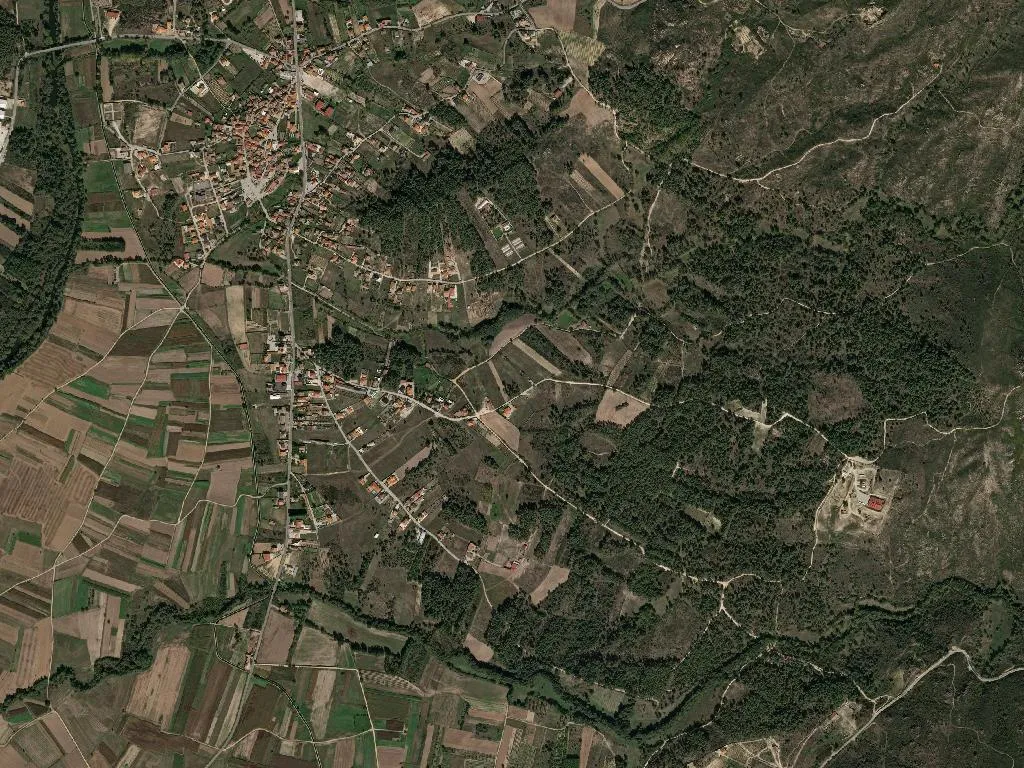
The road from Ourense drops softly towards the River Tâmega, and then Portugal begins without ceremony. A rust-spotted sign still bolted to the former customs hut at Vila Verde da Raia reads: “Livestock toll – 30$00 a head.” The tariff is meaningless now, but the letters remain, weather-worn proof that the invisible line bisecting these pasturelands once mattered. At 373 m above sea level, this is the first parish you meet after crossing the 1952 stone bridge from Spain; until 1986 it was also the first taste of Portuguese bureaucracy for lorry drivers, smugglers and shepherds arriving on the old N-532.
Smugglers’ footnotes
When every rucksack could be searched, movement itself became an economy. Café-Café instant coffee, bolts of cloth from the Cedofeita factory and untaxed Camel cigarettes crossed the bridge in double-bottomed suitcases or under three layered skirts. Maria da Conceição, 87, still laughs at the memory of sardine tins from Vigo bumping against her knees on the walk back from Verín market. House No 14 on Rua dos Pescadores hides a false step in its ceiling; 40 cm of extra height once concealed Haig whisky for Saturday-night dances. There is no museum to curate these stories—they survive in the dusk-time gossip of Café Central (Manuel Ferreira, proprietor since 1978) and in the dusty attics of granite houses that became autonomous only on 19 July 1969, detaching themselves administratively from neighbouring Santo Estêvão.
Granite bridges, slow water
Downstream, the 1964 CPPE dam has sculpted a 300-metre river-beach where, on peak August afternoons, exactly fifty towels are unfurled on the grass and children use irrigation pipes as waterslides. Dawn brings herons and mallards through the reeds, and the slanted light turns the medieval bridges the colour of burnt honey. Arcossó’s bridge, 85 m long, carries cart-grooves carved in the 1500s; the smaller Ponte do Arquinho has a centre slab that sags 15 cm—“the bride’s leap,” locals say, though no one can name the bride. Walking across demands attention: each uneven slab resets your stride, forcing you to notice weight, balance, the moment you are living.
Smokehouse flavours
The kitchen here is Trás-os-Montes in miniature. At O Tâmesa Rosa Pereira serves alheira from the Barroso plateau (€8), beef chouriço smoked for 21 days (€6) and hand-cut salpicão (€12). Carne Maronesa DOP—meat from cattle that graze the highlands of Castro Laboreiro—hits the grill over oak embers and comes with chestnuts roasted in the same coals (€18). Pastéis de Chaves, the region’s flaky-pastry half-moon pies, arrive still warm at 07:30 in the grocery O Cantinho do Tâmega, couriered daily from Pastelaria Jordão in the city of Chaves (€1.20). Inside Café Central the air is split fifty-fifty between wood-smoke and the sweet-fat perfume of hanging sausages.
Saints and slack water
The parish calendar pivots on two buildings: the early-18th-century Igreja Matriz and the domed Capela de Nosso Senhor dos Milagres. On 5 August the feast of Nossa Senhora das Neves packs 400 people into Largo do Coreto; the first Sunday of September belongs to Nosso Senhor dos Milagres—short processions, fireworks lit by António the pyrotechnician, bifanas and red wine served behind the chapel. The other 363 days tick by more slowly. Of the 815 residents, 277 are over 65; they tend walled vegetable plots, chat beside 14 stone fountains where water runs in unbroken threads, and leave the river paths unmapped so that strangers may wander by sound alone—the low flight of streaked swallows, the dam’s 12-cubic-metre-per-second murmur.
When thick fog rises, the border itself dissolves and the village floats in a white hush that erases shape, distance, time. Orientation shrinks to a single constant: water spilling over the lip of the weir, indifferent to customs unions and government decrees, reminding whoever listens that geography was here long before politics drew its first line.