Full article about Barqueiros: Dawn mist over stone-walled Tâmega terraces
Watch the river fog lift from 465 ha of UNESCO-listed vines in Mesão Frio’s hidden parish
Hide article Read full article
The mist that climbs before dawn
Fog rises off the Tâmega while the sky is still bruise-coloured, sliding between schist terraces like smoke caught behind dry-stone walls. The vines are asleep, lashed to stakes cracked by a hundred summers, and the only sound is a single hammer travelling up the valley—someone rebuilding a wall before the heat arrives. Barqueiros wakes slowly, at the pace of a place that knows grapes refuse to be hurried.
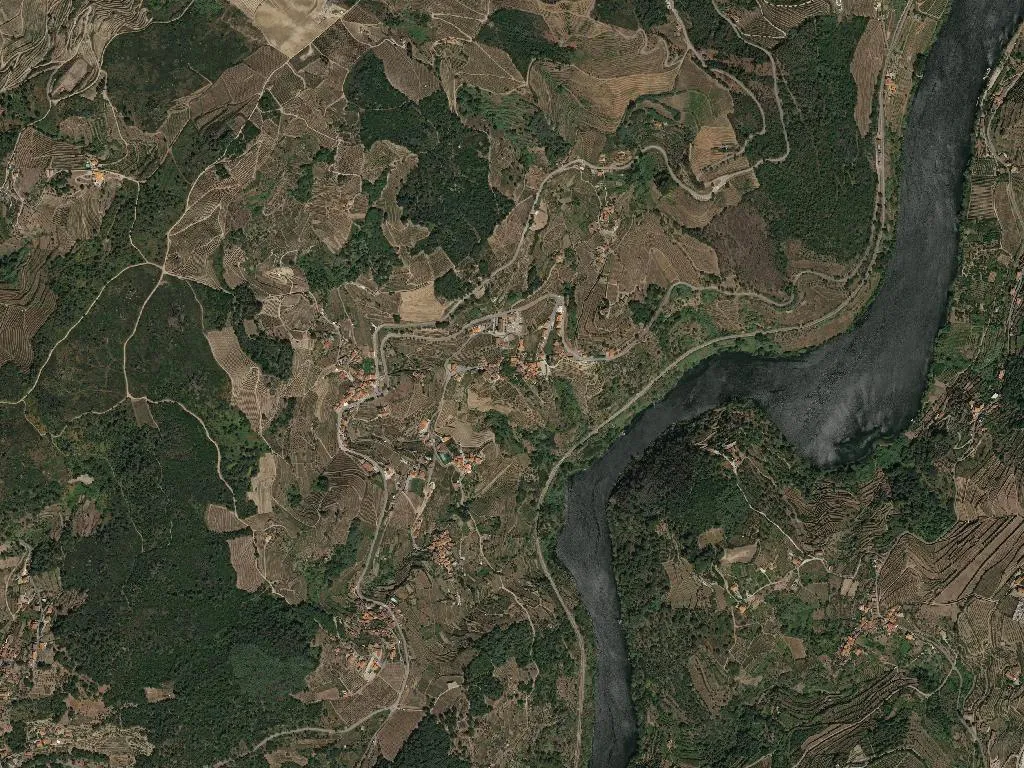
The name is a relic of the flat-bottomed boats that once ferried people and barley across the river. Shipping faded, but wine-making rooted itself in the 1600s and never left. Every square metre of soil here was torn from the mountain: terraces drop to 145 m above sea level, propped by gravity-defying walls laid without mortar, stone kissing stone in perfect friction. More than 60 % of the parish’s 465 ha is vineyard, a man-made landscape so coherent that UNESCO simply called it World Heritage and moved on.
Granite, gilt and field-side saints
The eighteenth-century parish church keeps its candle-lit gilded wood, yet the real collection is outdoors: the communal washing tank carved from a single granite block, the hill-top chapels of São Sebastião and São Roque built to break the wind, the narrow maize granaries on stilts along the footpaths. Only four buildings carry formal protection, but the entire slope is an open-air museum—every stone press, every calvary, every manor gate is a fragment of collective memory.
You will find no fireworks-coated patron-saint festival in the municipal brochure. Instead, there are restrained romarias: a January procession to São Sebastião across muddy terraces, an August open-air mass for São Roque followed by long tables under mulberry trees. The true calendar is viticultural: January’s communal pruning, September’s harvest that pulls emigrants back from France and Switzerland, the treading of grapes in the granite lagar, bare feet purple to the ankle. Afterwards comes the sopas dos caldeireiros—bread, streaky bacon and hot wine—eaten to the wheeze of a concertina.
What the mountain and the vine put on the plate
Kid roasted in the communal wood oven and finished with a glass of vintage Port. Posta maronesa beef grilled over vine-cuttings that scent the meat with caramelised sap. House-made chouriço and salpicão sliced straight from the smokehouse. Arroz de sarrabulho, the blood-rich risotto sharpened with garden mint. The local boiled dinner—cabbage, potato and home-cured sausage in an iron pot. Desserts borrow the baker’s tray: sponge soaked in Moscatel, egg-white cavacas, pumpkin jam set with heather honey. To drink, small-estate DOC Douro reds and the rare white Moscatel Galego grown on riverside terraces.
A handful of growers still bury a single bottle at the foot of the oldest vine—“wine of the dead,” a nineteenth-century trick that kept liquor cool through drought. Today the gesture is pure remembrance.
Walking between stone and water
The PR 10 MF footpath, nicknamed “Caminho dos Socalcos,” strings together six kilometres of walls, granaries and Tâmega viewpoints between Barqueiros and the hamlet of Cidadelhe. Start at dawn; there is no café en route, only stone, river glint and the occasional hoopoe. Half-way, a wooden bench at Casal de Loivos lets you watch the Douro bend like poured mercury between the ridges—one of those vistas that converts even the camera-shy.
Barqueiros is the smallest parish in the already pocket-sized municipality of Mesão Frio: 537 residents on the books, double that when the grapes turn violet. Grandchildren who have never pruned a shoot are flown in to feel the valley’s damp dawn, to carry the 20 kg basket, to learn why their parents left. When the lagar is hosed down and silence returns, the Tâmega keeps rushing below, indifferent to centuries, calendars or anyone’s need to leave.