Full article about Copper-dusk Cidadelhe: vines & creaking gates above Douro
Alto Douro schist terraces, granite chapel, dwindling 131 souls
Hide article Read full article
Copper light on schist
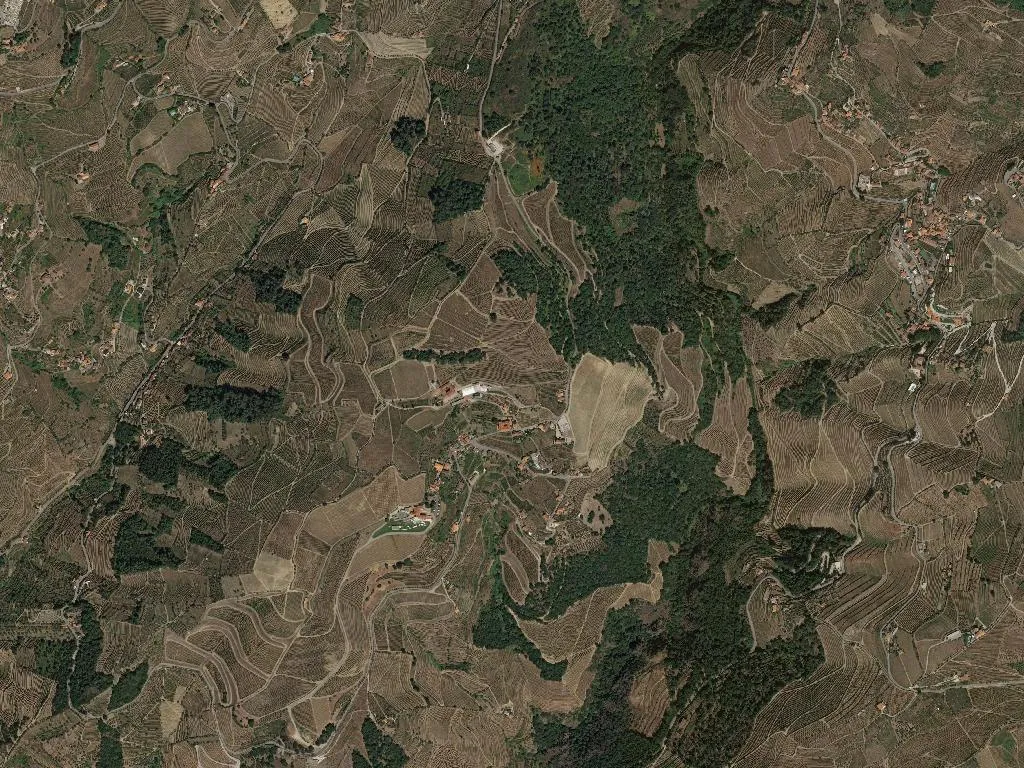
The sinking sun burnishes the Douro terraces to the colour of a newly-minted penny. In Cidadelhe the afternoon is so quiet you can hear a wooden gate complain on its hinges and, somewhere beyond the village, a rooster tuning up for dusk. One-hundred-and-thirty-one souls live on these 2.6 km²—yes, I counted—yet the lane from the granite cross to the Fontelo spring feels like ten when you walk it at altitude. At 355 m the vines grip the flaky schist as though one slip would send them cartwheeling into the river.
The geometry of wine
Cidadelhe sits inside the Alto Douro Vinhateiro, a UNESCO World Heritage site where the hills have been re-engineered by people who never cracked a book on Le Corbusier. Every dry-stone wall—hand-stacked each spring after winter rains—shoulders a narrow platform on which Touriga Nacional and Tinto Cão ripen under a sun that locals swear beats Galafura’s by several degrees.
The old vines, trunks twisted and thick as a navvy’s forearm, will end up in a bottle of vintage port. First, though, they detour through the five-litre jug Mr Ramalho brings to the tavern on Sundays—“to kill the bugs,” he insists.
The vineyard calendar ticks louder than the bus that links the hamlet to Mesão Frio. In September the air smells of crushed grapes and wood-smoke from the clay ovens baking “pão de massa” for the pickers. The hands that snip each bunch know every vine the way I know my brother’s faults—intimately, and the list is long.
Granite and memory
Official leaflets list “two monuments of public interest”. In practice that means the parish church and the chapel, both granite, both open only for mass or funerals. The stone is pale next to the dark schist of the terraces: different geology for different jobs, equally unforgiving to a cyclist’s knee.
Forty-four residents are over sixty-five; nine are under fifteen. The arithmetic is brutal: in twenty years the place will be called Cidadelhe Velho or someone will have to build a nursery. On warm afternoons cane chairs sprout outside front doors like mushrooms after rain. Conversation moves at the pace of men who have watched 70 harvests and know the Douro is never in a hurry—yet waits for no one.
Smoke-cured flavours
Presunto de Vinhais IGP finds educated palates here: people who can judge the slow cure, salt balance and silk-on-the-tongue texture—and who still pay in instalments because the minimum wage refuses to stretch. In stone outhouses oak and gorse smoke drifts over hams suspended from blackened beams. Dense rye bread, sour enough to make a mother-in-law smile, arrives sliced whisper-thin, carved with a “point-and-goat-handle” knife onto a table that holds more stories than cash.
Three village houses take paying guests—farmsteads whose owners have discovered Wi-Fi but still drop the showerhead straight onto stone flags. From the terrace you get a private mirage of the Douro: no coaches, no selfie sticks, only Senhor António’s grandson checking if the newcomer is lost. Access is a single-track road that coils like a dropped ribbon; sat-nav hesitates longer than I do over a second glass. The reward is the illusion that you alone have found this angle of the valley—plus a rental-car scratch the insurance will not recognise.
When the lights blink out at 22:30—Dona Fernanda’s, always the last—the stars appear with a clarity cities have forgotten. Far below, the river murmurs, invisible yet insistent as Mr Ramalho’s hangover, while the schist releases its stored heat and the village elders release the aches of a lifetime.