Full article about Vila Marim: Douro balcony stitched in schist
Vila Marim, Mesão Frio: vertiginous Douro terraces, midnight-schist walls and a café pour of 2018 vintage shared by the last 915 souls.
Hide article Read full article
Third-gear corners and schist walls
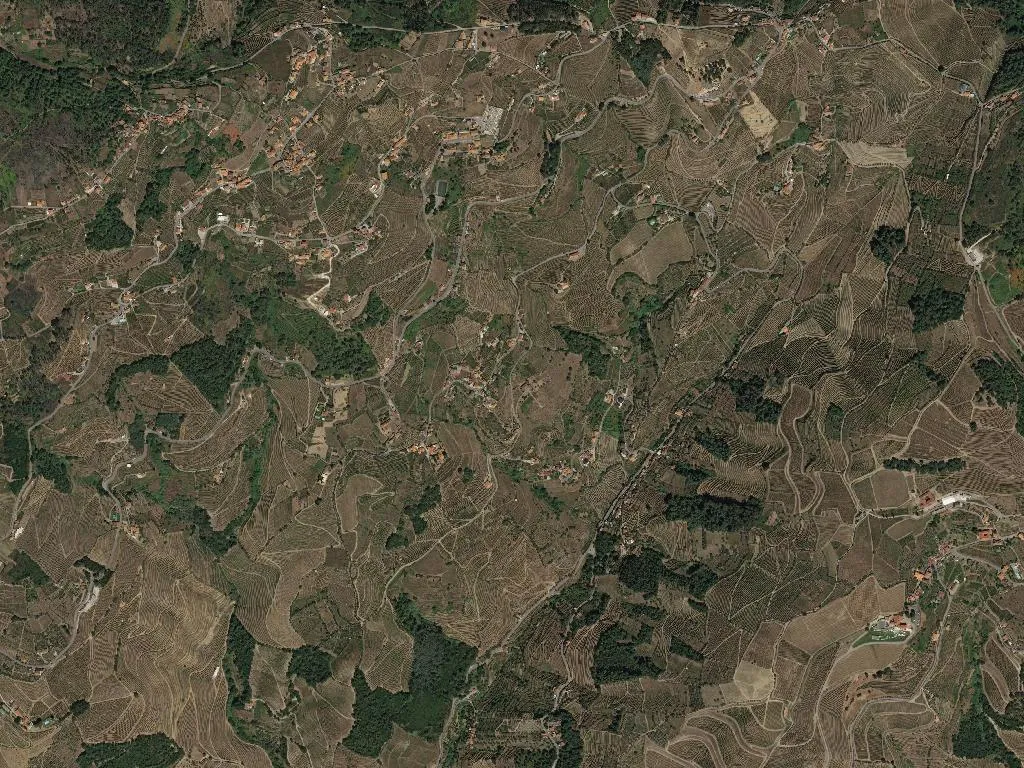
The N322 between Mesão Frio and Peso da Régua demands a down-change from fourth to third, then a heel-and-toe drop to second as the tarmac kinks between walls of midnight-grey schist. They rise like tectonic bookends, heat-stained and vine-mortared, until the terraces appear: ruler-straight rows pinned to a 35-degree slope so steep that even a sure-footed mule would think twice. At 306 m above the river, Vila Marim hangs above the Douro like a balcony over an amphitheatre; the water below is a molten pewter ribbon that steadies the whole hillside.
Officially, 915 people live here. At midday, it feels closer to 90. The parish register lists 301 residents over 65 and only 69 under 14; the primary school closed a decade ago, leaving the bakery (Mon–Sat, 07:30–13:00) and Adelino’s café, where the espresso is poured short and the lupini beans arrive in a chipped white bowl, not a foil bag.
Roots in the Vinhais term
The toponym “Vila Marim” has been bouncing around since at least 1258, when it appears in a foral granted by King Sancho II. Linguists argue whether the second element comes from the Latin marinus—a mocking label, since summer water is scarcer than shade—or from the medieval administrative “termo” of Vinhais, 120 km north-east. Either way, the place is now indelibly part of the Alto Douro Vinhateiro UNESCO site, a status that explains why every square metre of vine has been wrestled from bedrock. The schist walls are not picturesque; they are structural, storing noon heat and releasing it at 2 a.m. to keep Touriga Nacional ripening.
The Port Wine Route technically passes through, but you will not find brown tourist boards. Stop the car, wind down the window and ask the first figure contouring the slope—probably 78-year-old Armando Carvalho, who can pace out his 1.2 ha parcel blindfolded and will invite you in for a glass of 2018 vintage that never made it as far as the co-op.
What holds on
There is a listed monument—Igreja Matriz de São Tiago, Manueline doorway, 1523—but nobody will steer you there. Instead, count 15 houses that rent out rooms. None has a spa; several have Douro-facing infinity pools carved from the living rock. Dona Laura’s place, Quinta da Veiga, offers a east-facing terrace where the dawn ignites the river first, then the vines, then the coffee in your porcelain cup. Booking.com calls visitor numbers “moderate”; translate that as “a handful of Germans with carbon-fibre walking poles who treat the 18 % gradient like a Sunday park run”.
At lunch, the plate is presunto de Vinhais IGP, cold-smoked over oak for three months, its fat the colour of wheat. The wine list is short: whatever the quinta made last year. Expect a field blend of Touriga Franca, Tinta Roriz and Sousão that stains the glass violet and needs the fatty salt of a winter bean stew or a mountain cheese brittle enough to make your molars whimper.
Forget selfie decks. Beauty here is utilitarian: the terraces exist so the soil does not slide into the river; the roofs are low because the north wind arrives with intent. When the sun drops behind Marão and the terraces flash gold like bullion, you understand why Luís, 29, turned down a civil-service desk in Vila Real to prune his grandfather’s vines instead.
The work is kneecap-hard, the population is greying, but the vines themselves are age-agnostic. Every September they demand hands, ladders and 04:00 starts, and every September Vila Marim answers—earth beneath fingernails, a glass of last year’s red on Adelino’s Formica table, the Douro below carrying away the stories of whoever did not come back from the last harvest.