Full article about Bilhó: where church bells echo off schist and pine
Stone lanes, cabbage plots and chimney-cured ham scent the 544-m air
Hide article Read full article
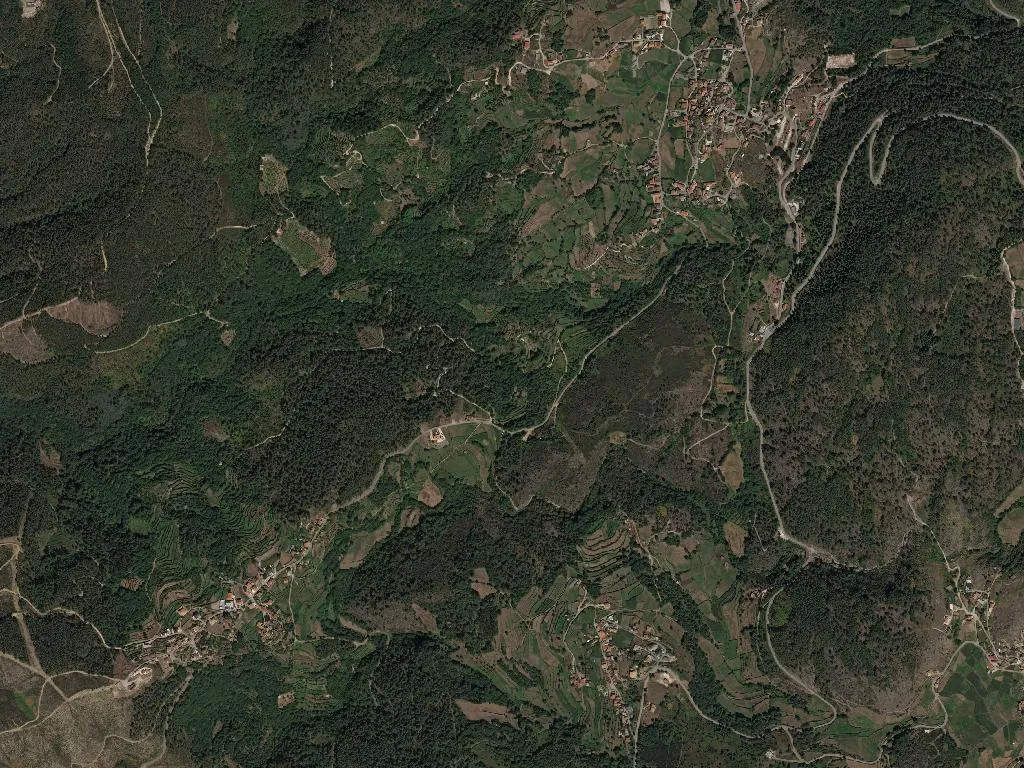
The church bell always strikes on time, though never in a hurry. Its note clings to the cold air before slipping down the valley as though following a map committed to memory. At 544 m above sea-level, Bilhó’s green is not the rolling sort you find in tourist brochures; it clamps itself to the schist, climbs walls, and keeps ascending until your eyes tire. Wind arrives carrying a tang of scorched pine, and on rainy days the earth smells so strong you taste it on the back of your tongue.
Officially there are 429 residents, yet the cobbled lanes reveal only the couple sprinting to the bakery before Maria shutters up at ten. Everyone else is in the fields—knee-deep among cabbages still waiting for the knife—or in stone outbuildings drawing last year’s wine for a first critical sip. Of the nine holiday cottages recently registered, two now flash electric-blue doors; they catch the eye, but the village’s core remains stubbornly grey: xisto roofs patched with lichen and punctuated by mud-swallow nests that reappear every April without fail.
Granite and custom hold sway
Stone dictates the pace: walls that subside gently into the gorse, threshing circles now sheltering tractors, granite troughs where Augusto still hand-shells maize when the mood takes him. The parish counts 145 pensioners and 31 children—rough arithmetic gives every grandmother a fifth of a grandchild. Even so, someone will teach the boy to split kindling in two clean strokes, to whet a scythe, and never to reach near a goat in labour.
In October, Zé Mário hauls a haunch of presunto up to the chimney; by April it emerges burnished and hard as a hoe handle. Sr António’s honey sets in the pot under a parchment crust—one spoonful tells you whether the hive had a good year. Lamb from the neighbouring Barroso plateau tastes of heather and peat; local lamb carries the sharper note of grass that forces its way between irrigation stones.
Faith that still walks
On the Night of the Romeiros every household lights a single lamp of leftover funeral wax, yellowed and guttering. The procession forms at the church portico and sets off for Santiago de Mondim de Basto—twelve kilometres out, twelve back—accompanied only by murmured gossip and the percussion of ageing knees. The priest is already waiting beside cases of cooperative red; a quick glass, an “ora por nós”, and the return leg begins before the frost finds their bones.
Vines climb the apple and chestnut trunks as though the ground were unsafe. The planters are long gone, yet bunches still appear in September: tight, tart, perfect for the farmhouse wine that scratches the tongue when drunk from a chipped ceramic cup. No guided tastings here—just Sr Domingos, who will fill your five-litre plastic flagon if you produce a clean one.
The Alvão plateau begins where the asphalt ends. A hunters’ footpath—blazed with a machete—leads through oak scrub to water so cold it hurts your knuckles. At dusk the sun catches the tree-line and everything turns gilt for exactly sixty seconds; then someone seems to throw a switch and the colour drains. Silence settles, scented with damp leaf, and you hear Bobi the village dog bark once—because that is what he always does, right on cue.