Full article about Campanhó & Paradança: bell-echo villages above the Olo
Campanhó e Paradança, Mondim de Basto: chapel bells, stone bread ovens, sword dancers and river-mist vineyards at 499 m
Hide article Read full article
The Bell Rings Three Times
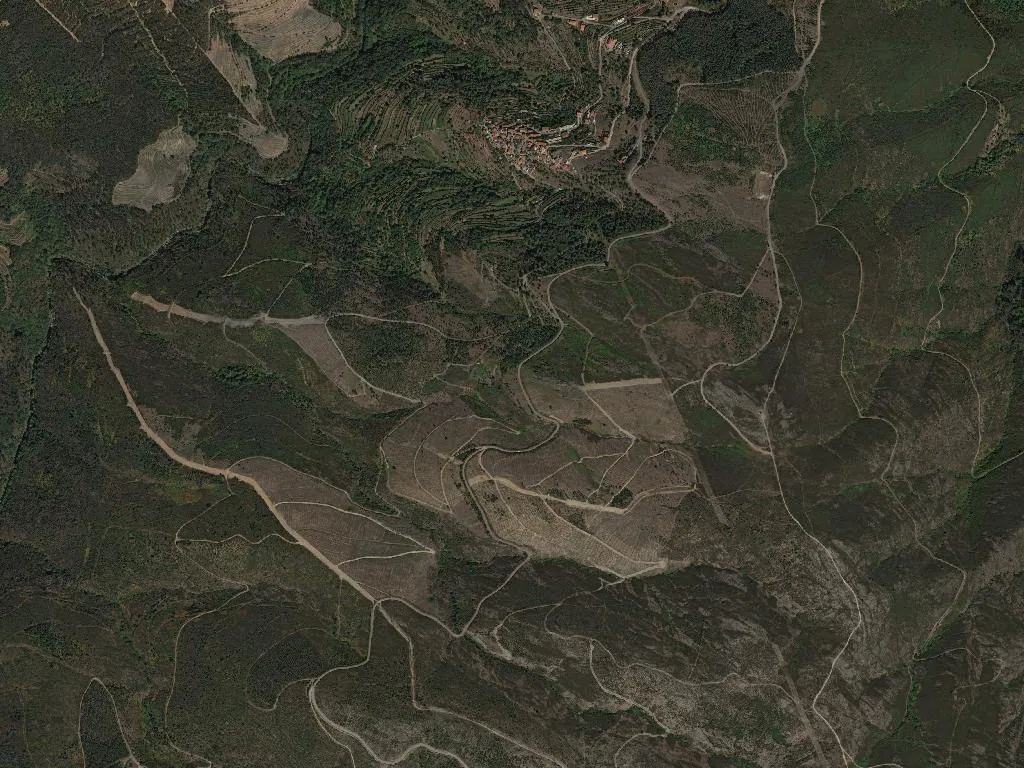
The chapel bell tolls once, twice, three times – six o’clock, the village hour – and the note ricochets across the slate ridge that keeps Campanhó and Paradança from tumbling into one another. Below, the last shafts of sun burn off the river-mist still crouched in the folds of the valley, picking out the tiny terraced vineyards that grip the slopes like limpets. Wood-smoke, not diesel, drifts on the air: slow-burning oak resin, the scent of every front-room hearth between here and the Natural Park of Alvão. At 499 m above sea-level the open campos that gave Campanhó its Latin name roll east until they bump into the granite ramparts of the park, and the only soundtrack is the hushed conversation of the river Olo, hidden under alders.
Two hamlets, one story
An administrative stroke in 2013 married what geography had already pushed together. The two villages lie 1.8 km apart, each with its own patron saint and annual excuse for fireworks. Campanhó has prayed to Santa Bárbara since 1727, the year its wayside chapel was first registered; Paradança rallies round St George, still toasted with gunshots on 23 April. On the parish coat-of-arms approved the year after the merger, the bread oven and the drum are not rustic decoration: the oven is the communal stone kiln still fired every Saturday for crusty mountain loaves, the drum is the leather bombo that keeps time for Paradança’s pauliteiras – sword-and-stick dancers – on the first Sunday of May. Grand monuments are scarce; instead there is the 1784 schist wall that once enclosed the coutada hunting ground of Pereiro, the granite threshing-floor with its 23 hand-hewn beaters silent since 1978, and an 1872 wayside crucifix whose “Ye are the salt of the earth” remains legible on the road to Vilar de Ferreiros.
A pilgrimage that misses Santiago
Curiously, this parish venerates St James without lying on any recognised Camino. The Night of the Romeiros (24 July) and the Romaria de Santiago (25 July) commemorate a vow made in 1835 when cholera skirted both villages. The “pilgrims” are simply locals: they leave Campanhó at 4 a.m., descend to Paradança’s 1703 chapel of Santiago – extended in 1926 when emigrants returned from Brazil with deeper pockets – and climb home again behind Zé da Cuca’s one-row accordion. Scallop shells are absent; instead there is flame-grilled Celtic-pork chouriço and 200 ml tumblers of Vinho Verde from the cooperative press at Lagar do Carvalhal, washed and reused until the glass clouds.
Meat, honey and green wine
The kitchen here needs no ornament. Carne Maronesa DOP – 28 pedigree animals graze above 600 m – becomes rojões, nuggets of shin and belly seared with Marmeleiro bacon, served on 24 July in black pottery bowls thrown in neighbouring Vilar de Ferreiros. Barroso IGP milk-lamb, reared by the Gomes family in Paradança, spends four hours in a wood oven with a handful of garden-grown pennyroyal. Antonio Monteiro’s 30 hives of Iberian black bees produced 840 kg of Mel das Terras Altas do Minho DOP in 2023; he sells it from his front door at €8 a kilo. Over the square in Campanhó a Bisaro pig leg has been dangling from an oak beam since November; it will be cracked open on Epiphany. The local pour comes from Casal do Paço: 1.2 ha of loureiro trained on schist terraces, 4 000 bottles a year, €4 if you knock at the winery gate.
Between the Tâmega and the Alvão
The footpaths carry no way-markers, only names learnt at primary-school break. The Caminho do Ribeiro drops 2.3 km to the Olo, where a 1952 concrete bridge replaced the log crossing swept away by the flood of 1946. The Trilho da Urze climbs 350 m to the Santa Luzia plateau; at 860 m you can sight the river Tâmega 7 km off, the shuttered 1896 station of Campanhó (passenger service axed 1990) and, inland, the rocky crown of Alvão at 1 030 m. The flora is a short roll-call: tree heather flashing white in August, bracken browning in September, crystalline moss upholstering north-facing walls. A buzzard starts its thermal circuit at 11 sharp; blackbirds sing at five, even in December. With barely twenty souls per square kilometre the silence is so complete you can hear Joquinha’s 1970s John Deere clockwork tick a kilometre away.
What lingers
At day’s end, when the light thickens and shadows stretch like cats across the meadow, the same tractor drones home. Smoke rises vertical from chimneys; no wind disturbs it. In the six legal village houses – three in Campanhó, two in Paradança, one down by the Olo – lamps come on: twenty-three beds in total, 42 % occupancy last year. Night chill arrives with the smell of damp earth and the certainty that at seven tomorrow the mist will refill the valley like an unhurried tide.