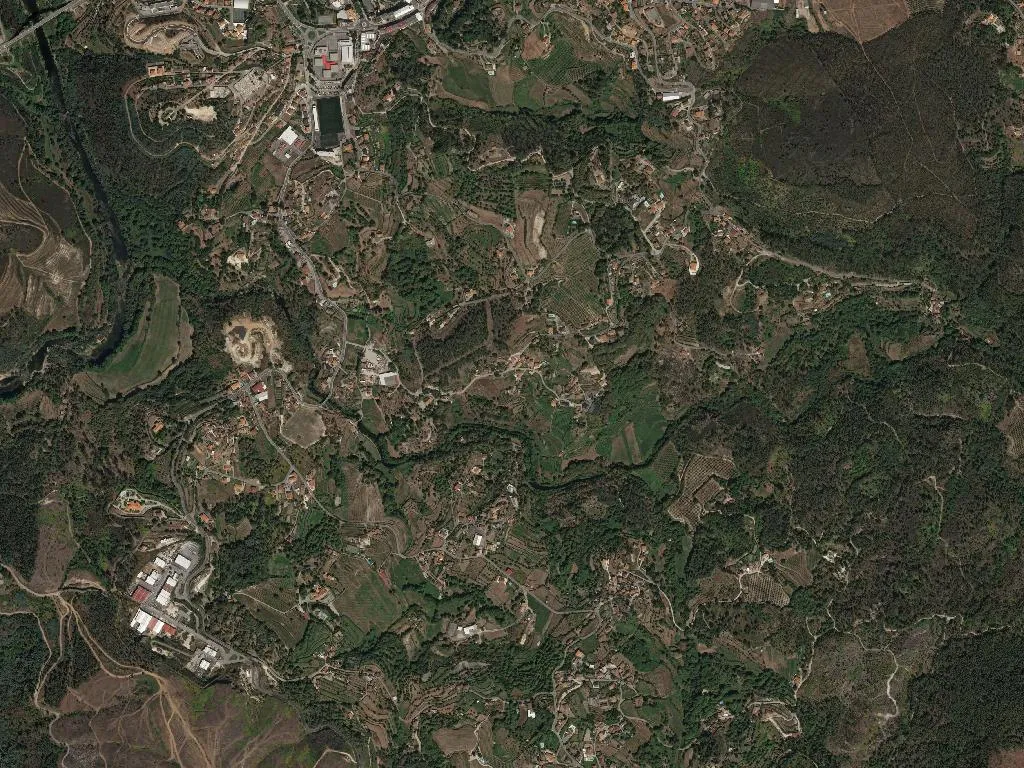
Full article about São Cristóvão de Mondim de Basto
From 1278 charter to Iron-Age castro, taste €3 roast chestnuts, Azal wine, river-beach trout.
Hide article Read full article
The parish bell strikes eight, its bronze note sliding down terracotta roofs into the Tâmega valley. On the second and twenty-second of every month Dr. Augusto Brito Avenue becomes a ledger of smells: cured mountain cheese at €12 a kilo, smoke still clinging to chouriço, dew-damp kale from the allotments of Bilhó. A paper cone of roast chestnuts costs €3; wood smoke drifts from half-open doorways. Somewhere below the oak canopy the Campos stream slips unseen over granite.
1278-2024
First recorded in a 1278 charter, the settlement’s name compresses Latin and medieval pasture rights: “Mondim” from monticinus, little hill; “Basto” from the open grazing land attached to the castle of Bragança. The main church, finished in 1757, smuggles a 14th-century Gothic portal beneath its Baroque retable. Inside the Romanesque Chapel of the Lord a sixteenth-century Saint Christopher, smothered in goose-foot gold leaf, spent the Napoleonic wars hidden inside a chestnut trunk.
Castro do Crastoeiro
A four-kilometre waymarked trail climbs from Campos through schist walls flushed pink with rhododendron. Terraces of Avesso and Azal grapes stair-step the slopes; at 550 m the Iron-Age castro gives a hawk’s view of the river loop. Descend to Vilar de Viando’s river-beach for trout-transparent water and a single-arched granite bridge that once carried the Royal Road from Braga to Vila Real.
What to eat
At “O Moinho” order IGP Barroso milk-fed lamb (€14) with chip-sized roast potatoes and a glass of spritzy Azal. In winter the kitchen turns to stuffed pig’s stomach—bucho—simmered with turnip tops and corn broa. Start with salpicão sausage and a scoop of rice blood pudding, finish with sopa dourada, a saffron-scented bread custard, dribbled with DOP Terras Altas Minho honey over a slab of cured sheep’s cheese.
24-25 July
Pilgrims walk the Caminho dos Romeiros barefoot, 7 km and 600 m downhill from the hilltop chapel to the Sanctuary of Grace. An open-air mass is followed by free caldo verde. The Romaria de Santiago spills into the square: processions, bonfires, clay bowls of pork-and-pepper rojões (€7). For four days the Feira da Terra fills stalls with linen weaving, mountain wool and every DOP/IGP label the Alto Minho can muster. On the last morning farmers drive their caramel-coloured Maronesa cattle through Bilhó—the only fair in Portugal dedicated to the breed.
As dusk folds over the cultural centre, Joaquim Paulo’s concertina—hand-built in his workshop behind the petrol station—sends fado-like laments across the valley to the emigrants who still order his instruments from Paris and Newark.