Full article about Vilar de Ferreiros: Where Water Writes on Granite
Snow-melt levadas, chest-high terraces and a chapel-tilted skyline shape Mondim’s hidden hamlet.
Hide article Read full article
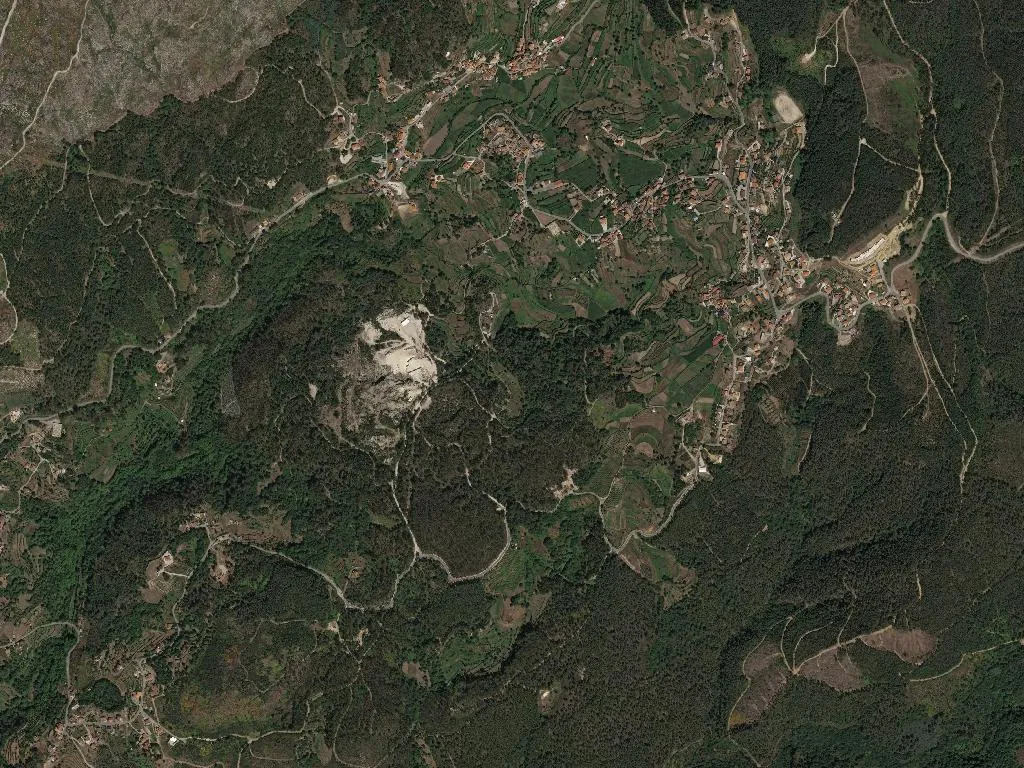
The sound arrives first: water sliding over granite, a hush that ticks like the long-case clock in my grandmother’s hall. It spills from the Piscaredo levada, a vein of snow-melt that has irrigated these terraces since the 13th century, when iron-workers from the Guarda highlands wintered here to shoe oxen and mend ploughshares. Even in August the air cools as you climb, weighted with dew that never quite burns off. Fingers brush moss-slick stone; the scent is of wet oak, bruised fern and the low, wild scrub that colonises every gap between the vines. Vilar de Ferreiros—888 souls, 549 m above the Douro—hangs on a geometry of water, wall and faith: channels that step down the slope, chest-high terraces that cup the vines, chapels dropped at intervals like commas in a long sentence.
The smiths’ echo
The parish name remembers the ferreiros who once hammered charcoal into steel. You can still cross their bridge at Trandeiras—wide enough for a modern tractor, its single arch unchanged—and trace the rebuilt dry-stone walls Joaquim repaired after the storm of ’22. Maize dries in stone espigueiros, miniature granite temples where grandsons now hide vape pens. The parish church tilts its asymmetric tower over the village as if apologising for the uneven ground; above, the whitewashed Capela de Santa Quitéria keeps night-watch over the valley. Stand there in August and Mondim’s street-lights below look like constellations that have slipped their moorings.
Waterways and pilgrim fires
The Levada do Piscaredo is the parish spine. It begins at the Fonte da Póvoa, tunnels through the Carrascal oakwood—where António still sneaks in potatoes between the roots—and skirts Sr Albano’s pergola-trained vines. His vinho verde fires the throat; Braga restaurants pay a premium for the burn. Seven kilometres upstream the track to the Santuário da Graça starts, a calf-numbing ascent that on clear days gifts you a shimmer of Atlantic blue.
Every July the Romaria de Santiago pulls the entire village from bed at 4 a.m. Pilgrims slap sandals against cobbles as if to wake the medieval dead, torches bobbing up ancient paths. Ti Chico never remembers the hymns but could walk the route blindfold. By midday the churchyard fills with refectory tables: D. Rosa’s sarrabulho rice (stirred since three), Zé Manel’s kid goat on a six-hour spit, and the bakery’s cavacas—egg-white biscuits that sell out before the priest reaches the Kyrie.
Altitude on the tongue
Taste obeys altitude here. Carne Maronesa from Albano’s oxen, grazed on Cabreira summits; Zérito’s lamb, inspected once a year by a vet who hikes in for the privilege. Sunday demands cozido à portuguesa—chorizo, shin, cabbage, potato—simmered in a cauldron so wide D. Lurdes has to carry it like a child. Sequeira’s honey carries heather from 600 m; he started beekeeping at fourteen and swears his bees are fussier than any mother-in-law. In Sr António’s cellar a three-year ham hangs like a dowry; “same as women,” he winks, “the older, the dearer.”
Granite, schist and very few strangers
Four guesthouses—stone outside, underfloor heating within—look permanently shuttered, yet Booking.com flashes “no availability”. Yellow way-marks fade fast; ask Sr Domingos on the bench and he’ll draw a map in the dust. Population density is 31 souls per km²; meet another walker and you’ve probably booked the same dinner table. If it’s Sr Joaquim, allow an hour: he’ll recount the entire Colonial War, complete with kit-list.
Of the 265 residents over 65, many still sing ao desafio—improvised verses traded across winter fires while stripped vines thrash outside. D. Amélia, 92, climbs to her potato patch daily: “keeps the path home open,” she says. Long after you leave, the levada’s pulse stays in your ears: water on granite, cold stone under palm, the iodine smell of wet oak. Vilar de Ferreiros never insists; it lets itself be overheard—one empty chair in the café revealing, without a word, that Ti Arménio is gone.