Full article about Covelo do Gerês, where mist swallows the mountains
166 souls, granite terraces and a silence you can almost touch
Hide article Read full article
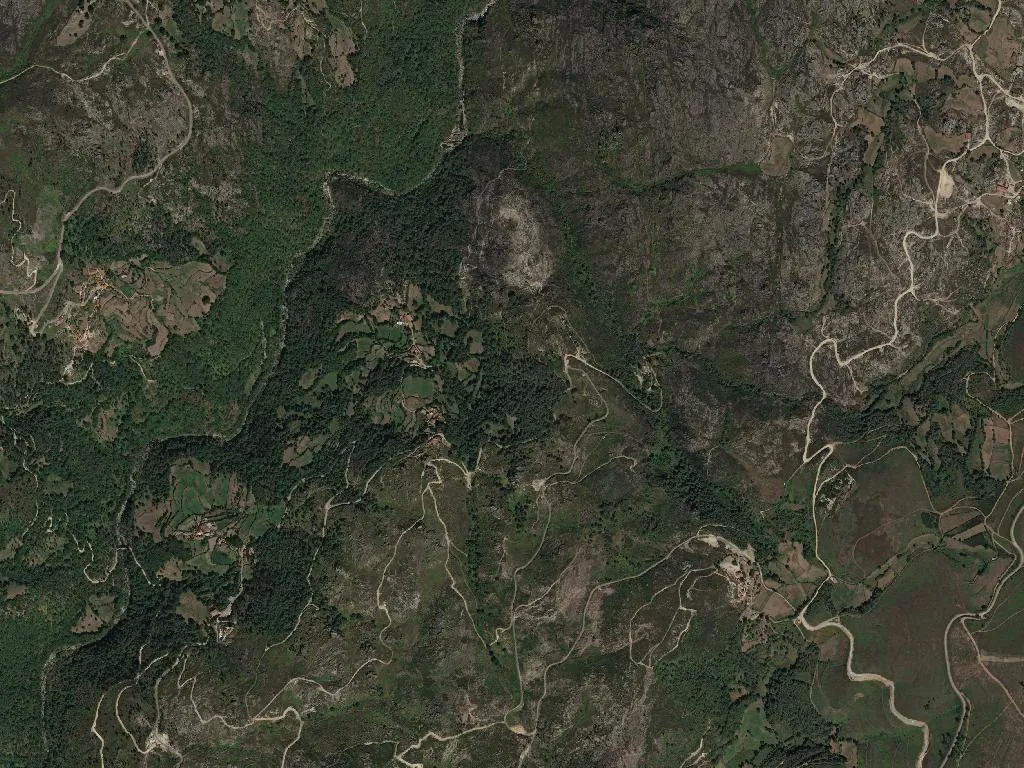
The morning mist clings to the oak scrub and the sound of the Lapa stream arrives sharp-edged, uncluttered by engines. Covelo do Gerês wakes slowly. Its 166 residents—you can recite them by heart—are scattered across more than a thousand hectares of granite slope where the Barroso plateau fractures into terraces of gorse and broom. On the threshold of Peneda-Gerês National Park, silence is not the absence of noise but a dense, almost tactile presence: wind combing the summits, water sliding over black stone. When the fog closes in, the world appears to end at the next bend. It doesn’t; the mountains are simply reminding you of your own coordinates.
Stone that remembers
The parish church of São Vicente still anchors the village centre, its grey baroque façade quietly surrendering joints to moss the way a clerk stamps a time-sheet. Inside, gilded carving catches the oblique light and 18th-century azulejos show biblical scenes faded to the colour of weak tea. Higher up, at Cimo de Vila, the tiny Chapel of Nossa Senhora da Piedade interrupts the Portuguese leg of the Camino Nascente to Santiago. Fewer than five hundred walkers a year tackle this stretch; many give up at Soajo. Those who reach Covelo are the stubborn sort. The medieval bridge over the Lapa keeps its pointed arch intact, granite blocks locked without mortar, still guiding cattle across after seven centuries.
Masks, bells and midsummer fires
The first Sunday in May, a procession climbs to the churchyard accompanied by bonfires and the sweet smell of mass-produced cake handed out to the faithful. The Festa do Senhor da Piedade drags home emigrants from Lisbon and Bordeaux; the village doubles in size and sofas become guest beds. At Carnival, the Caretos of Covelo storm the lanes—hand-carved wooden masks, wool fringes in acid yellow and scarlet, concertinas ricocheting off schist walls. They number barely a dozen yet make enough racket to rebound off the next ridge. In August, worshippers hike eight kilometres to the mountain-top meadow of Senhora do Pranto for an open-air mass, boots drumming a dry-earth rhythm while the valley unrolls below in green and ochre. Bring water; the café only unlocks at weekends.
Barroso on a plate
No euphemisms here: kid goat roasted over embers, carne maronesa rice, pork belly braised in bay and garlic. The IGP-smoked alheira of Barroso-Montalegre arrives dense and urgent, flanked by Trás-os-Montes potatoes and a wedge of warm maize bread. Pumpkin chouriço—sweet, clove-scented—shares the board with air-cured salpicão and sheep’s-milk cheese that squeaks against the teeth. Finish with DOP Barroso honey over a slice of horseshoe cake, locally known simply as bolo de ferradura because a horseshoe is a horseshoe and needs no further poetry. The accompanying vinho verde, lightly spritzed, comes from terraced vines that step down toward the Caniçada reservoir. If Sr António offers a thimble of home-distilled bagaceira, accept; refusal is considered discourteous and you will not be asked twice.
Trails where wolves still commute
The Senhora do Pranto footpath climbs four kilometres through heather and bald granite to the Franqueira lookout. At sunset, griffon vultures plane overhead while the Homem valley bronzes in the low light. That howl you half-hear is not a dog; Iberian wolves still descend when snow bottles up the high plateaux. Below, the Queda da Cabra pools stay glacial even in August—local children hurl themselves from improvised bridges while parents practise selective blindness. The Xertelo track ends at a ruined water-mill, its wooden wheel fossilised mid-rotation. The hamlet of Xertelo safeguards the council’s tallest espigueiro: twelve wooden stilts, seven metres high, built to defy Atlantic gales and the odd blizzard. Locals claim it holds sixty maize sacks; the optimist in me insists sixty-five, but no one is taking bets.
When dusk settles and the last sheep clatter down from the high pastures, the echo of cowbells lingers between granite walls. No hurry survives that ancient sound. It signals the day’s close, the arrival of night, and the promise of swede soup tomorrow. If you pass the blue-shuttered house, knock: Dona Idalina is always at the window, coffeepot already on the stove.