Full article about Morgade: where granite teeth bite the sky at 962 m
Morgade, Montalegre, guards Peneda-Gerês’ edge: granite hamlet, Maronesa cattle, oak-smoked sausages and a church clock frozen in time
Hide article Read full article
The first light of morning skims the plateau and drags long shadows across the wet meadows. At 962 m the night’s chill clings to the soil; even in August the air has a blade to it. Morgade inhales slowly, at the tempo of its 195 registered souls. Locals insist the figure is optimistic. In the only bar the smart money says fewer. Granite erupts through the grass like elderly teeth that refuse to come out. Silence prevails until the church bell remembers to strike – unless the wind pockets the sound – or until a Maronesa cow lowing somewhere beyond the stone walls offers commentary on existence.
Edge of the Park
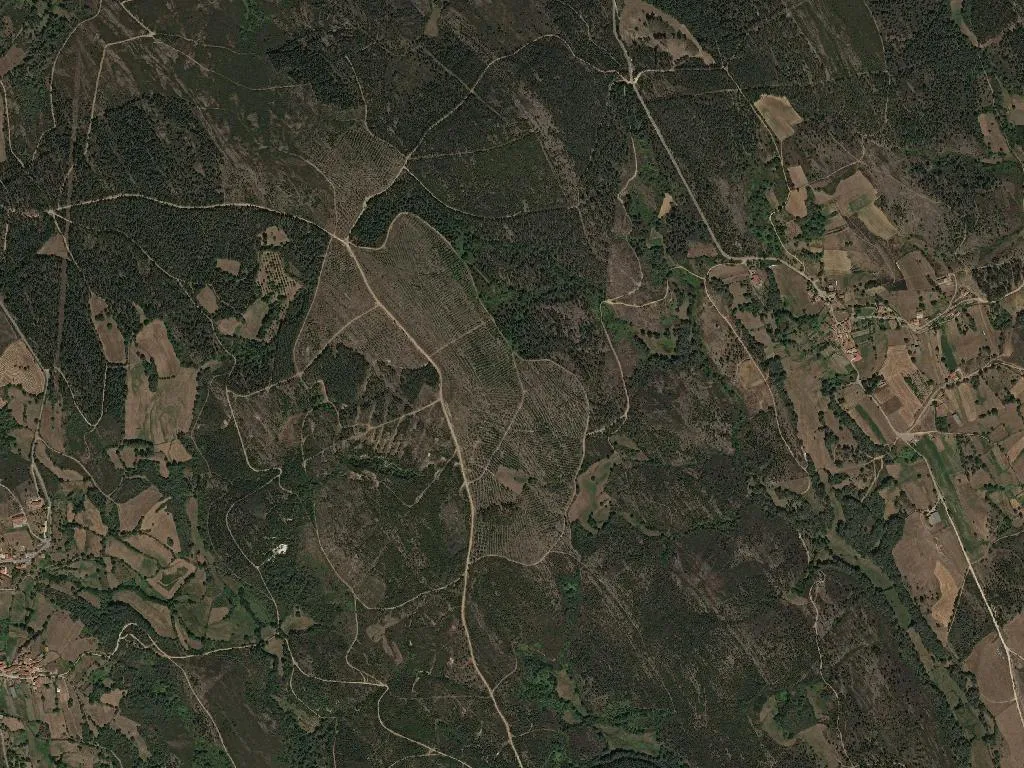
Morgade sits on the lip of Peneda-Gerês National Park where the mountain writes the rules and weather changes its mind hourly. Its 2,114 hectares spill across knee-complaining slopes and deep valleys where granite boulders look planted by a prehistoric set dresser. Oak and sweet chestnut cloak the lower contours; higher up, heather and exposed rock take over. Walking here demands lungs as well as legs – the air is thin and city-softened bronchi notice.
The nascent Caminho de Santiago – the lesser-known eastern variant of the Portuguese route – crosses these heights. Backpackers labour up the rutted ramps, but most march on towards Santiago, nursing a hazy guilt about not stopping. Those who do discover a village that keeps time by sowing and harvest, not by the church clock – which, incidentally, has stood still for years. No one has bothered to fix it; no one appears to mind.
Smoke and Altitude
Cookery answers climate like a returned insult: firmly. At almost a thousand metres, cold legitimises heavy smoke. Barrosan alheira, the bread-thickened game sausage, is torn apart by hand – cutlery is for the faint-hearted. Chouriça de carne, rich with paprika and red wine, makes the accompanying corn bread taste like dessert. Salpicão, a cured pork loin the colour of claret, unravels almost before it reaches the knife. Smoked links hang from ceiling beams like trophies from a war on hunger.
Kids and lambs graze the upland meadows until their final afternoon; the meat carries the concentrated tang of high-altitude grasses and water that has crossed granite seconds after being snow. Barroso honey, almost obsidian, traps heather and chestnut pollen. Locals claim it is Portugal’s finest. They would, but that doesn’t make them wrong.
Two granite cottages offer beds; guests are mainly walkers or the deliberateness-seeking. Crowds are mathematically impossible – population density is nine persons per square kilometre. Ninety retirees oppose fifteen under-thirties, yet Morgade resists with the obstinacy of people who can name every spring, every wall-stone, every bend where the road once swallowed a cartwheel. Novelty is viewed as suspicious by definition.
Two Feasts
The Festa do Senhor da Piedade (late May) and the Senhora do Pranto (mid-September) punctuate the calendar like exclamation marks in a paragraph of ellipses. Over three days the head-count triples. Emigrants fly in from Paris or Geneva, balancing duty and holiday, pockets full of foreign liqueurs and half-remembered accents. Grills fill with crackling chouriço and cornbread that tastes of sun and last summer’s maize. Music ricochets off stone until someone, milking at dawn, begs for quiet. Then silence returns – thick as the autumn fog that turns cottages into ghost galleons adrift above the valley.
When night finally clamps down, the sky unpollutes itself: black, deep, starred. Cold settles like a relative who has overstayed. Granite walls surrender their daytime heat within minutes; chimney smoke rises straight, dissolving into darkness. Morgade asks much and offers little, yet those who remain ask for nothing more.