Full article about Negrões: granite, frost and slow-smoked mountain time
132 souls above the clouds, curing alheira in oak smoke and altitude
Hide article Read full article
Dawn at 963 Metres
Morning frost needles the skin. Granite walls exhale last night’s damp while smoke from the fumeiro rises in ruler-straight lines against the pewter Barroso sky. A single bell tolls somewhere below—time-keeping for 132 residents spread across twenty square kilometres of ridge and scree. No one hurries.
Geography of Staying Put
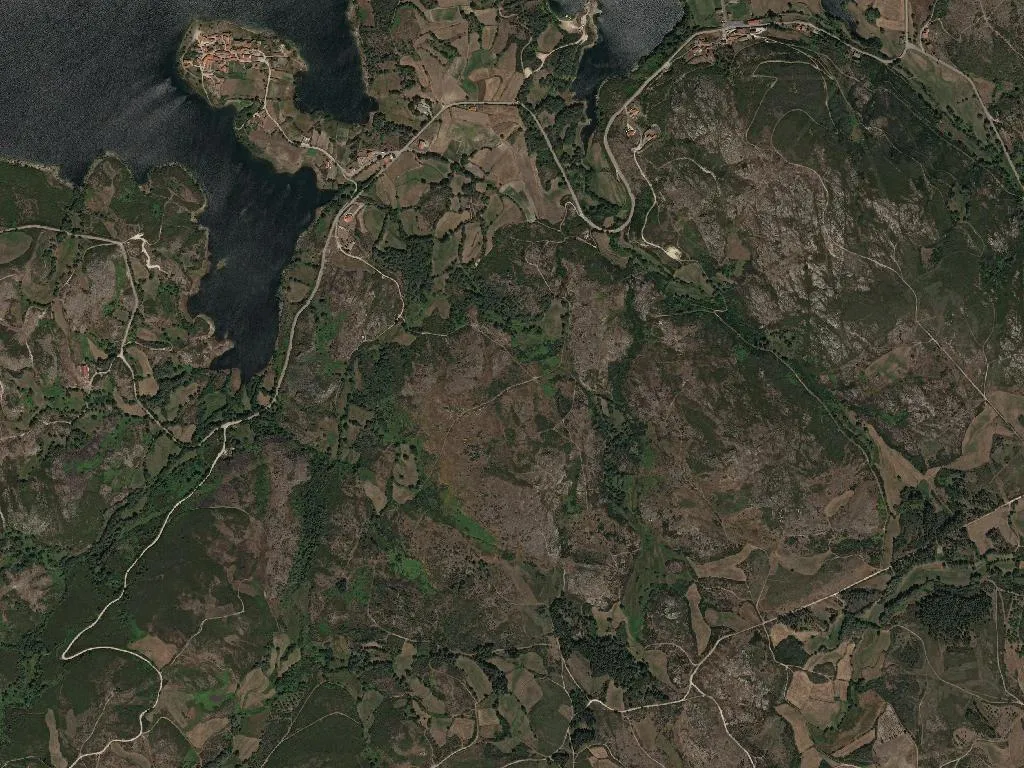
Six point four souls per km²: the arithmetic of endurance. Village statistics list eight children, fifty-four pensioners, yet the settlement refuses to become a ghost. Four modest guesthouses have opened their shutters to travellers who want the lung-press of high air and the hush that follows. Negrões nudges the eastern gate of Peneda-Gerês National Park, where Atlantic weather slams into Iberian granite: winters that bite until May, summers brief as a sigh, palette restricted to gorse-dark green and stone grey. Walkers on the nascent Caminho Nascente de Santiago pass through as if entering a decompression chamber—mobile signal falters, the lowland world recedes.
The Smokehouse as Library
Here gastronomy is engineering, not folklore. In timber smokehouses dangling like stone-swallow nests, alheira sausages, chourição, pumpkin-smoked chouriço, salpicão, blood-rich morcela and mountain hams cure above smouldering oak. Everything is labelled Barroso or Montalegre—DOP and IGP badges that translate as “we still know how to survive.” Maronesa cattle graze the wetlands, Barroso kid goats grow slowly on heather, and bees working the bitter furze produce honey that tastes of resin and altitude. There are no restaurants with tasting menus; instead, cast-iron pots bubble in family kitchens, lamb roasts inside granite ovens, and a slice of six-month-smoked presunto is offered with the reverence normally reserved for vintage port.
Two Dates on the Calendar
Only the Festa do Senhor da Piedade and the Senhora do Pranto (Our Lord of Mercy and Our Lady of Lament) swell the lanes—returning emigrants, polished boots on cobbles, processions that momentarily double the population. Afterwards, Negrões subsides into its baseline soundtrack: cattle bells, wind combing the Bracelva oaks, hearth fires crackling. Winter light arrives sideways, exposing every fissure in the granite, every emerald tuft of moss. After dark, starlight falls so close you feel you could pocket it. The temperature drops; chimney smoke thickens; the village stays exactly where it has always been—gripped to the mountain, quietly defiant.