Full article about Cávado’s Birthplace: Paradela, Contim & Fiães Secrets
Glacial ponds, smoke-cured alheira and mountain pilgrimages in Montalegre’s highest parishes
Hide article Read full article
Source of the Cávado and glacial ponds
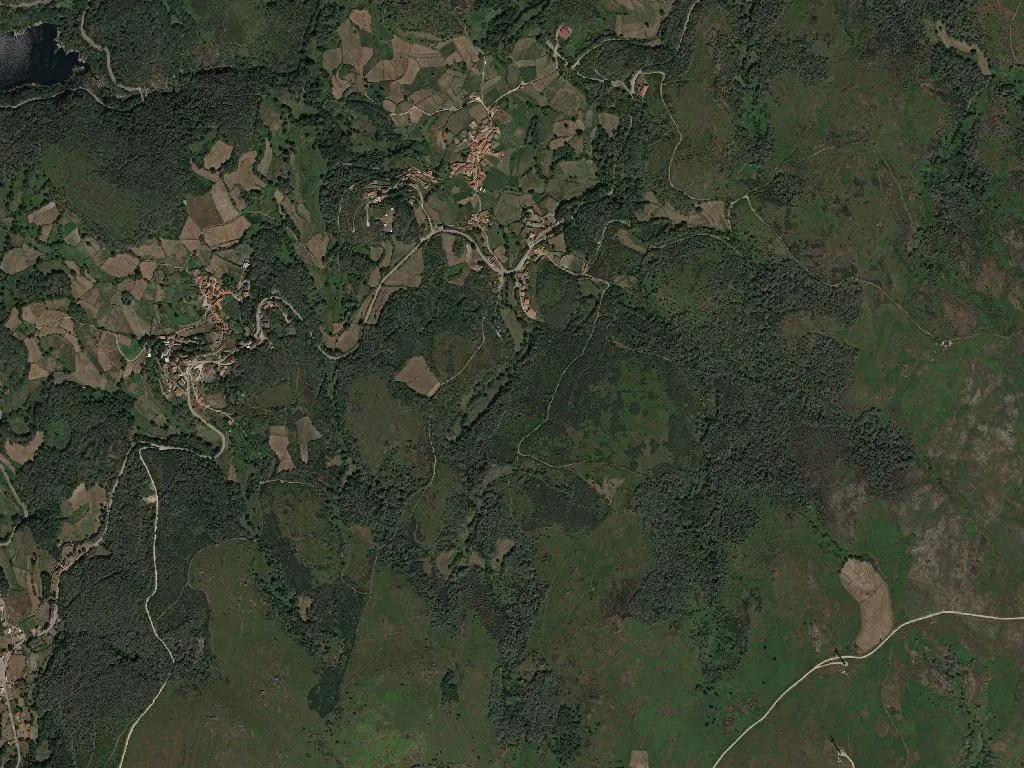
The Cávado begins here, at a granite spring 1,200 m above sea level, then tumbles 135 km to the Atlantic. Beside the village of Contim, the glacial lake of Vascões mirrors the sky like a black mirror; parish elders swear it froze solid in the winters of 1954 and 1963, sturdy enough for skating. A 5.8-km loop trail – the Lagoa e Mata path – climbs through alder and Portuguese oak where ring ouzels nest and, at the treeline, capercaillie boom. Outcrops of mica-schist and granite catch the late sun and glitter like shattered glass inside Peneda-Gerês National Park.
Smokehouses and high-altitude potatoes
Food is not folklore in these villages; it is the calendar. Alheira de Barroso-Montalegre IGP smokes slowly over chestnut logs until the skin tightens and goldens. Chouriço de Abóbora, protected since 1996, folds pumpkin, hot-smoked paprika and Bisaro pork into a sausage that tastes simultaneously sweet and incendiary. Barrosã lamb, raised above 800 m on heather and broom, is pot-roasted until the meat slips from the bone. Trás-os-Montes IGP potatoes are baked in a wood-fired oven with streaky bacon, drinking the fat and smoke. The only place to eat all four on one plate is Café O Cávado, open since 1987, where the house wine is a high-altitude Vinho Verde pressed from Borraçal and Amaral grapes grown in pocket-handkerchief plots between dry-stone walls.
Lord of Mercy and Our Lady of Tears
On the third Sunday of September, Paradela stages the Festa do Senhor da Piedade: brass bands, processions, a fair that smells of caramelised almonds. The bigger pilgrimage arrives fifteen days earlier. The Romaria da Senhora do Pranto draws worshippers from Montalegre, Boticas and even Chaves to an 18th-century chapel built after a spring dried up in 1713, then miraculously flowed again. In Fiães, the mannerist Mother Church (1598) displays a 1724 gilded baroque altarpiece; Contim still turns its 1753 and 1787 granite wayside crosses at ancient path intersections. Along granite terraces, espigueiros on stilts guard the August corn like stone sentries.
The rising way and full-moon walks
The Caminho Nascente of the Portuguese Santiago route crosses the parish, offering sudden balconies over Larouco (1,535 m) and the Gerês ridge. José António Pereira, former parish councillor, schedules full-moon hikes when the schist gleams silver and the only sounds are a distant dog or the shuffle of a wild boar among the gorse. In Paradela, Maria da Conceição Faria, born 1945, still weaves burel on a four-pedal wooden loom that belonged to her great-grandmother, turning local churra wool into blankets thick enough to defeat mountain frost.
At dusk the Minho churra flock descends the only street, hooves clacking on granite, met by the six-o’clock bell and swallowed by the Cávado valley. That metallic echo – repeated, ancestral – is what lingers after the road back down begins.