Full article about Salto: Where Smoke-Cured Chouriço Hangs Above Gerês
Granite hamlet at 842 m, its schist fumieros perfume wind-scoured ridges inside Peneda-Gerês.
Hide article Read full article
Granite, Smoke and Altitude
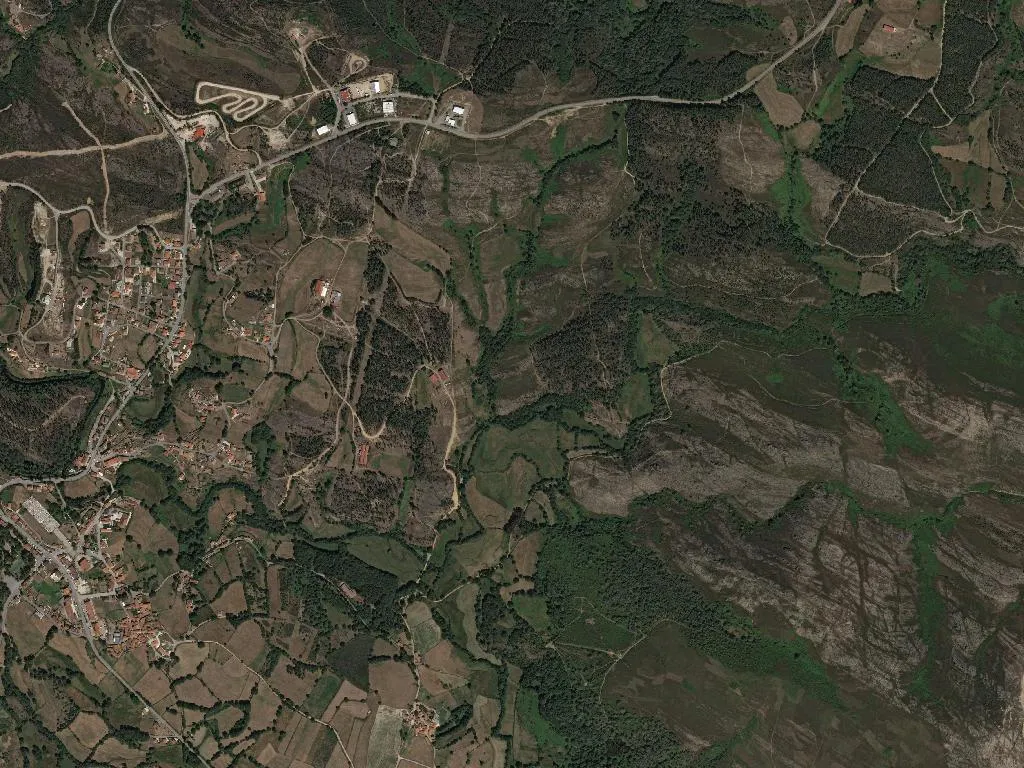
The road climbs in slow switchbacks, shedding a degree of human noise with every ten metres gained. At 842 m, Salto unravels across the shoulders of the Gerês massif – a name that here is not marketing copy but daily weather report. Granite houses grip the slope as though hewn in situ; morning wind carries the resin of heather and, on winter days, a skein of smoke from shale-built fumieros where chouriço and salpicão swing like pendulums.
Smoke-cured geography
Tourism is not the village payroll – the land is. One thousand two hundred and sixty-three souls occupy 78 km² of wind-scoured ridge and deep valley, a density lower than the Scottish Highlands. Neighbours are separated by minutes of walking, not metres, and that breathing space keeps alive a charcuterie tradition too sprawling for one label: Alheira de Barroso, Carne Chouriça, Abóbora Chouriço, Salpicão, Sangueira – all IGP-protected, all stitched through generations in lofts of oily schist. Fancy a slice? Count three doors left of the church and look for the blue paint. No sign, just the aroma of smouldering oak and garlic drifting downhill.
Local gastronomy is not a chapter in a guidebook; it is the spine of identity. Carne Maronesa beef grazes the upland meadows, Cabrito de Barroso kids spend summer above the treeline, and heather honey traps the scent of the slopes. There are no restaurants with picture windows, only kitchens doing what they did last century: potatoes from Trás-os-Montes simmered in spring water and salt, kid roasted over a wood fire, Vinhais ham shaved tissue-thin. The trick is to refuse the bill before dessert arrives – here, that is simply rude.
Where the park begins without asking permission
Peneda-Gerês National Park slips into Salto without ceremony: no ticket booth, no grand gateway, only a quiet shift in texture. Oak canopy closes, streams multiply, granite outcrops jut like ancient bone. Walk slowly; notice moss upholstering river stones, the kestrel’s low pass, a cowbell echoing across a ravine. Bring water – the nearest espresso is 4 km away and Sr António unlocks the café only when the mood takes him.
Pilgrims on the lesser-known Caminho Nascente of the Portuguese Jacobean route cross the parish on one of its toughest stages. Altitude saps lungs, wind pierces layers, yet the horizon repays the effort: kilometres of rolling sierra unbroken by pylon or tower. Some pause at the chapel of Senhor da Piedade or the small shrine of Nossa Senhora do Pranto, focal points for Salto’s two remaining processions. These are not folkloric set pieces but community book-keeping – days when emigrants clock back in. Even in July, pack a jacket; mountain air has no mercy on lowlanders.
Arithmetic of staying power
Of 1,263 residents, 443 are over 65; only 100 are under 14. The equation is brutal. Salto’s future hinges on retaining its born or coaxing down those who crave silence. Seven legal lodgings – scattered stone cottages, a converted watermill – signal cautious hope, yet the rhythm remains seasonal, sceptical. Mr Domingos, who lets a spare room, warns guests: “It’s grand company here, but it’s grand solitude too.” Consider that fair disclosure, not discouragement.
Morning damp darkens the granite; afternoon sun bleaches it pale again. Come November the fumieros exhale once more. Cattle still migrate to high pasture when the first bud breaks. Salto does not reinvent the year; it bows to the altitude calendar, non-negotiable. Visitors learn quickly that some things refuse acceleration: the cure of sausage, the steepness of a path, the collagen-melting roast that demands six hours. As Dr Silva, the retired GP, puts it while pouring aguardiente: “Round here, time isn’t money – it’s an ingredient.”