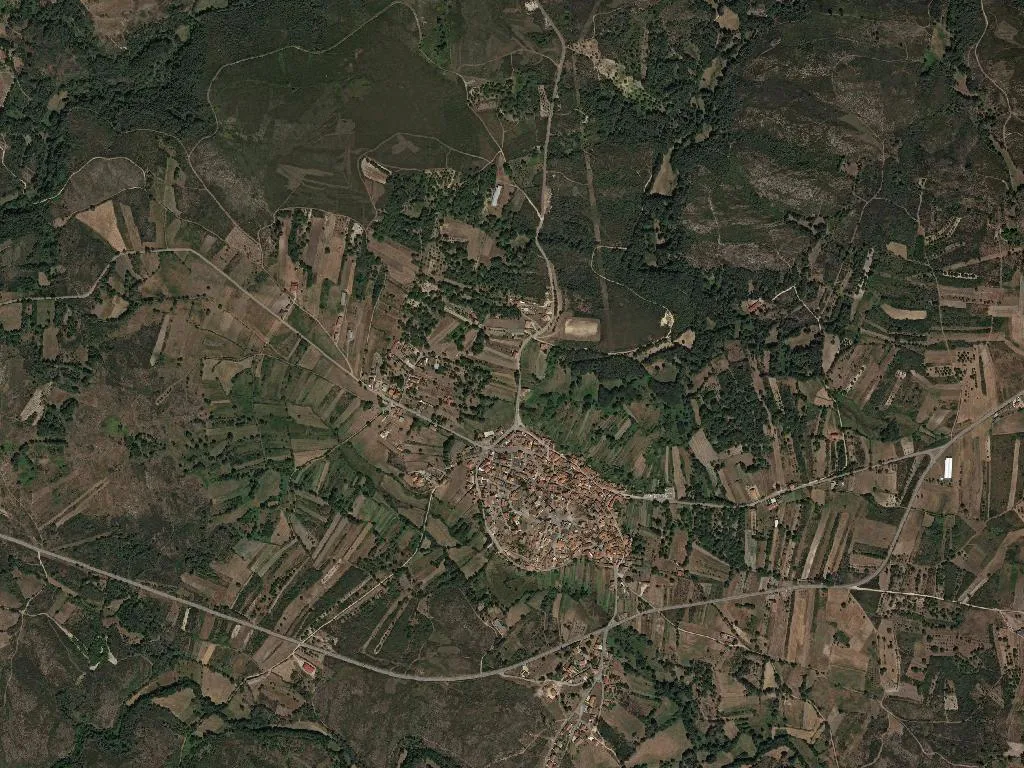
Full article about Solveira’s granite ovens bake rye broas at 851 m
Solveira, Montalegre, hides communal ovens, silent bell towers and Moorish millstones where rye broas crack like ice
Hide article Read full article
A Smoke that Lingers
The smoke curling from the communal oven is the colour of wet slate, not the Instagram-white of boutique sourdough. It drifts uphill at 851 m, losing flecks of soot against the granite sky. Inside, the corn and rye broas split open with a sound like ice fracturing. Maria do Outeiro, specs balanced on the tip of her nose, turns each loaf with a wooden paddle as if rotating a sleeping infant. In the flour-dusty ledger beside her – “6 pães” – an olive-oil thumbprint records the transaction more faithfully than any card machine.
The Bell that Never Rang
Halfway down the single-lane high street stands what visitors assume is a belfry: a cylinder of unmortared stone punched by a square hole. No bell ever hung there. Instead, a holed iron bar was struck with a spanner by the parish clerk to announce harvest, baptisms, burials. The bar now lives in António’s bedside drawer, a milk-tooth souvenir of when time was told by labour, not phones. Santa Eufémia next door has taken centuries to shift two centimetres off plumb; inside, beeswax and moth-balled linen perfume the air, and the saint’s plaster cheek is polished to raw chalk where palms brush her each September.
Stray Shards of the Past
Below the last house the path drops to the site locals call Golas Mills. You will find no interpretive panel, only grindstones grooved like old vinyl and, if you rinse potatoes there, the glint of copper pans or brass finger-rings. The village labels them “Moorish”, a catch-all for anyone who worked this slope before the first parish register of 1594. Artefacts are wrapped in loo paper and stored in shoeboxes under beds, family photographs of people no one can name.
Calendar of Faith & Flour
The Sunday after 8 September belongs to Senhor da Piedade. Six bearers in rope-soled espadrilles carry the painted statue down slabbed lanes too narrow for two cows abreast; the brass band’s concertina is always half a tone flat. At the church door Dona Amélia saws the communal cake, each wedge marked with a paper flag: “4 eggs – Rosa”, “2 kg rye – Albertino”. In May, Nossa Senhora do Pranto processes to the granite cross outside the cemetery; afterwards boys raid grandfathers’ wood-sheds for cork-oak logs while girls sing the response to the Marian litany. New Year’s Eve still allows children to beg “bolo-ranço”; householders hand out pork-lard bread without asking where they come from. No Halloween required.
What the Plate Expects
Alheira, the garlic-smoked sausage invented by Jews pretending to convert, arrives whole. You tear it by hand, fat spilling onto turnip tops that your neighbour has brought still wearing her apron. Kid goat is not roasted but stewed in red wine and sweet paprika that stains the pottery crimson for three washes afterwards. In Zezinho’s grocery-smokehouse, links of chouriça hang within arm’s reach; he snips off a thumbnail of meat for you to taste before the scales tip. The honey is darker than espresso, almost black, harvested by Eduardo from hillside strawberry-tree blossoms in neighbouring Portelinha. Cavacas – brittle little cakes – are whisked with still-hot pork lard. If you decline the rough local red, someone will fetch well water; the craft IPA from Montalegre costs twice as much and marks you immediately as foreign.
A Trail that Goes Nowhere & Everywhere
The footpath begins behind the cemetery where the earth smells of soaked heather. It skirts São João pool – really a sky-mirroring pond where children belly-flop after iridescent dragonflies – then climbs through oak and chestnut scrub patterned by wild-boar snouts. At the ridge the entire Larouco massif appears, its summit aerials winking like a cat’s eyes at dusk. Autumn brings chestnuts by the sack-load, lugged out on backs because no tractor could turn here. The magusto roast happens in the bread oven once the last batch cools; the nuts emerge tasting of wood-smoke and olive-oil dregs.
When the final loaf is claimed and the embers sigh shut, the scent of burnt oak clings to sweaters like a boutique fragrance that will never go on sale. Solveira needs no bell. Stand still and you can hear the little stream scurry beneath the single-arched bridge, or the slow tug of Barrosã cattle through the marsh. Outsiders call it silence. Locals call it the village talking.