Full article about Carva e Vilares: smoke-cured ham & silence at 743 m
Carva e Vilares, Murça: taste slow-smoked Maronesa beef, rye bread & toucinho-do-céu while schist hamlets breathe 743 m above the Douro uplands.
Hide article Read full article
A scent of earth and smoke
The wind climbs the slope, carrying the smell of newly-turned soil and the faint tang of woodsmoke from chimney stacks. At 743 m, Carva e Vilares inhales at a tempo where silence feels like ballast. A single bell thuds somewhere across the ridge; no-one counts the strokes. Schist walls store the morning’s heat, and olive trunks torque themselves into corkscrews against the dry northerly—living witnesses to a calendar still ruled by sowing and slaughter.
Two names, one root
Administratively fused in 2013, the two villages keep their personalities in the toponymy. Carva probably remembers the vanished oaks that once mottled these slopes; archaeologists add a POSSIBLE Iron-Age hillfort a kilometre south-east, though no one has dug deep enough to confirm it. Vilares nods to the scattering of casais—one-couple farmsteads—typical of Trás-os-Montes settlement. When the 1758 royal parish survey reached Carva, it already qualified as a parish in its own right, testament to continuous occupation on the climatic hinge between Portugal’s Terra Fria and Terra Quente.
What the plateau puts on the table
Up here, preserving food is survival that learnt to taste sublime. In the smokehouses—low granite sheds you smell before you see—hang hams from Vinhais, fire-engine-red chouriço and salpicão sausages that have taken the slow cure over sweet-chestnut embers for weeks. The native Carne Maronesa (from free-roaming cows that graze the high communal pastures) and Barroso lamb arrive on earthenware platters with a faint alpine tang. Golden Trás-os-Montes PDO olive oil meets rye bread dense enough to anchor a tablecloth, while kid goat roasts for four hours in a wood-fired oven until its fat crackles like parchment. Cozido transmontano, the regional boiled dinner, is served in strict order—cabbage, beans, pork, beef—each ingredient a receipt for winter labour. Dessert is toucinho-do-céu, a conventual egg-yolk-and-almond slab that weighs on the fork like ingots of Iberian history.
Stone horizons and 432 neighbours
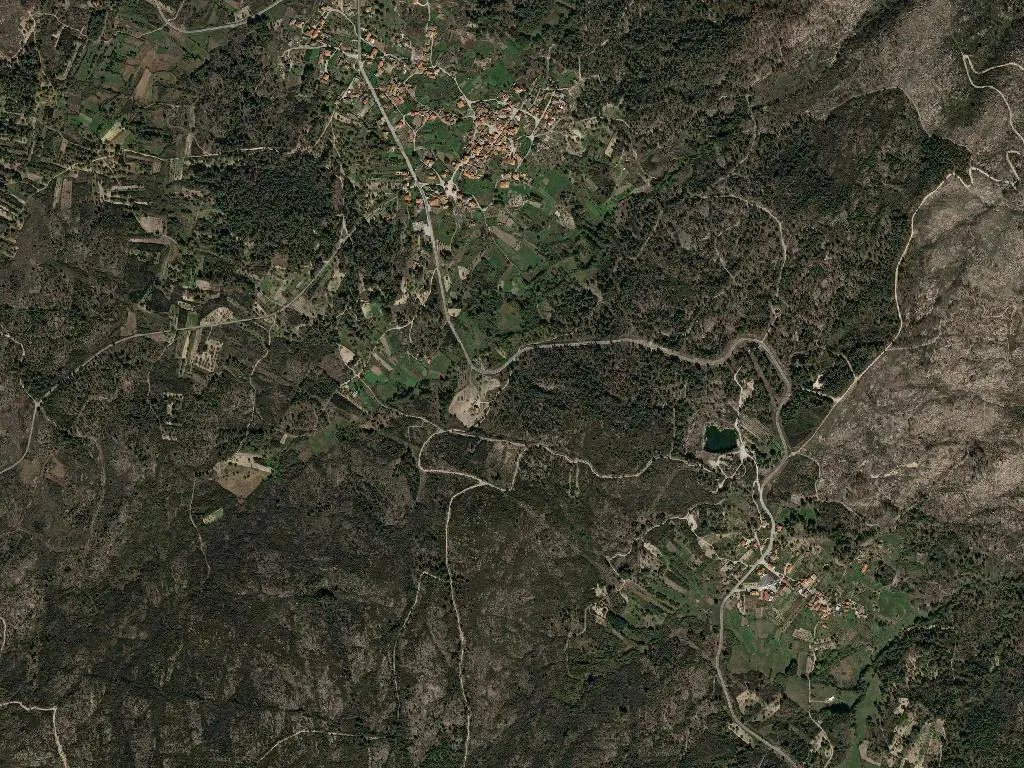
Across 2,930 ha of terraced valleys, only 432 people are registered to vote, giving a population density lower than the Scottish Highlands. No nature park status applies, yet the absence of signage becomes part of the appeal. Walk the mule-width tracks and you move through successive vertical gardens: heather and cistus at shin level, sweet-chestnut coppice glowing emerald in April, vineyards stitched onto schist ledges. Dawn light is knife-cold and horizontal; midday flattens every colour; dusk gilds the dry-stone walls as slowly as honey sliding off a spoon. Shout from one hamlet to the next and chances are no one will hear you—which, most locals agree, is perfectly fine.
Night drops fast. Windows ignite one by one, yellow squares pinned onto indigo wool. Woodsmoke rises ruler-straight in the still air, and the plateau resets to its factory setting: footfall measured, breath deep, gaze allowed to linger.