Full article about Noura & Palheiros: granite ribs above the Tinhela
Walk olive terraces, taste Maronesa beef and smoky Vinhais ham in Murça’s twin hill villages
Hide article Read full article
Granite bones and olive oil mornings
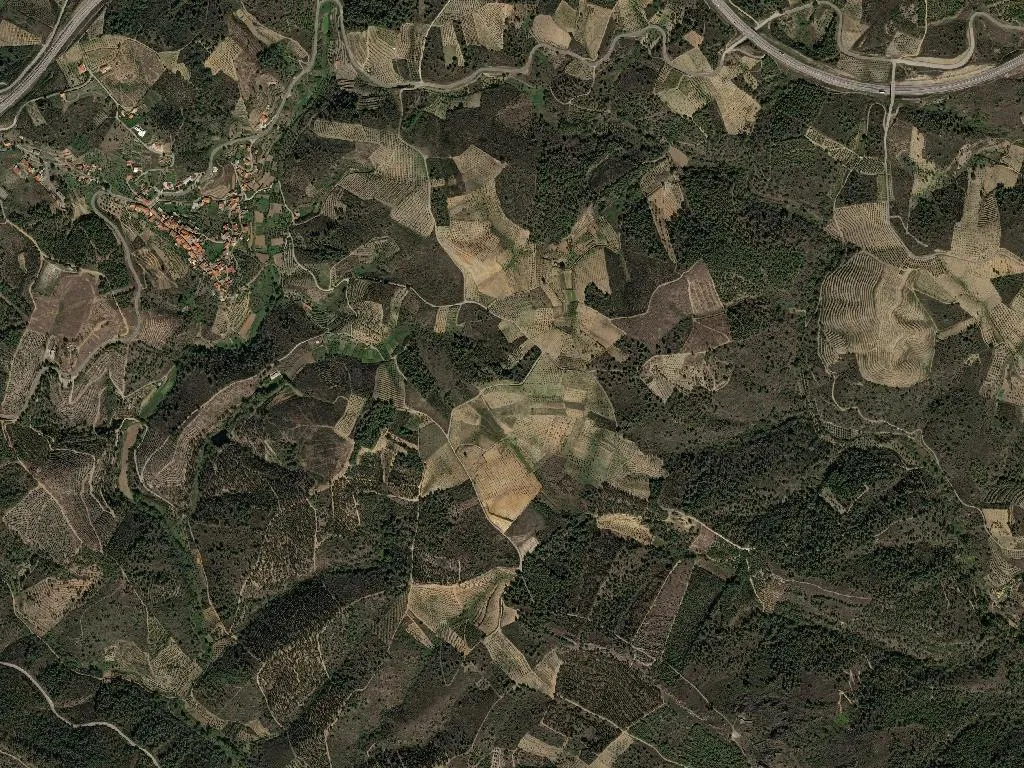
The dark granite pushes through the vineyards like the knuckles of an old labourer who refuses to loosen his grip on the land. At midday the schist glints, the Tinhela river slips between alder branches, and the air carries the twin perfume of turned earth and pine resin riding the updraft. Five hundred metres above, the twin settlements of Noura and Palheiros sprawl across 4,000 hectares of olive groves, terraces and houses that cling to the slope the way a regular clings to the bar counter—just enough purchase to stay upright and keep talking.
Footprints half a million years deep
Stone flakes found among the vines show someone knapped tools here in the Lower Palaeolithic; on the hill above, Castro dos Palheiros has yielded circular stone hut bases that pre-date the Romans by centuries. The interpretation centre—still waiting for its new roof—will eventually display the potsherds and walls that tell how news travelled by bonfire long before it travelled by feed. The name Noura drifts from the Arabic naùra, the water-wheel turned by a donkey; Palheiros recalls the thatched straw stacks once used as field shelters. When King Sancho II granted Murça its royal charter in 1224, Noura was already itemised: a border post between the cold highlands and the warm valley, halfway between football and petanque country.
The Transmontana larder: oil, beef and smoke
The cooking is unshowy—hunger is the original spice. Azeite de Trás-os-Montes DOP flows thick from stone presses; Carne Maronesa DOP tastes of the heather the cattle grazed; Vinhais IGP ham spends its holidays in a smokehouse until it takes on the colour of oak fire. Barroso IGP milk-fed lamb rules the festive table; rye ripples on high terraces, and almond trees bloom early, like the customer who arrives first at the café and still bags the best table.
Tracks through vines and sweet chestnut
The footpath that stitches Noura to Palheiros is a folded paper map of ochre earth: past an abandoned press whose stones still wrinkle with dried must; across a levada once allocated by whoever shouted loudest. Eastwards, the Serra da Garraia forest reserve gives blackbirds a stage and its name to the local cultural association—essentially the Sunday club that keeps the ballroom floor waxed. The parish lies on the 15th-century Czech nobleman Leo de Rosmithal’s variant of the Portuguese Way to Santiago; few pilgrims pass, but those who do receive a “bom caminho” and a tumbler of tap water. Of the 812 residents, 266 are over 65: living archives who prune on the right saints’ day and fire the smoker in November without checking a weather app.
When the sun drops, the granite changes jacket—grey, gold, bruised violet—and the scent of split firewood mingles with the late almond blossom. It is then that Noura and Palheiros disclose their quiet boast: time does not pass here, it puts down roots.